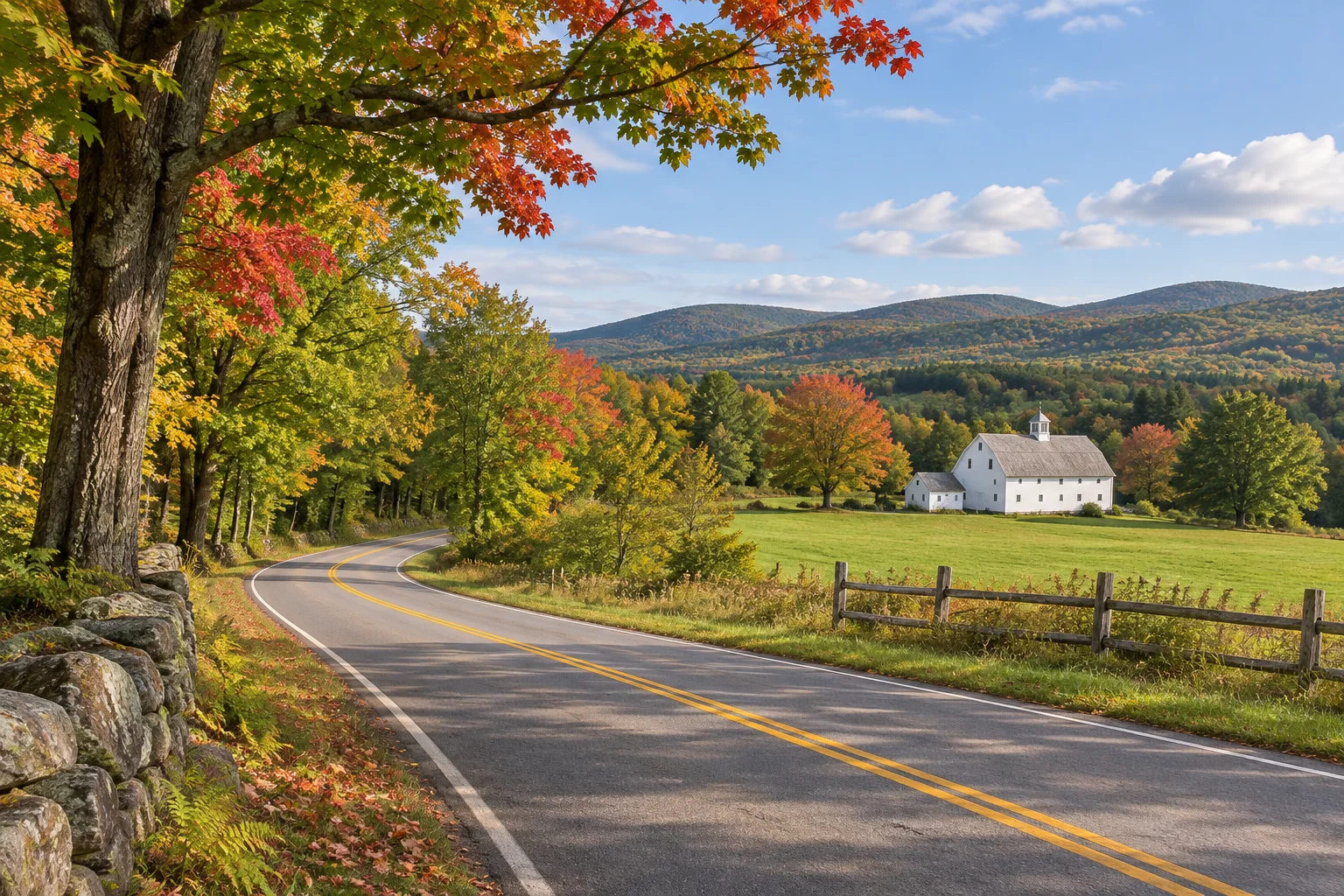
Historic Boston streets, the Maine coast, a mountain driving day and a quieter Vermont village finish give this New England road trip a varied rhythm. The Boston loop visits Portsmouth, Portland, North Conway and Stowe, with time to enjoy the bases as well as the roads between them.
This is a ten-day, nine-night plan with five overnight bases. It suits a trip that mixes short city walks, coastal stops and scenic countryside without changing accommodation every evening. Choose the daily outings for the weather and season; fall color is part of the appeal, with regional timing that varies each year.
Day-by-day route planner
Open the companion sheet, mark your choices and print a copy for the trip. Your entries stay in this open page and are not saved after you leave it.
Why this plan works
Choose this loop for a mix of history, coast and inland scenery, with two-night stays at the larger bases. Portsmouth makes a short first road stop, Portland holds the coastal outing, North Conway anchors the mountain day and Stowe gives the final village-and-path time. An early Boston flight changes the last overnight: move night nine closer to the airport or add a night.
The ten-day route and nine-night plan
| Day | Plan | Stay |
|---|---|---|
| 1 | Arrive in Boston and settle in | Boston |
| 2 | A full Boston day | Boston |
| 3 | Travel to Portsmouth and explore the waterfront area | Portsmouth |
| 4 | Continue to Portland with one optional coastal stop | Portland |
| 5 | Portland Head Light, Fort Williams Park and Portland | Portland |
| 6 | Travel inland to North Conway | North Conway |
| 7 | Kancamagus scenic drive from the North Conway base | North Conway |
| 8 | Travel to Stowe | Stowe |
| 9 | Stowe Village and the Recreation Path | Stowe |
| 10 | Return toward Boston and depart or add an overnight | — |
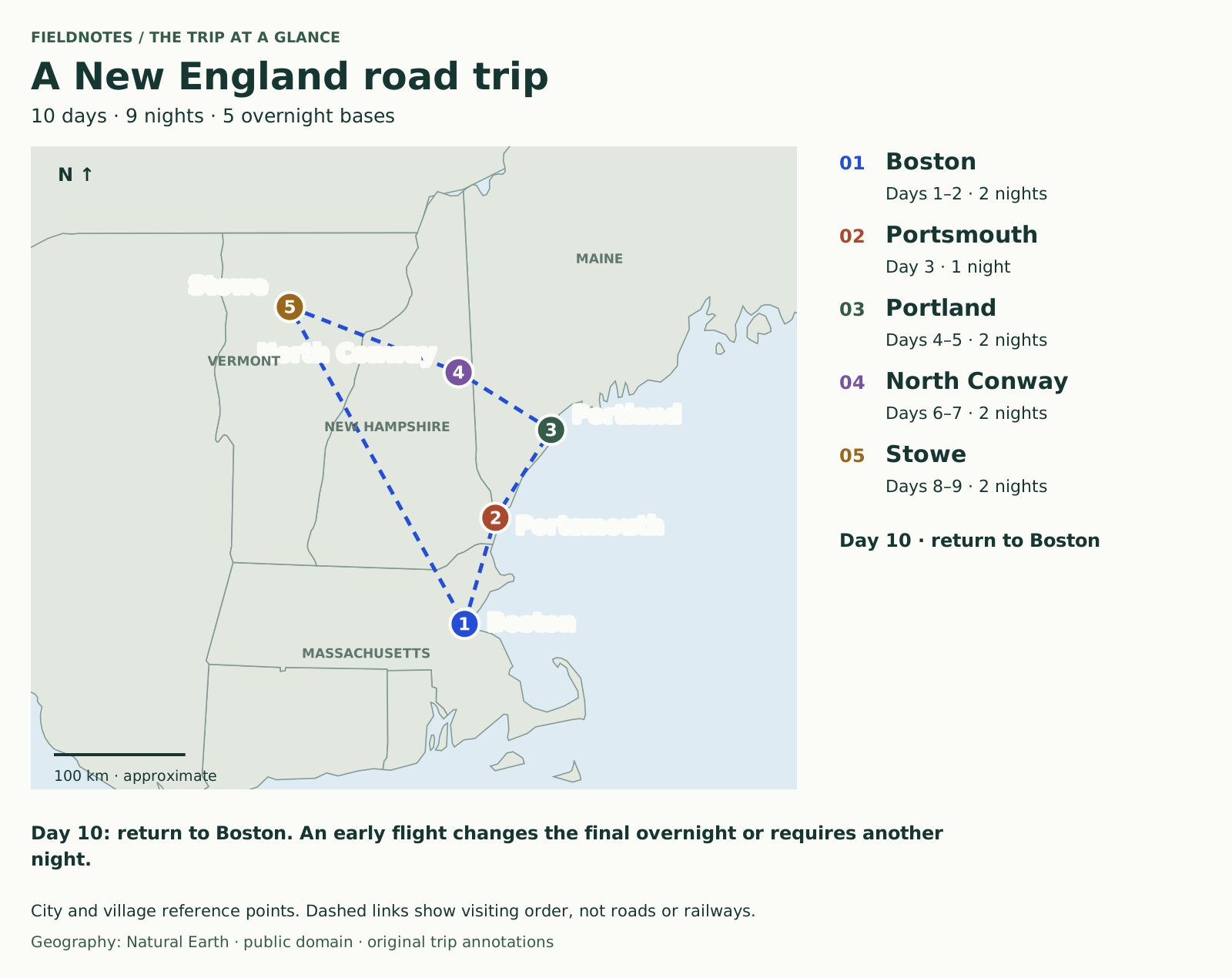
Open places in Google Maps
- 1. Boston — Days 1–2 · 2 nights
- 2. Portsmouth — Day 3 · 1 night
- 3. Portland — Days 4–5 · 2 nights
- 4. North Conway — Days 6–7 · 2 nights
- 5. Stowe — Days 8–9 · 2 nights
That is two Boston nights, one Portsmouth night, two Portland nights, two White Mountains nights and two Stowe nights: nine nights in total. If a Boston flight makes Day 10 too tight, move the final night back toward Boston by shortening Stowe, or add a night.
Driving legs: reserve more than the map time
| Leg | Approximate distance and moving time | Time to protect in the day |
|---|---|---|
| Boston → Portsmouth | About 60 miles; 1–1½ hours | At least a half-day block if collecting the car, checking out and stopping for lunch |
| Portsmouth → Portland, direct | About 50 miles; 1–1¼ hours | Use 3–4 hours if adding Ogunquit, parking and a short coastal walk; allow longer for the full out-and-back path and lunch |
| Portland → North Conway | About 60–70 miles; 1½–2 hours | Allow a relaxed half day with lunch and arrival, then keep village time local |
| North Conway → Stowe | About 115 miles; 2½–3 hours | Keep 4–5 hours for driving, a rest/meal stop and arrival |
| Stowe → Boston | About 200 miles; 3–4 hours | Add rest stops, traffic, rental return and the airport’s required arrival margin separately |
These rounded planning ranges use Google Maps routing for the five-base loop, checked on 3 November 2026. They exclude sightseeing detours and are not promises for fall weekends, winter conditions or your accommodation addresses. Open each actual leg again before departure; avoid choosing a flight from the quickest moving-time estimate.
Days 1–2: begin in Boston
Day 1: keep the arrival light
Reach the accommodation and take a short walk near your base. Save the full sightseeing program for the following day. If your arrival is late, a meal and an early night can be the whole plan.

Consider whether you need the rental car during the Boston stay. Compare the collection location, parking arrangements and your plans before paying to keep a car you will not use. Collecting it when you leave the city may simplify this version of the trip.
Day 2: choose one coherent Boston day
Use the Freedom Trail as the day's historic walking focus. Start with the central section from Boston Common toward Faneuil Hall, then continue into the North End if you want a longer day. The Foundation's official trail connects sixteen historic sites, so choose the section and interiors that interest you rather than treating the full route as a timed challenge.
Use the North End as the food-area choice after the central trail section: Hanover Street and Salem Street give you a coherent place to look for an Italian lunch or pastry break. Continue toward the waterfront only if you still want more walking. Individual museums and church interiors have their own arrangements; the walking route is not one all-inclusive attraction ticket.

Keep a proper meal break and avoid driving between several central stops simply because the car is available. The road-trip portion begins tomorrow; today can be a city day.
Day 3: Portsmouth as a relaxed first road stop
Leave Boston with time for the car collection or departure checks. Make Portsmouth the destination rather than adding a long list of coastal detours on the first driving day.
Make Prescott Park the default waterfront stop. The city describes it as a public waterfront park with several garden spaces, so it gives this short stay a clear outdoor focus without requiring another major ticketed visit. From the riverside, continue toward Market Square and the nearby downtown streets for dinner, keeping the evening within the compact center.
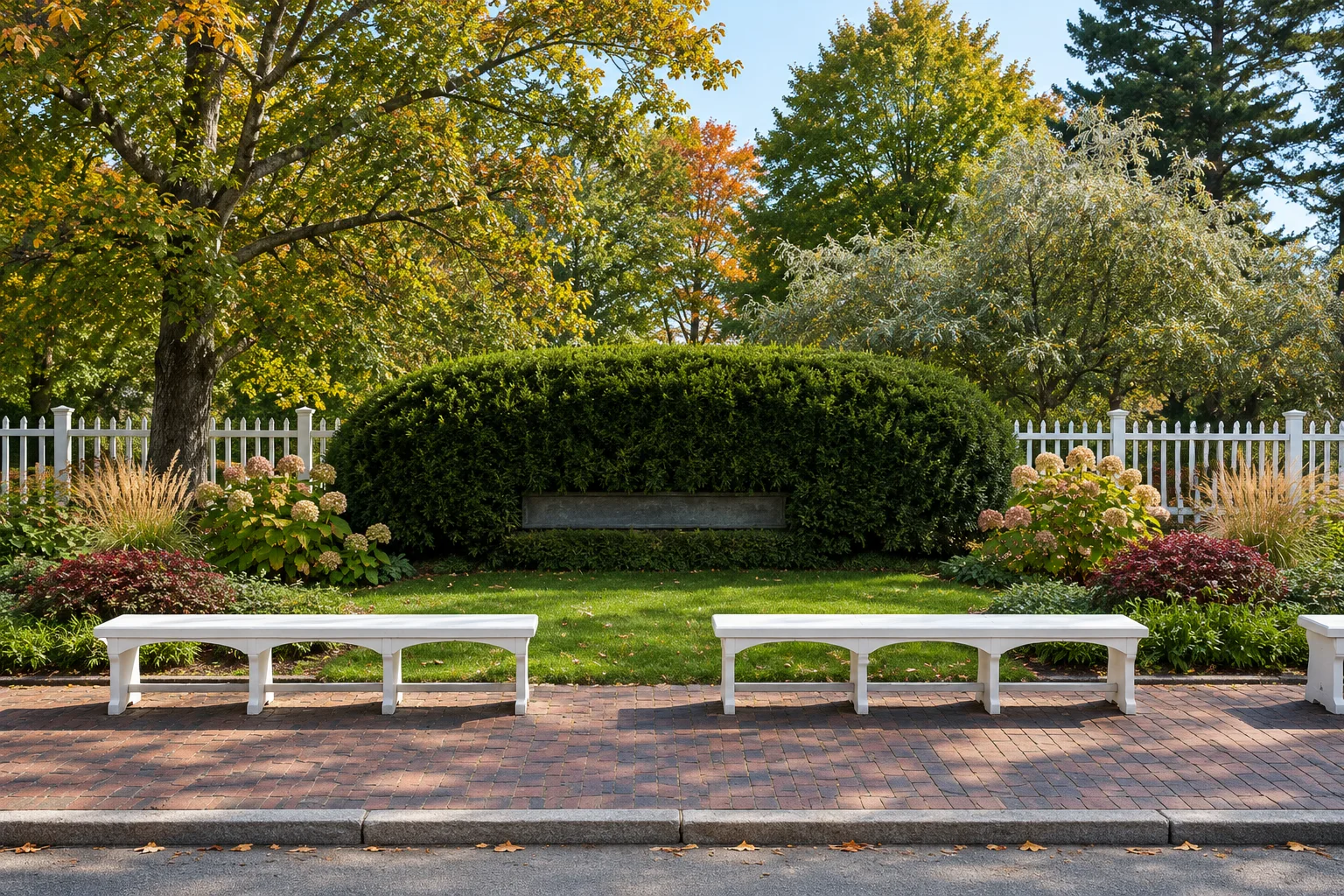
Garden displays and events are seasonal. If you want a museum or historic-property interior as well, replace some walking time with that visit and check its own operating arrangements.
A single-night stop works best when the luggage is simple. Keep an overnight bag near the top so the whole car does not need to be unpacked for one evening.
Days 4–5: Portland and a manageable stretch of coast
Day 4: leave room for one coastal stop
Choose Ogunquit as the optional coastal stop between Portsmouth and Portland. Park once and take a short out-and-back section of the Marginal Way from the Perkins Cove end for rocky shoreline views and a working-harbor setting. The town describes the full paved cliff walk as 1.25 miles one way; walking all of it and back is a separate commitment. Use the town’s linked maps and parking information for the actual visit.
This stop replaces the longer Portland arrival walk. If parking, weather or the journey is already slow, skip Ogunquit and go straight to Portland; keep the coastal outing on Day 5 instead. Do not add Kennebunkport as a second compulsory stop.
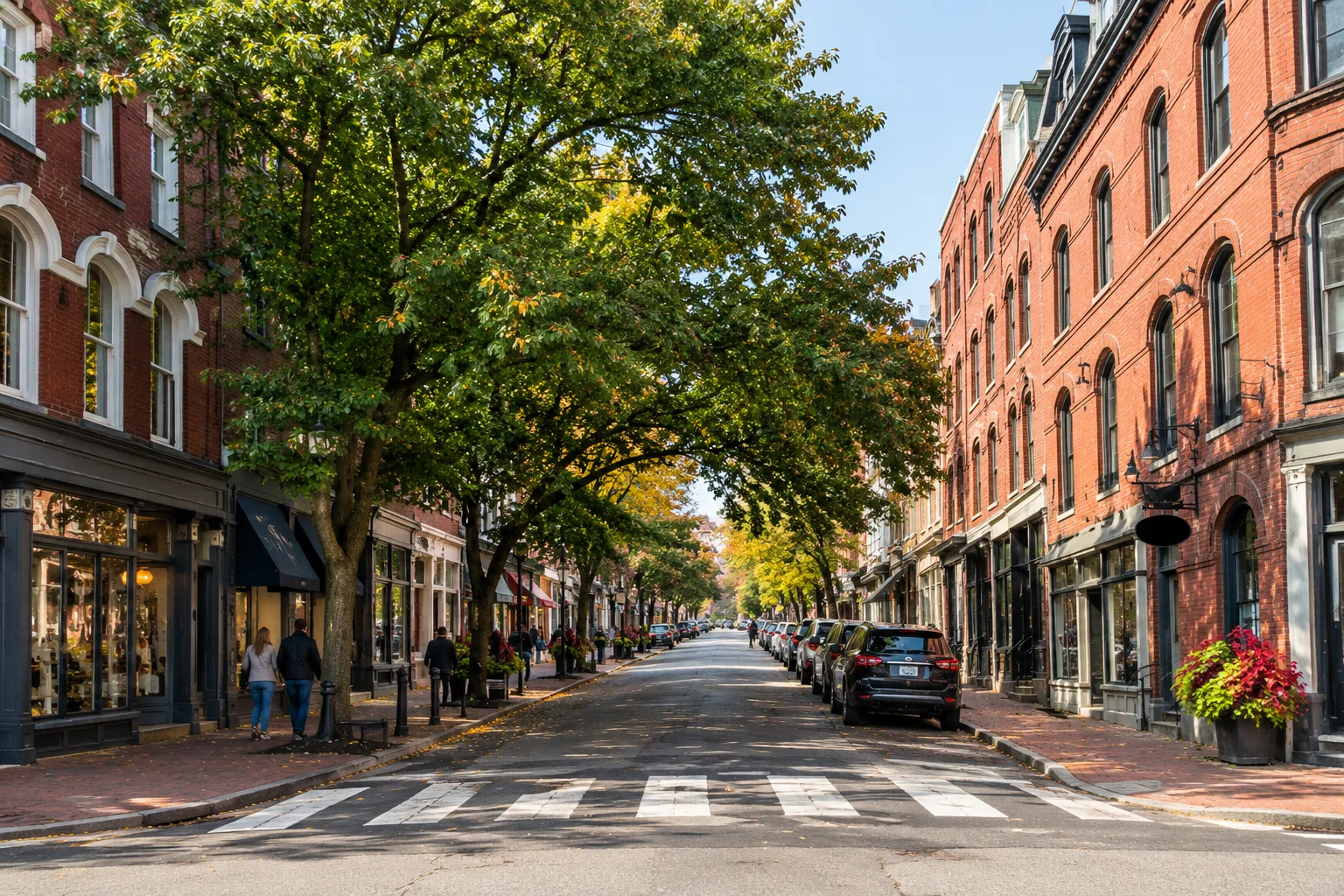
After check-in, use Commercial Street and the Old Port side streets for a short Portland arrival walk if you skipped the Ogunquit stop. Let the first evening be about a meal and a little exploring; the full coastal outing has its own day tomorrow.
Day 5: choose city time or a coastal outing
For the default outing, visit Portland Head Light and Fort Williams Park in Cape Elizabeth, then return to Portland for the later part of the day. The park's official visitor page lists the Cliff Walk Trail, lawns, former batteries and the Children’s Garden, giving you several ways to make the stop more than a quick lighthouse photograph.
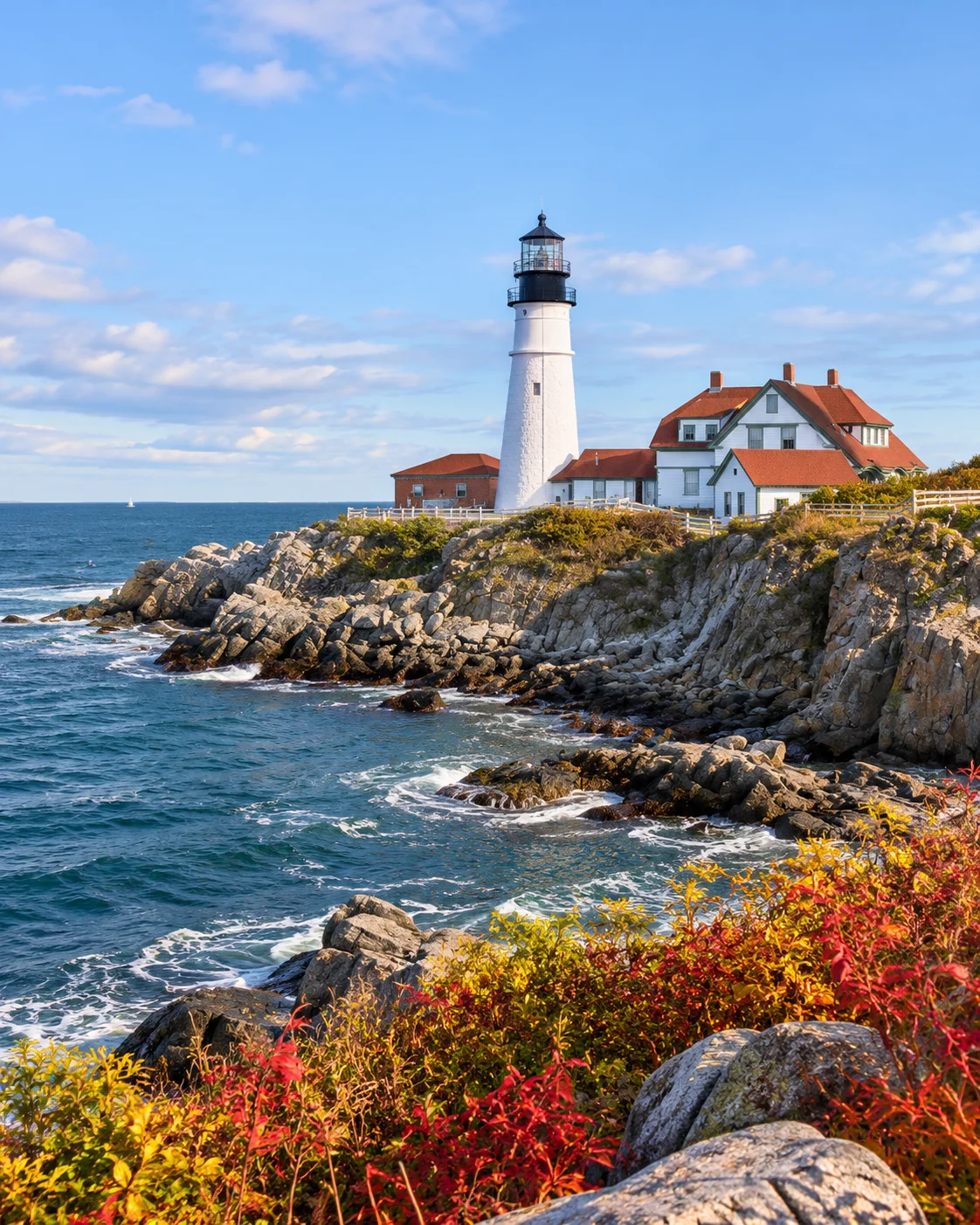
Choose the walk that suits the weather and your group, and check the park's current visitor and parking information. Pack out your rubbish: the official page describes a carry-in/carry-out policy with no park rubbish bins. Do not assume that the lighthouse tower or a museum interior is included or open simply because the grounds are accessible.
Back in Portland, use Commercial Street and the lanes around Exchange Street for Old Port time and a relaxed meal. Choose a seafood meal or a simpler café lunch according to appetite; the neighborhood is the recommendation, not an untested restaurant endorsement. A boat trip is an alternative to this program, not another full outing to add on top.
Do not treat a distant Maine highlight as a quick extra. Acadia is deliberately outside this loop. Adding it requires more nights and a redesigned route, not an optimistic gap between Portland and the mountains.
Days 6–7: the White Mountains
Day 6: make the inland transfer the main task
Use North Conway as the two-night mountain base for this version. After the transfer from Portland, spend any remaining time on Main Street and around Schouler Park rather than driving a second long sightseeing loop. The official regional visitor guide identifies the village shops, park and historic station area as useful places to explore.
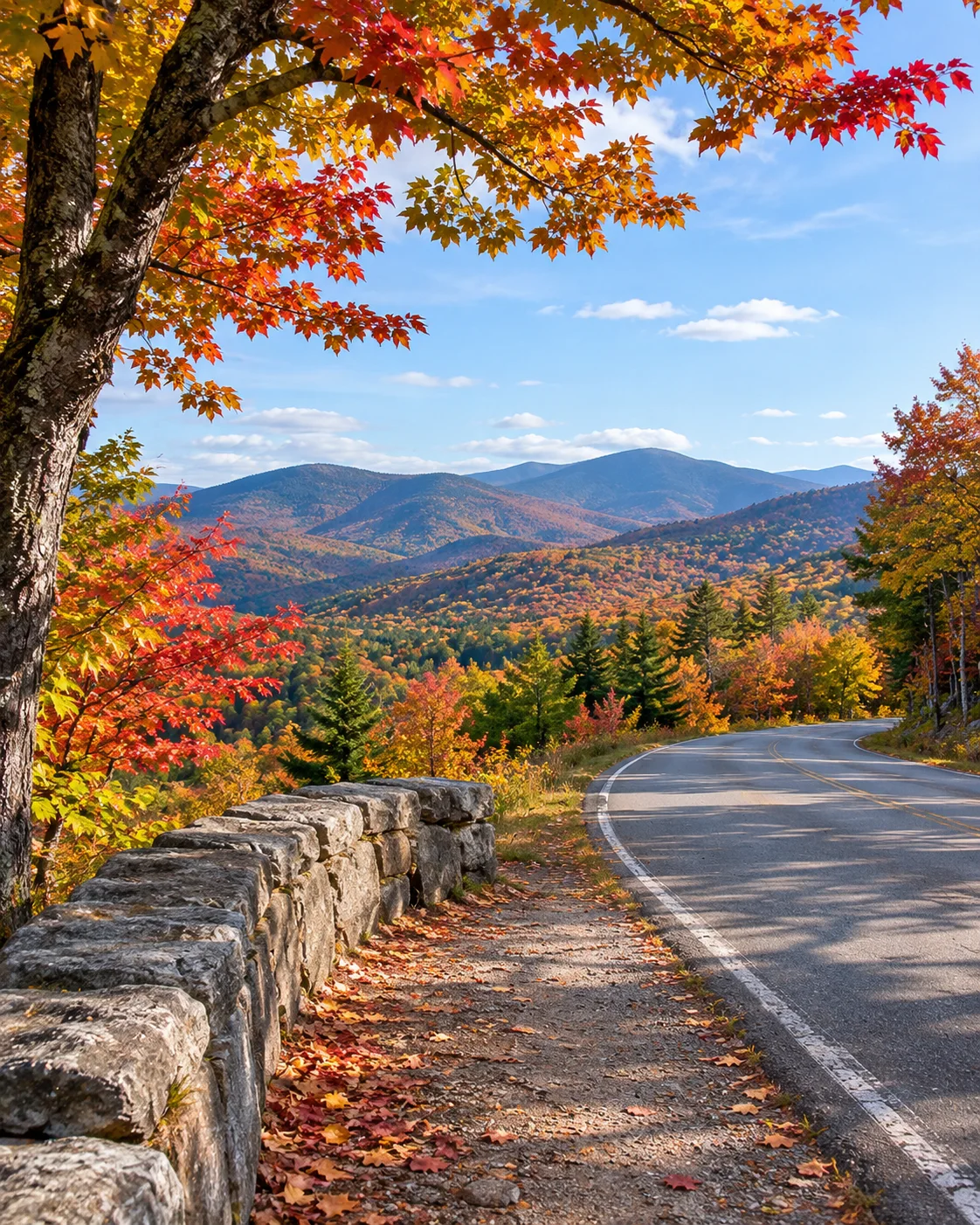
This eastern-side base keeps the next day focused on a chosen scenic corridor, with the same accommodation waiting at the end. If you choose a different mountain town, redraw the Day 7 driving plan instead of assuming every base serves the same route equally well.
Use Main Street for a meal and a practical food-and-water stop before tomorrow’s drive. Check the mountain forecast alongside the road information, then keep the arrival evening local.
Day 7: one scenic route or outdoor focus
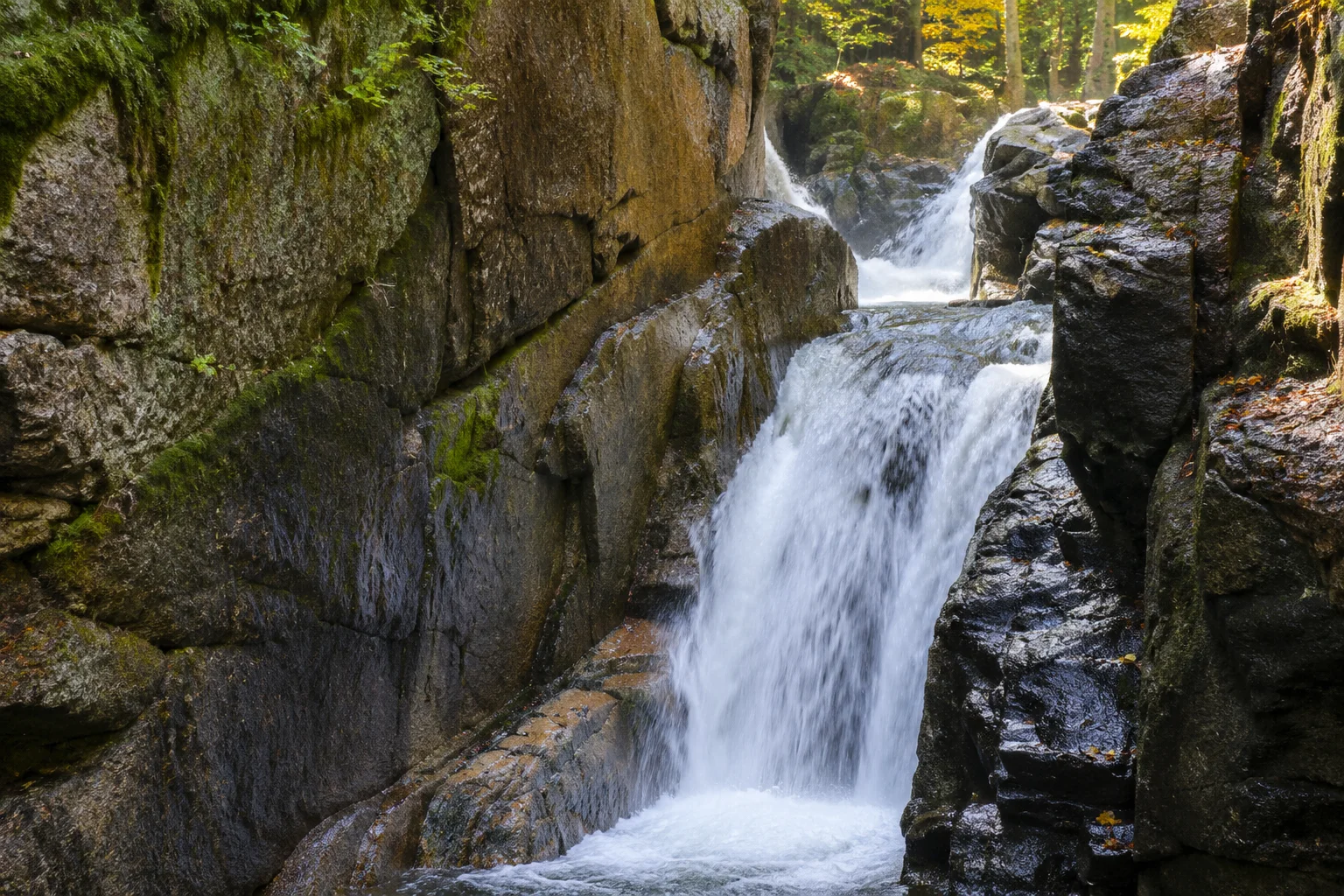
Make a shortened Kancamagus out-and-back the default, returning to North Conway rather than continuing around the regional loop. Drive to the Albany Covered Bridge area for a Swift River stop, then continue west to Sabbaday Falls. Make the falls parking area the turnaround: take the short signed walk if conditions suit, eat your packed lunch at an appropriate stopping place, then return east. This gives the day two distinct subjects—covered bridge and waterfall—without requiring every overlook or the full crossing to Lincoln.
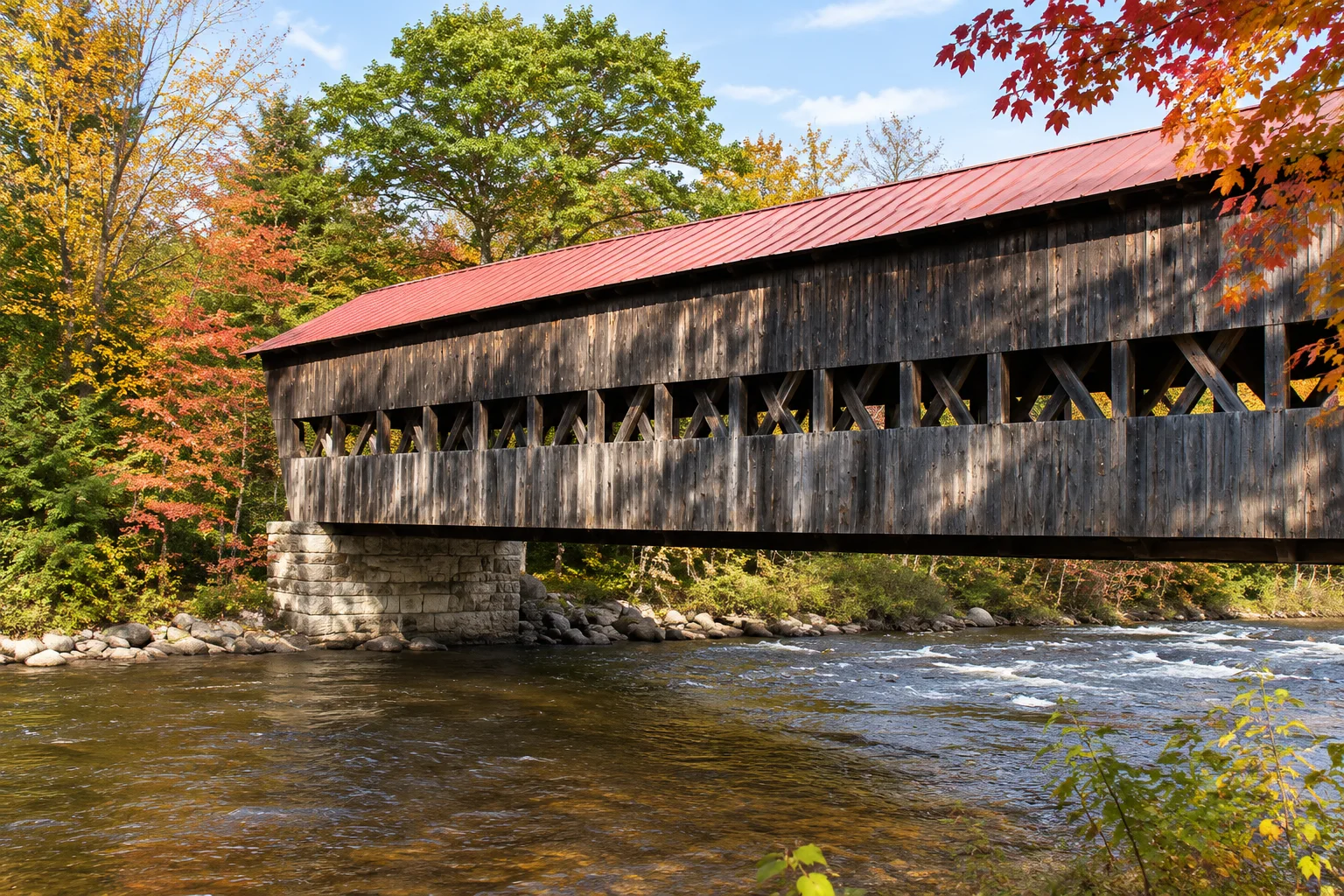
The regional visitor authority describes Sabbaday Falls as a 0.7-mile out-and-back on a crushed-gravel path. That short distance does not guarantee suitable footing in wet or icy conditions. The Forest Service’s Albany Covered Bridge page describes winter vehicle closure of the bridge and a maintained parking area; confirm current site and road conditions rather than assuming the bridge is a through-driving route.
Check signed parking/permit instructions at each stop and arrive with food and water. For a shorter day, turn back after the bridge-area stop and spend the afternoon in North Conway. If mountain conditions are unsuitable, replace the drive with the village day rather than treating a shorter mountain drive as automatically safe.
Alternatively, choose an outdoor activity that suits the forecast, available daylight and everyone's ability. An attraction with seasonal operations needs its own check. Do not combine a full mountain outing with a long sightseeing drive simply because both appear nearby on a map.
Leave room to substitute a lower-key day if the weather changes. The value of two nights is that you can adjust the activity without moving the whole route.
Days 8–9: Stowe and Vermont scenery
Day 8: travel west and settle in
Head toward Stowe using a route suited to current conditions and the location of your base. Allow for food, fuel or charging and any one deliberate stop. This is another transfer day, not a spare full day of sightseeing.

Use the arrival time for a Stowe village walk and an easy dinner. The next day can then start with the path or another suitable local outing, chosen around the weather and any operating arrangements that matter.
Day 9: choose a scenic Vermont day
Begin in Stowe Village and use a manageable section of the Stowe Recreation Path for the main outing. The town describes a paved 5.3-mile path from the village toward Topnotch Resort, crossing the West Branch of Little River. You can turn back before the end; the full distance is not the required length of your walk.
Lintilhac Park behind the community church is one of the town's listed access points. Check current path, parking and road notices before setting off. Share the path considerately: the town asks users to keep right, yield appropriately and walk bicycles across intersections. Return for a village meal rather than adding another long regional drive.
If fall foliage is the main reason for the trip, use the current Vermont reports to choose the outing. A fixed list of “best” viewpoints cannot guarantee what the trees will look like on your dates.
Day 10: return to Boston with a real buffer
Check the actual driving route, traffic expectations, rental return and airport requirements before choosing a flight. The Stowe-to-Boston leg should not be treated as a short hop between breakfast and an early departure.
For a more comfortable flight day, spend the ninth night nearer Boston instead of taking the second Stowe night. That changes the final part of the trip, but it can be a better plan than relying on every part of a long transfer going smoothly.
When to take this road trip
Choose the season for the experience you want and check which activities operate then. Autumn can suit scenic drives, but the foliage changes at different times by latitude, elevation and weather. Official New Hampshire guidance describes a north-to-south progression; Vermont also notes that higher and northern areas tend to change earlier.
Use current foliage reports close to departure. Do not expect the coast, the mountains and Stowe to peak together. Outside fall, rebuild the activity choices around the relevant weather and operating season rather than keeping a leaf-peeping checklist unchanged.
Packing and route adjustments
Bring useful layers, weather protection and clothing for the actual activities, plus the road-trip car and cabin kit. Keep the everyday overnight bag separate from equipment you only need for one outing.
For a slower trip, remove the Portsmouth overnight or one inland base and add that time elsewhere. To include Acadia, extend and redraw the route. For winter, replace this seasonal sightseeing plan with a newly checked route using the winter road-trip framework and winter clothing list. Those guides help build the plan; they do not establish winter clearance for this loop.
New England road trip questions
Does this visit all six New England states?
No. This loop focuses on Massachusetts, New Hampshire, Maine and Vermont. Connecticut and Rhode Island would require a different route or more time.
Will I see peak foliage everywhere?
No itinerary can promise that. Check current reports, expect regional differences and choose the daily outings accordingly.
Can I drive the loop faster?
You can remove places, but shortening every stop while preserving the whole list mostly creates more time in the car. Choose the experiences that matter and give those enough room.
Useful official planning links
- Visit NH | Foliage Tracker
- Fall | Vermont Tourism
- Best Time to See Foliage in Vermont | Vermont Tourism
- Visit NH | NH Climate
- What to Do - Portland Head Light and Fort Williams Park
- Stowe Recreation Path | Town of Stowe
- Scenic Drives In The White Mountains | Maps & Byways
- North Conway, NH Attractions & Things to Do | White Mountains
- Homepage | The Freedom Trail
- Prescott Park | City of Portsmouth
Check the arrangements for your travel dates before booking or departure.