A good road-trip setup makes each stop easier. Prepare the car before departure, keep a small travel kit ready for breaks and use a simple overnight bag so one-night stays do not mean unpacking the whole boot.
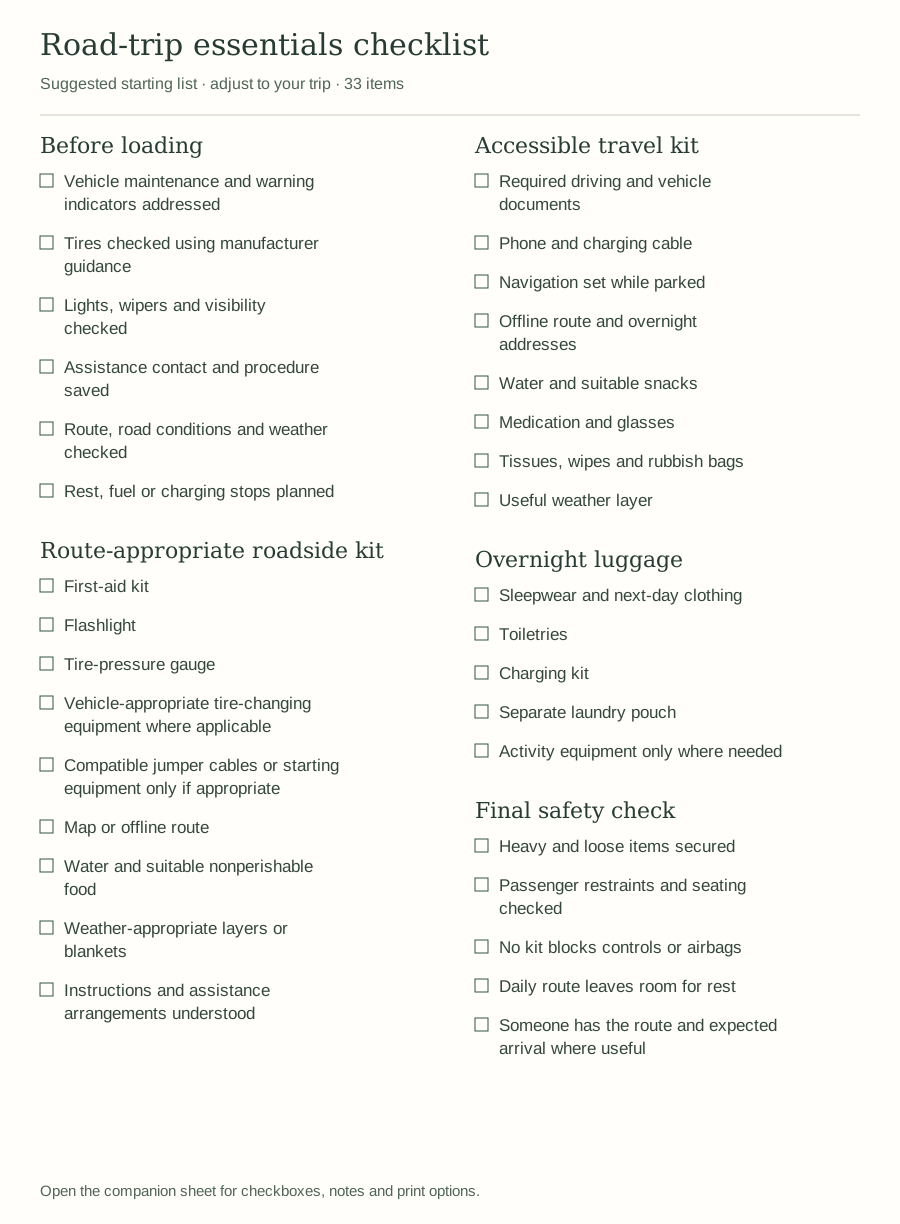
This road trip essentials list covers ordinary vehicle preparation, the accessible cabin kit, route-appropriate roadside supplies and overnight luggage. Build it around your vehicle and route; winter, remote travel and specialist activities need a more specific plan.
Packing checklist
Open the companion sheet, mark your choices and print a copy for the trip. Your entries stay in this open page and are not saved after you leave it.
Prepare the vehicle before packing it
Use the owner's manual and the appropriate service advice to check the car before a longer journey. Tires, fluid levels, lights, visibility and any warning indicators deserve attention before you leave, rather than at the first unfamiliar service station. Use the vehicle manufacturer's tire-pressure recommendation on the door placard or in the manual—not the maximum pressure printed on the tire sidewall.
- Confirm the vehicle is suitable and ready for the route
- Check tires and the vehicle's recommended pressure guidance
- Check lights, wipers and visibility
- Deal with maintenance needs and warning indicators
- Know what roadside equipment the vehicle has and how help will be arranged
- Save breakdown and rental assistance details where relevant
At a rental collection, take time to understand the controls, the equipment provided and the assistance procedure. Save the relevant contact details with the booking. This gives the first driving day a clear start and avoids searching for instructions during a roadside problem.
The accessible travel kit
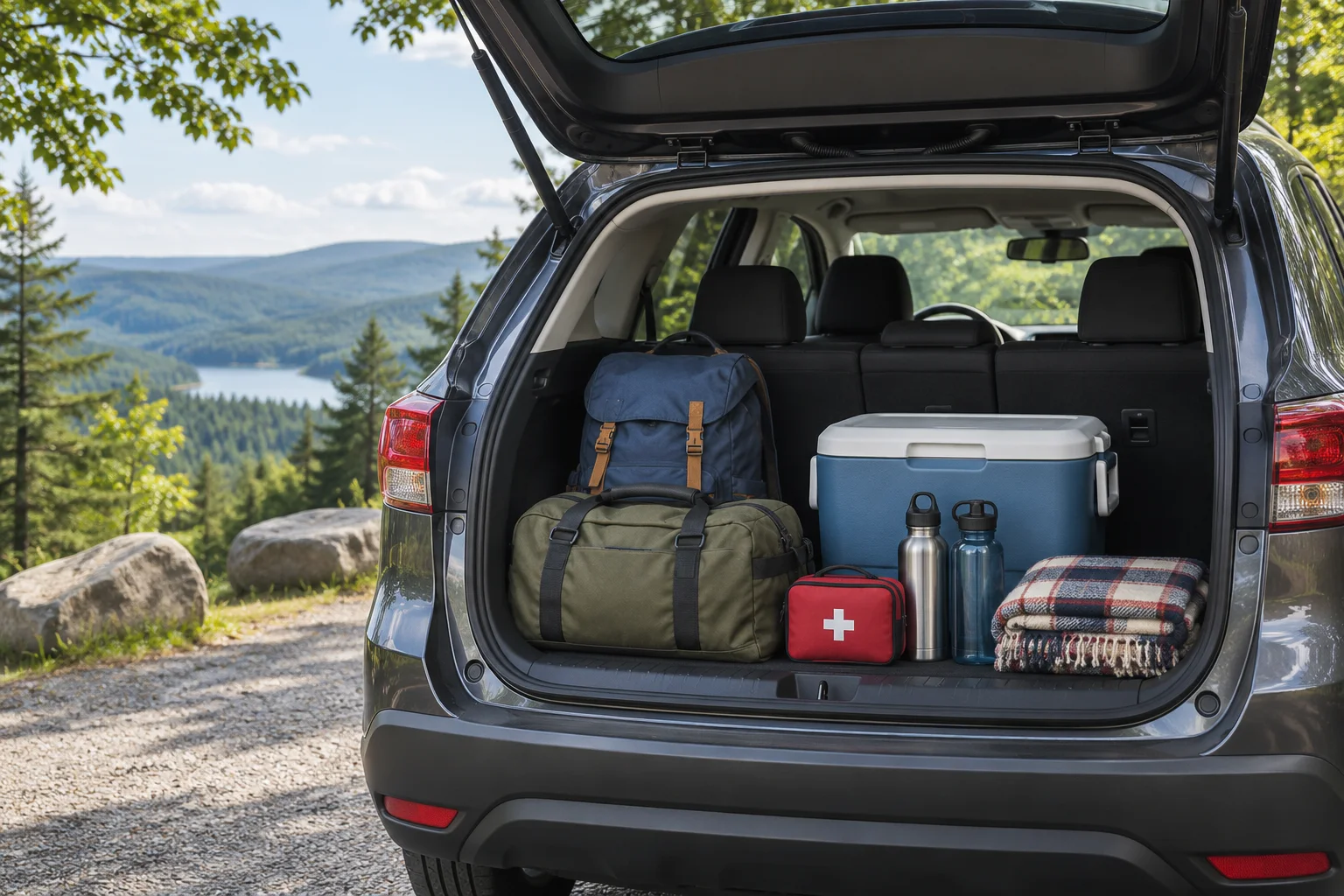
Put the things you may need during a planned stop in one small bag or compartment. Keep heavy and loose objects secured, and store the kit where it will not interfere with driving, airbags or passenger restraints.

- Driving documents and any vehicle or rental information required for the route
- Phone, charging cable and an appropriate mount if you use navigation
- Saved route, overnight addresses and an offline backup where useful
- Water and a manageable snack supply
- Regular medication and everyday personal-care items
- Glasses or sunglasses as needed
- Tissues, wipes, rubbish bags and a small cleanup pouch
- A layer suitable for planned stops
Set navigation and organize the next part of the drive while parked. A good packing arrangement reduces the temptation to search bags or change settings on the move.
Build the emergency kit for the route
NHTSA's road-trip preparation guidance gives a concrete starting list. Choose compatible equipment and add what the route and climate require:
- A first-aid kit and flashlight
- A tire-pressure gauge
- The tire-changing equipment appropriate to the vehicle, where applicable
- Compatible jumper cables or other starting equipment only when appropriate and understood
- A phone, charging equipment and saved assistance details
- A map or offline route, water and suitable nonperishable food
- Blankets or coats when conditions call for them
Know the kit you actually have. Buying jump-starting or tire equipment does not mean it is suitable for every vehicle or safe to use without reading the instructions. Resolve uncertainty before departure and use professional assistance when appropriate.
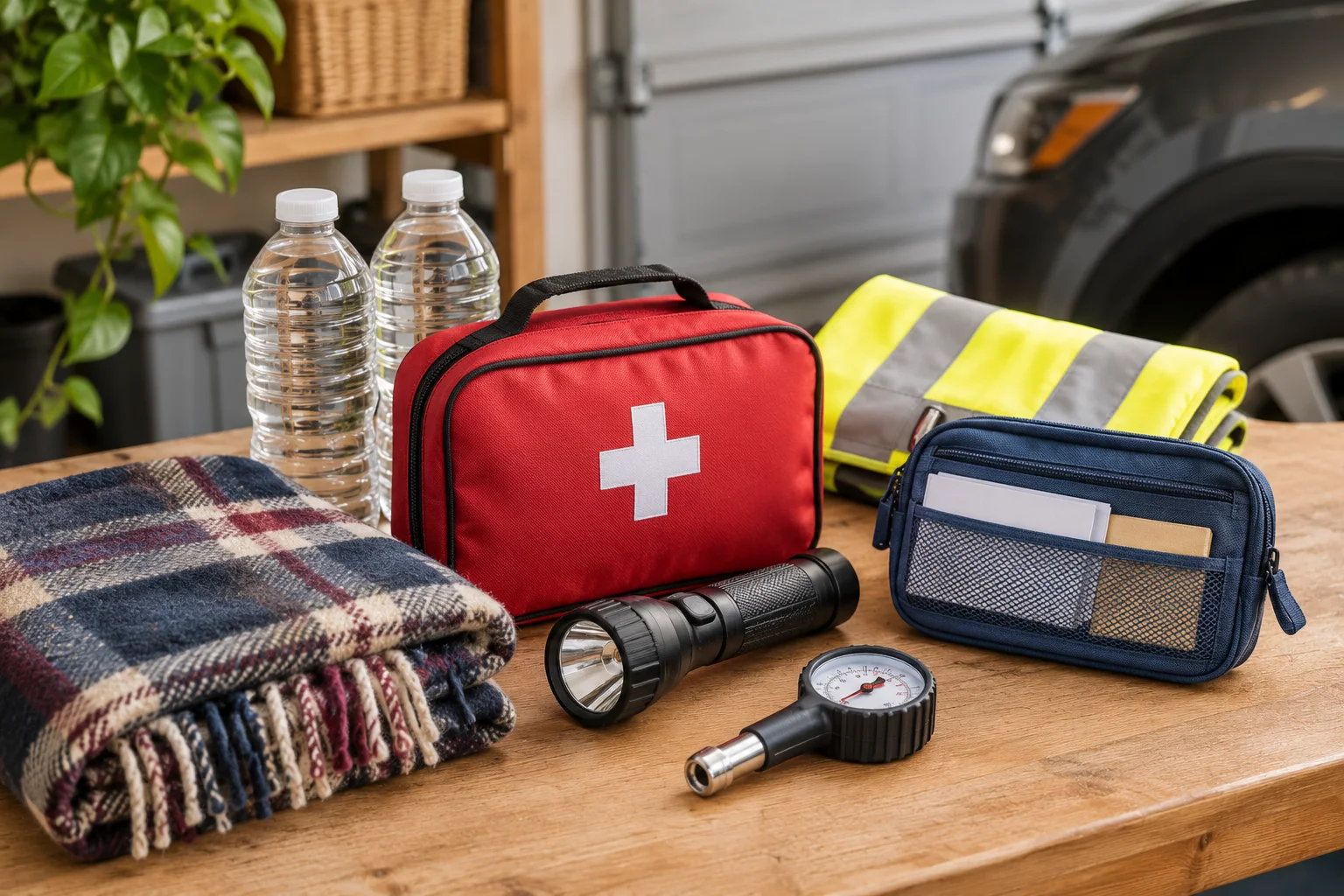
For a cold-weather journey, use the winter road-trip framework for daylight, road decisions and the car kit, and the winter packing list for personal clothing. Remote travel also needs a route-specific plan. Adding one blanket to this everyday kit does not settle those decisions.
Organize water, food and rest stops
Plan enough breaks to make the journey comfortable and realistic. Include refuelling or charging, meals, toilets and the needs of everyone travelling. A route that looks short on a map may still take a full day once those stops are included.
Use a cooler when the food you bring requires temperature control, and follow appropriate food-safety guidance. Choose containers that close securely and keep rubbish easy to collect. Avoid packing a week's worth of snacks into the cabin when a smaller refillable kit will do.
Rest is a driving decision, not just a packing decision. Do not rely on entertainment, snacks or a tight itinerary to make an overlong driving day work. Leave enough flexibility to stop and change the plan.
Keep overnight luggage simple
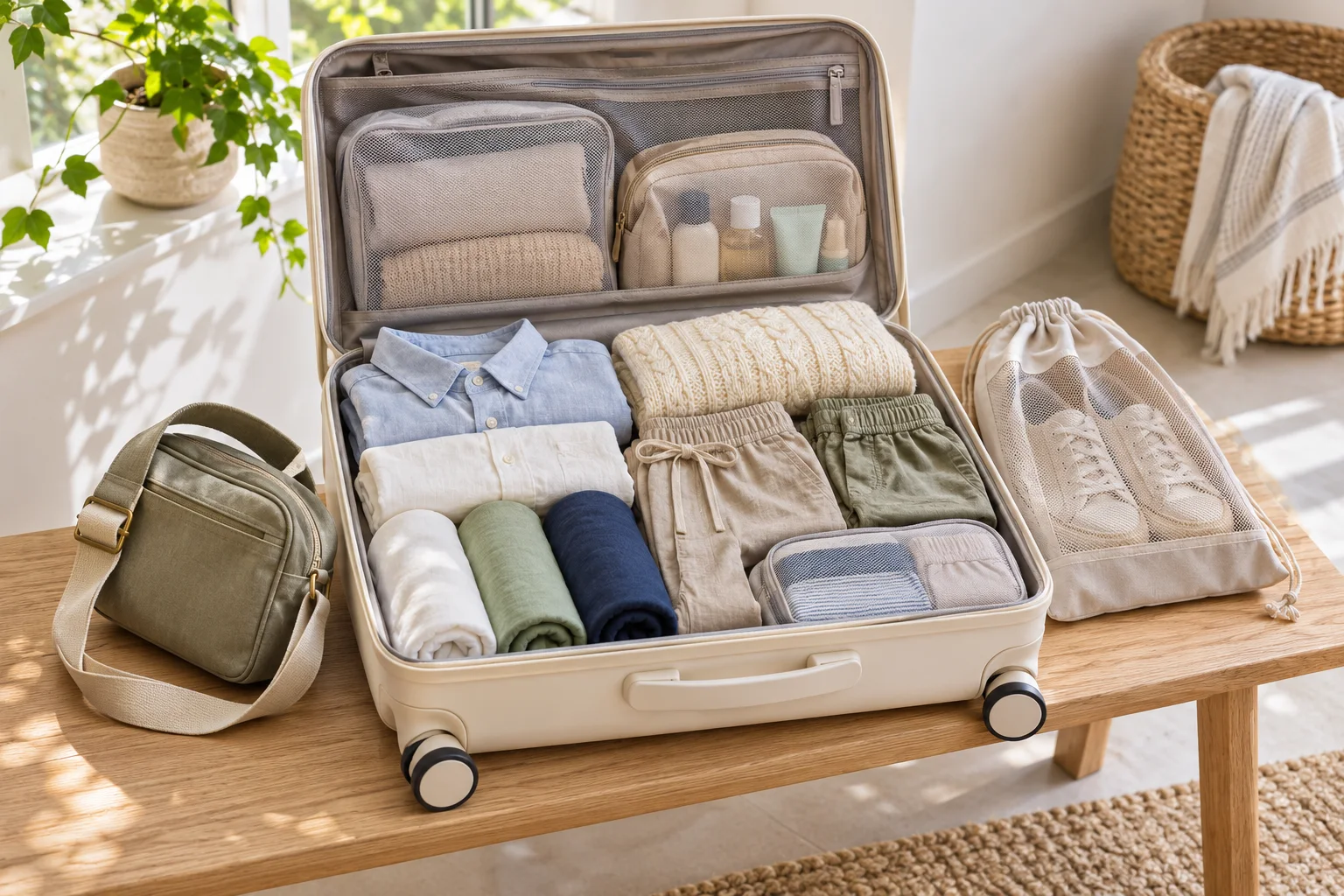
Make the overnight bag a complete small set: sleepwear, next-day clothes, toiletries and the charging pouch. It should be possible to lift that bag out at a one-night stop and leave the rest of the packed luggage organized. Refill it before the next transfer so the simple system survives the whole route.
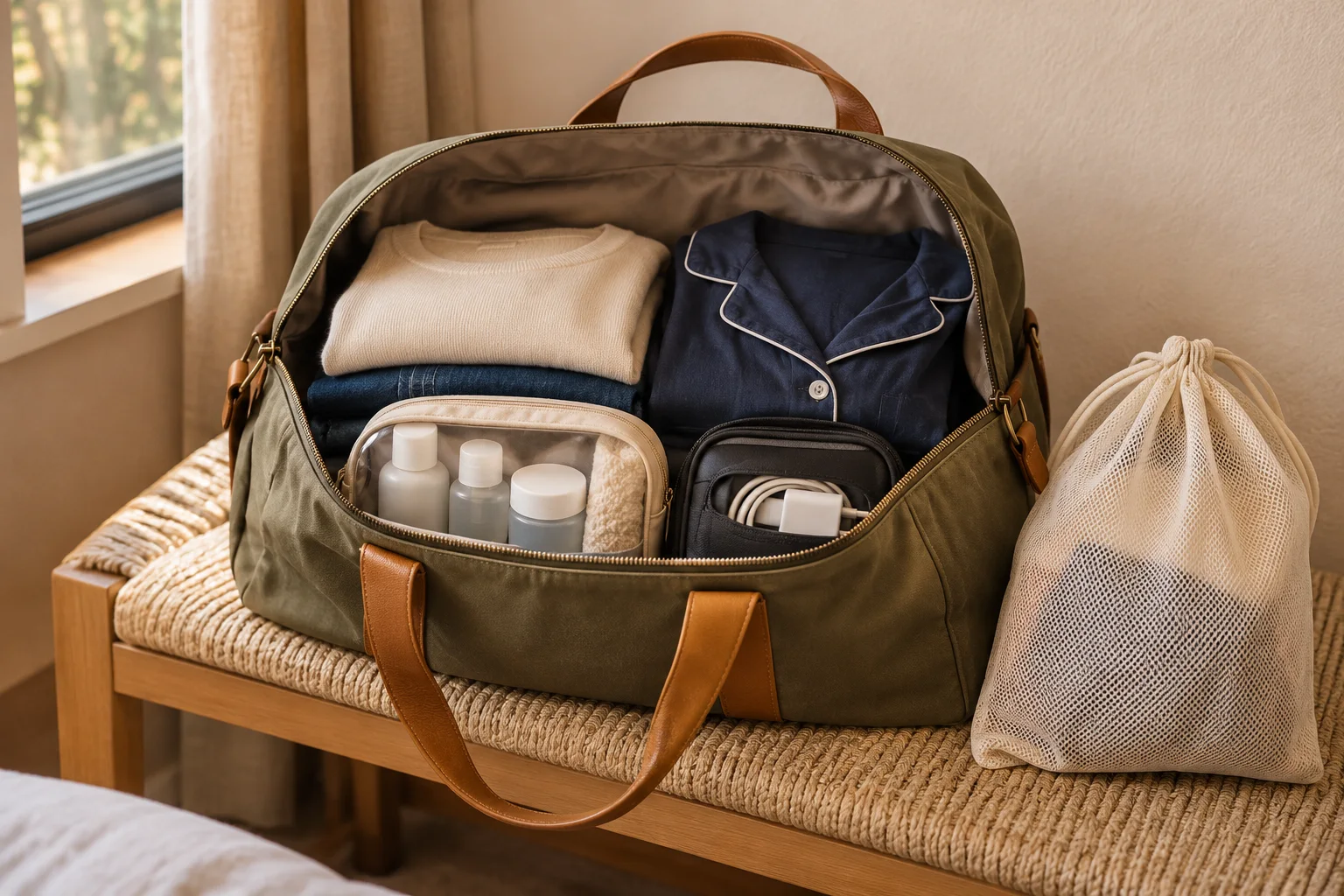
Return used clothing to a separate laundry pouch and keep wet items away from the next dry outfit. Remove valuables when leaving the vehicle as appropriate. On our New England loop, the same overnight setup works across the coast, mountain and village bases.
Reset the bag between two one-night stops
At the parked arrival, take in the overnight bag and valuables, with next-day clothes already bundled beside sleepwear and toiletries. Move the charging pouch to the room only after the car is parked for the night. In the morning, put used clothing in the laundry pouch, separate anything damp, and return the phone cable to the travel kit before loading.
At the next parked stop, refill the overnight bag from the main luggage with tomorrow’s outfit. On the New England route, do that reset before leaving the one-night Portsmouth stay for Portland. You reach the next room with a complete kit rather than yesterday’s laundry and a missing charger.
What to add when travelling with children
Plan the seating and restraints correctly before planning the entertainment. Follow the applicable requirements and the restraint and vehicle instructions. Bring the everyday care items, changes of clothing and comfort items your family uses, and allow more time for stops.
Choose a few activities that suit the ages and do not create a cabin full of loose pieces. Keep supplies accessible during stops, and use a separate cleanup kit for spills or damp clothing. The driver should not be responsible for distributing activities while moving.
Give the route an offline backup
Save the overnight addresses, important contacts and the parts of the route you may need without a signal. Look at the road before departure rather than blindly accepting the shortest line offered by an app. Check current closures, weather and access restrictions through the appropriate official service.
For an electric vehicle, plan charging around the car, compatible stations and a reasonable backup, not just the distance between attractions. For any vehicle, keep the daily plan flexible enough to deal with a missed stop or a slower section.
The final check before leaving
- Check the route, weather and current road information.
- Confirm the car, documents and assistance arrangements are ready.
- Secure luggage and make sure passengers have the space they need.
- Set the first destination while parked.
- Put the accessible kit where it can be used safely during stops.
- Leave time in the plan for rest and changes.
Road trip packing questions
What belongs in the car rather than the suitcase?
Keep documents, necessary personal items, navigation information, water and the small travel kit accessible. Secure them so accessibility does not create a driving hazard.
Do I need specialist equipment for every road trip?
No single equipment list fits every route. Start with the vehicle and official local guidance, then add what the conditions and assistance options justify.
How can I avoid overpacking?
Separate car readiness, the travel-day kit and overnight luggage. Remove duplicate items and supplies for activities you have not actually planned, while preserving what the route genuinely requires.
Useful official planning links
Check the arrangements for your travel dates before booking or departure.