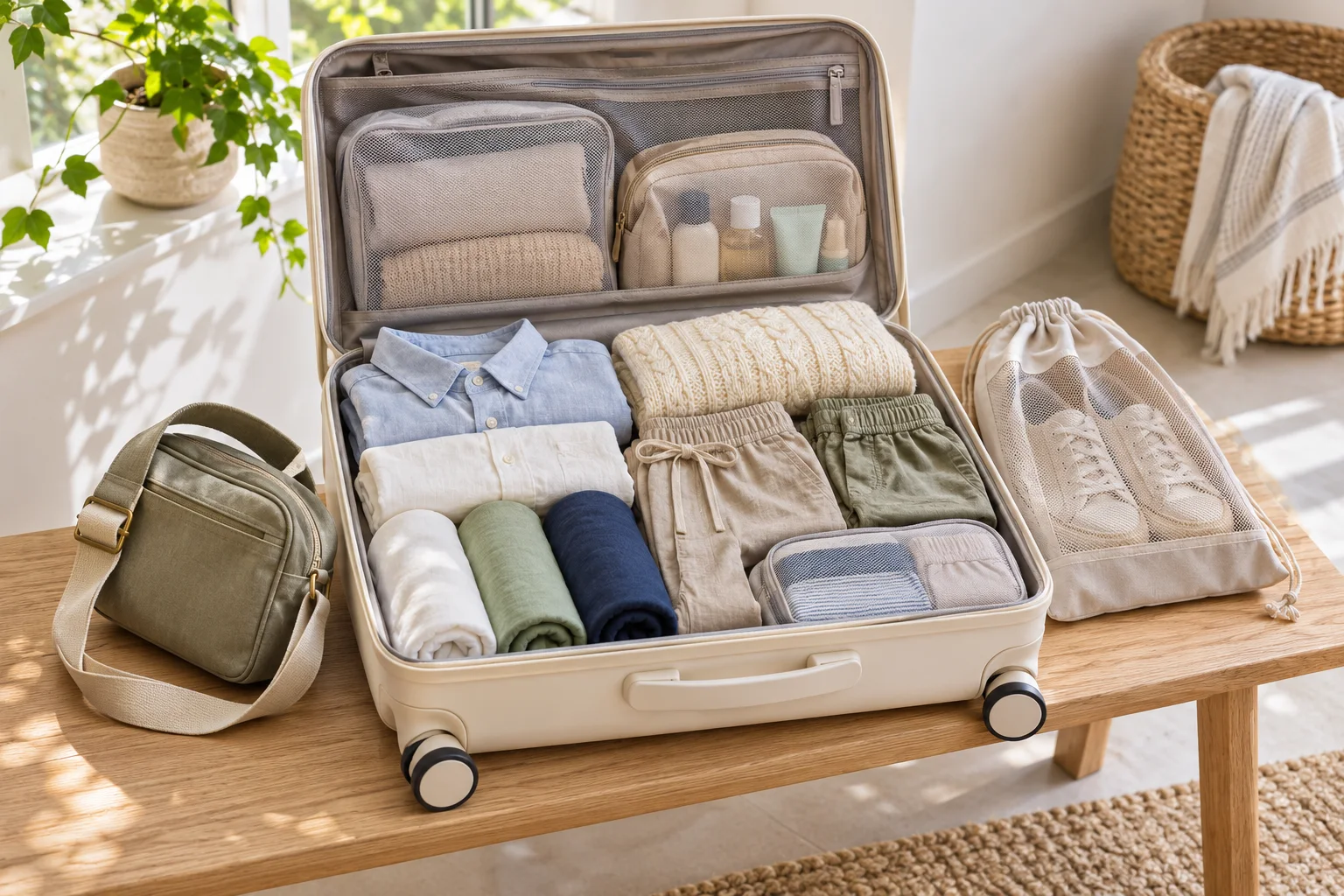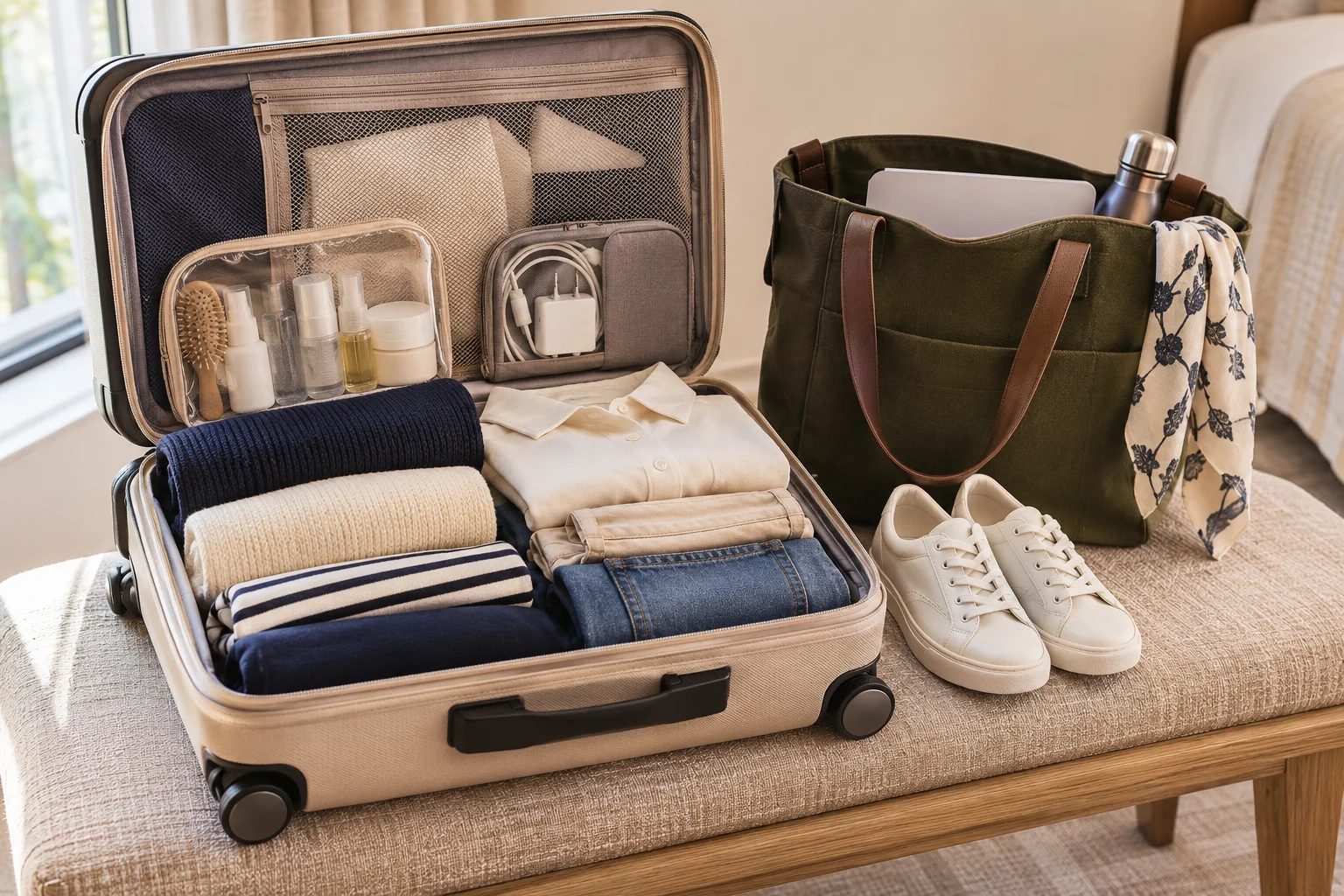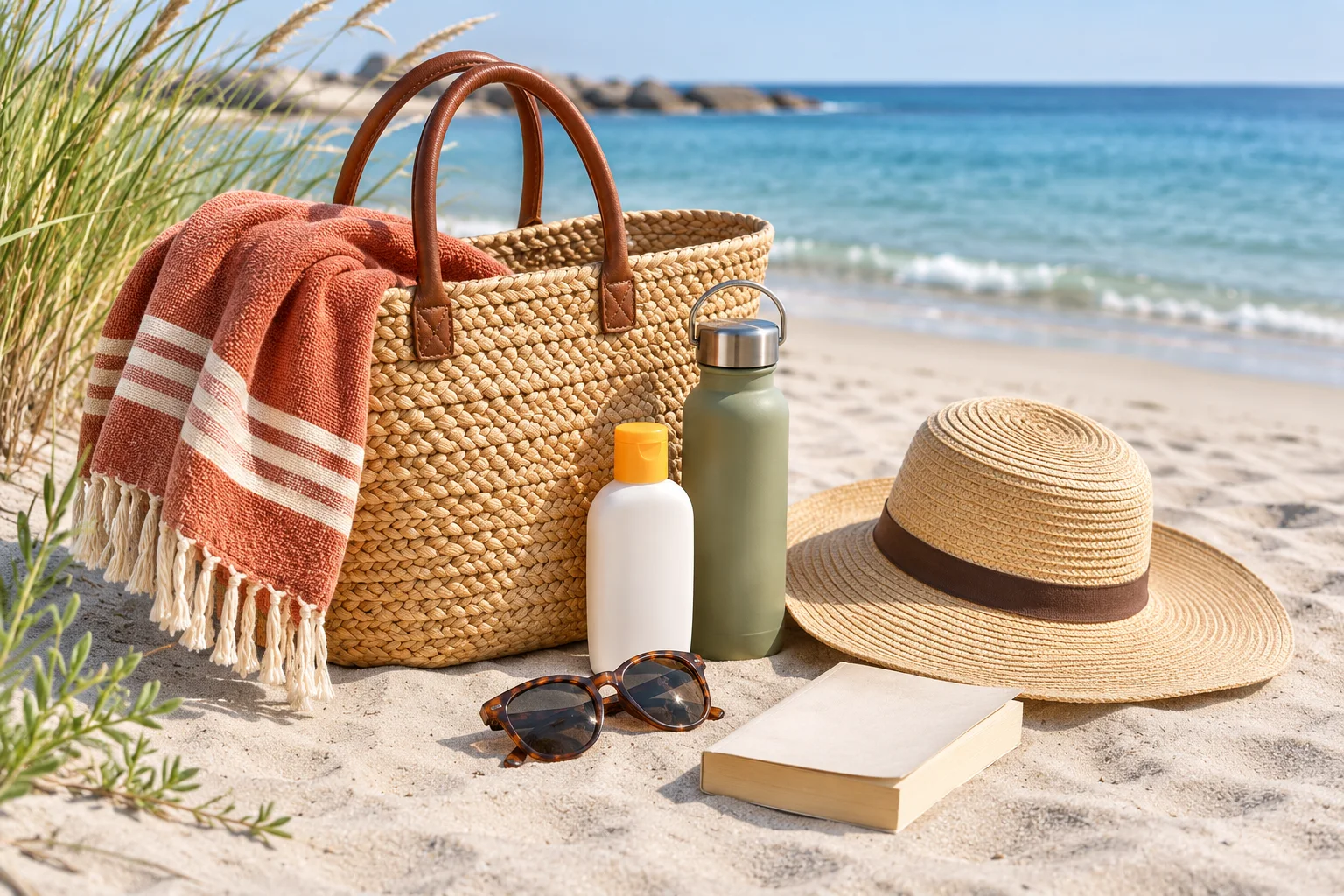
A well-packed beach bag has three jobs: make the day comfortable, keep small essentials easy to find and get the wet, sandy things home separately from clean clothing. Start with the core kit, then add the extras that suit the walk, facilities and people coming with you.
This beach packing list is for a day by the water. It includes a dry return outfit, a simple food-and-water plan and useful family additions. For a longer holiday, keep this as the daily beach kit inside your wider vacation packing plan.
Packing checklist
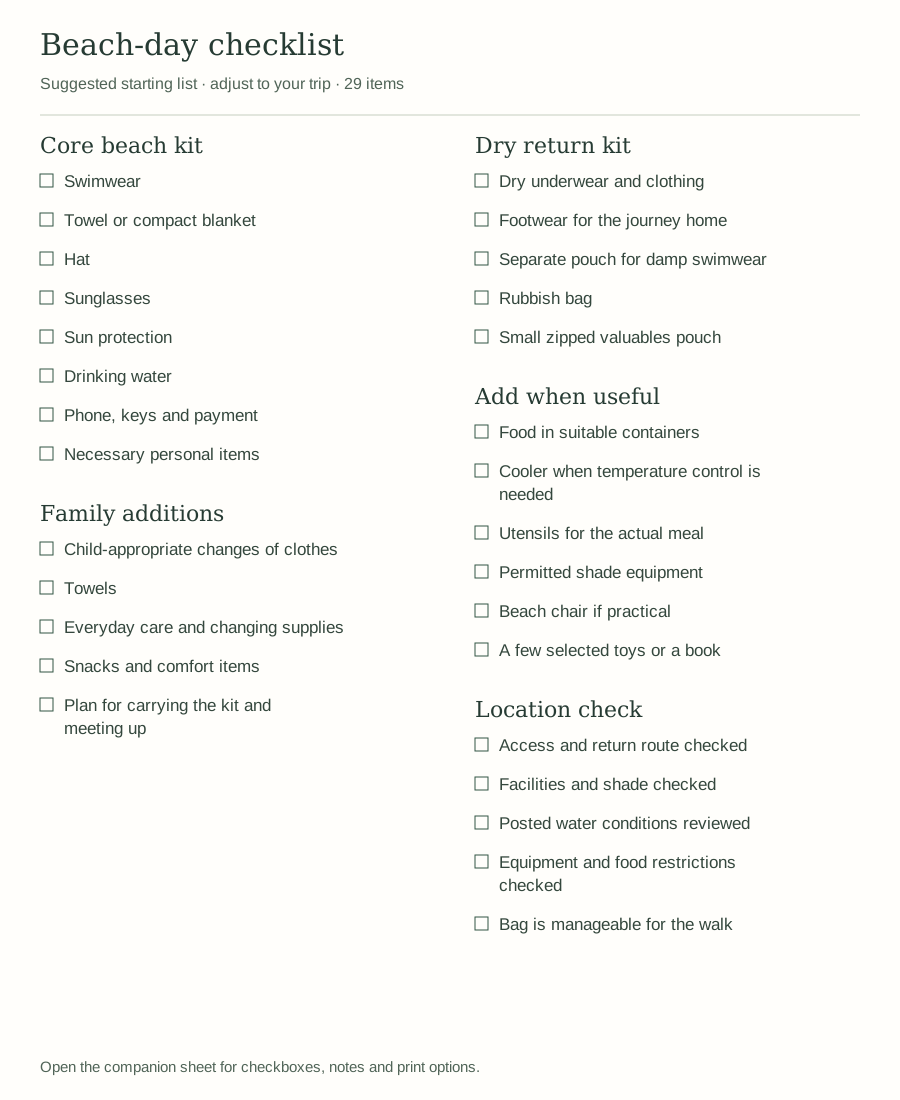
Open the companion sheet, mark your choices and print a copy for the trip. Your entries stay in this open page and are not saved after you leave it.
The essential beach-day checklist
- Swimwear and clothing for the trip there and back
- Towel or a compact beach blanket
- Sun protection and a comfortable hat
- Sunglasses and any everyday glasses you need
- Drinking water and food appropriate to your plans
- Phone, keys, payment and necessary identification
- Regular medication and personal-care items
- A pouch for damp clothing and a bag for your rubbish
Pack the items you use first near the top. Your hat, towel and sun protection should not sit beneath the food and spare clothes. Put the small things you cannot afford to lose in a zipped compartment rather than leaving them loose at the bottom of a woven bag.
Choose a bag you can actually carry
A tote works well when the walk is short and the load is simple. A backpack leaves your hands free when the route is longer or you are carrying other equipment. Choose a size that fits the full load without turning every item into a tightly fitted puzzle.
Keep dry clothing in one pouch, small valuables in a zipped compartment and damp items in a separate return bag. Lay those groups out before filling the tote; it is easier to see whether the bag works than to search for a small item through loose towels and food containers. Use a phone pouch only within its stated protection limits.
Two beach bags built from the same core
| Situation | Keep | Change the load |
|---|---|---|
| Short walk to a serviced beach | Swimwear, towel, sun kit, water, personal essentials and the dry return bundle | Use a tote. If food, shade or chairs are reliably available, choose what you will buy or rent and omit those bulky duplicates |
| Longer walk with limited facilities | The same core kit, with dry and damp groups separated | Use a backpack; carry the water and food needed for the full outing, a rubbish bag and any permitted shade solution you can manage. Leave the chair and extra toys behind if they make the walk impractical |
Share items deliberately: one group picnic setup or rubbish bag can serve several people, while each person still needs their own suitable sun protection, drinking water and dry clothing. Water quantities depend on the heat, walk, duration and people; a single bottle count would give false precision.
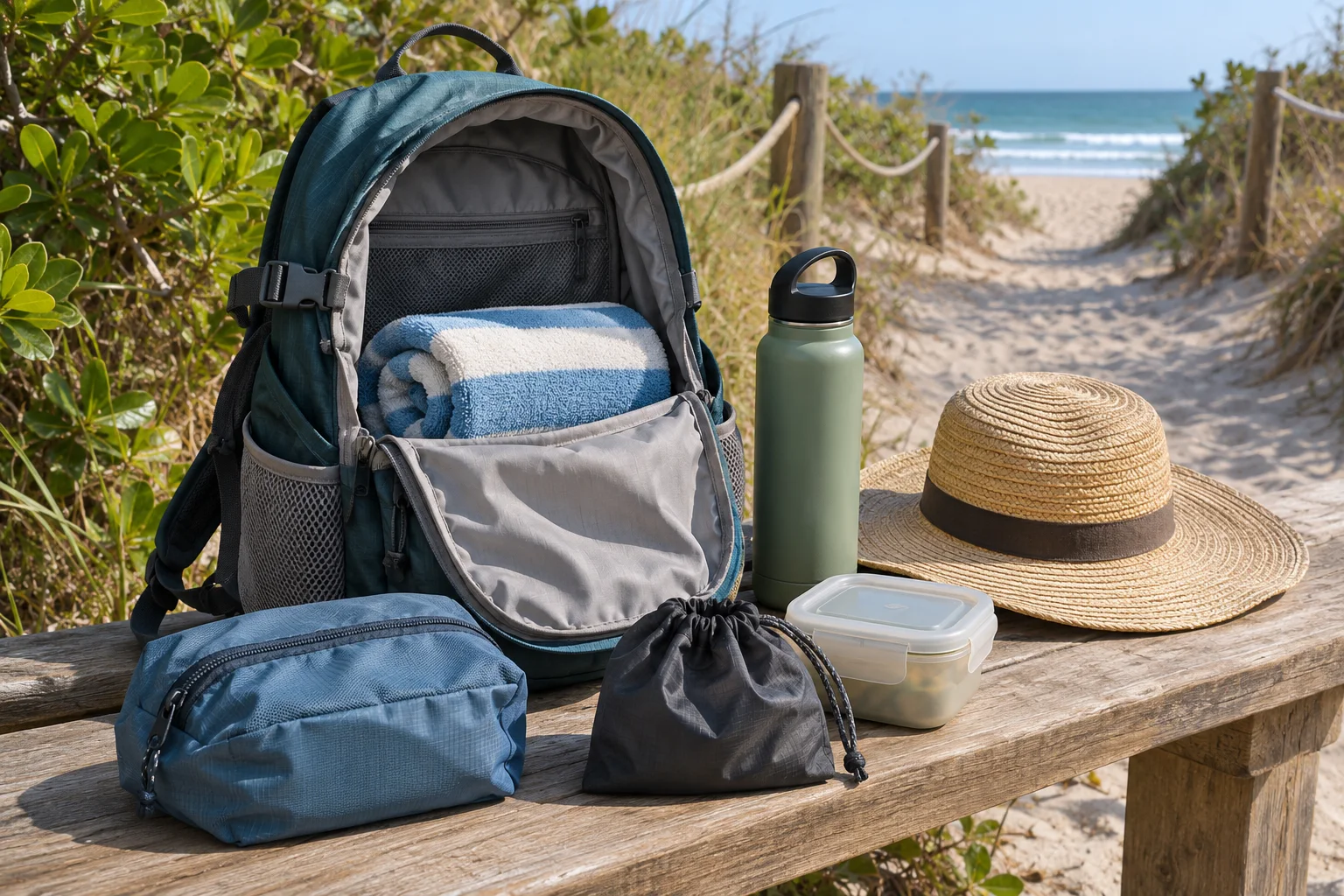
Plan shade and sun protection around the location
Check whether the beach has shade, rentals, facilities or restrictions before bringing bulky equipment. If you plan to use an umbrella or shade shelter, confirm it is allowed and use it according to its instructions and the local conditions. Strong wind can turn a useful item into something you cannot safely leave standing.
Bring the sun protection you normally use and follow its directions. Covering clothing and a hat can be practical additions to the bag. Avoid building the whole day around an assumption that a beach kiosk will sell the exact products you need.
Bring clothing for the journey home
Pack the return outfit as a complete small bundle: underwear, a light change of clothing and the footwear you will want afterwards. Keep it dry until the end of the day. That one bundle can take you from the beach to the journey home or a relaxed meal without opening the whole bag.
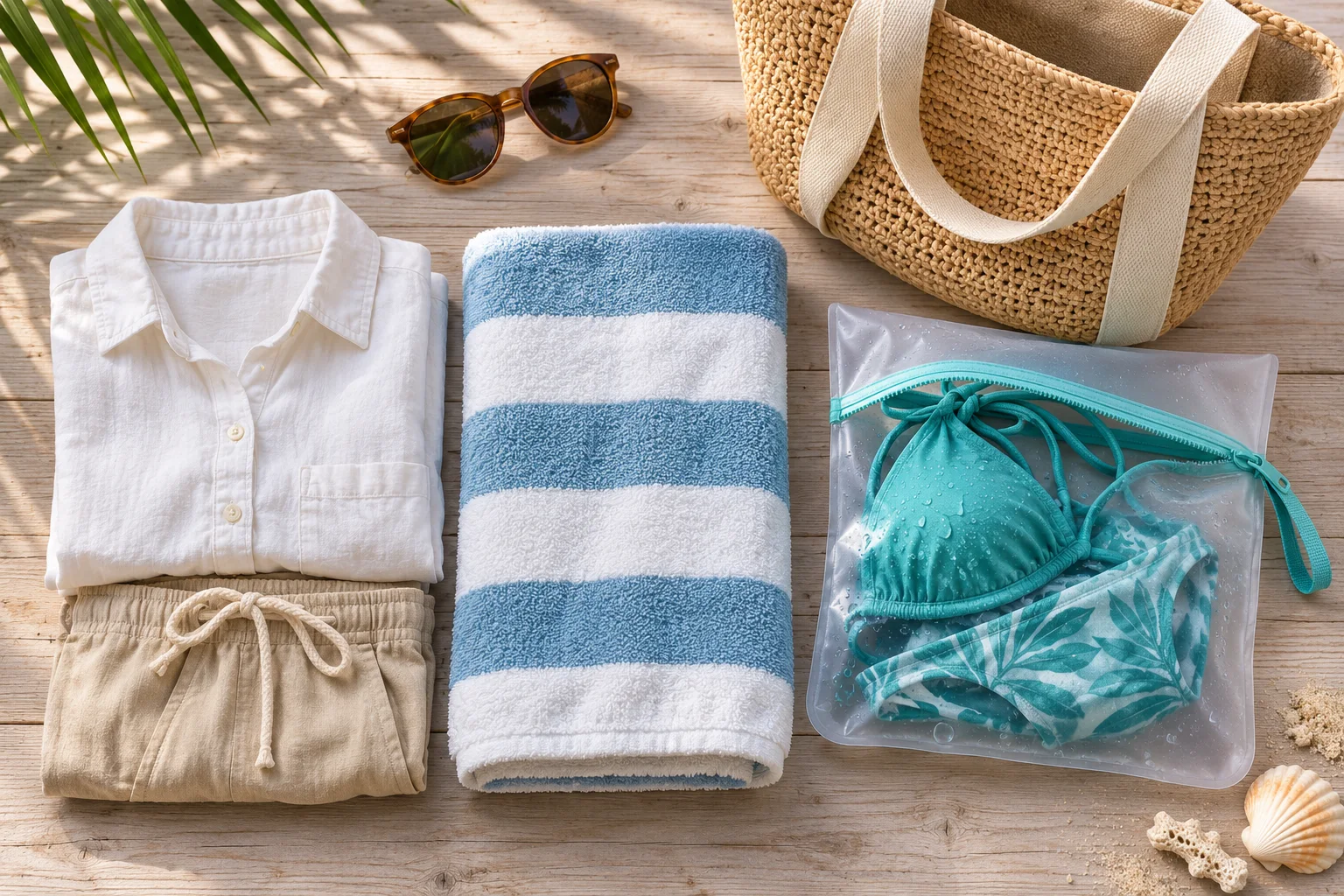
Place damp swimwear in its own pouch rather than rolling it inside the clean clothing. Shake out loose sand where appropriate before packing, and keep the bag ready to be emptied when you return. Wet items are easier to deal with promptly than after they have spent another day forgotten in a closed tote.
Food and water without an oversized picnic
Decide how long you will be away and whether there is a realistic place to buy food. Pack enough drinking water for your circumstances and a food plan that suits the conditions. If the menu requires temperature control, bring suitable equipment and follow food-safety guidance rather than leaving perishable food warm all afternoon.
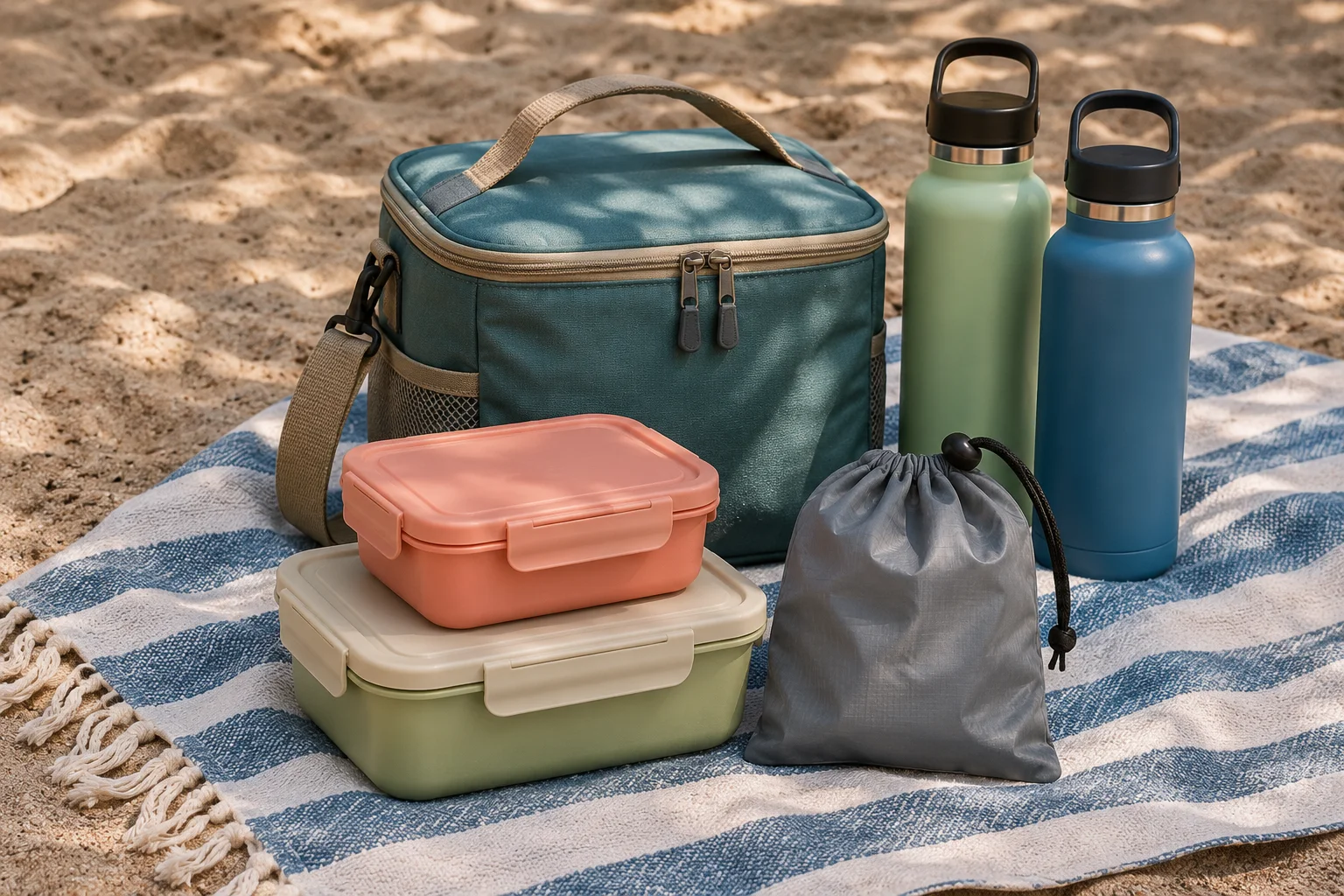
Simple containers with secure lids keep sand out and make the return trip easier. Include the utensils you actually need and a bag for rubbish. Check local rules before bringing glass, alcohol, grills or food into protected areas.
What to add for a family beach day
Give each child an appropriate change of clothing, a towel and the things they routinely need. A few selected toys are easier to manage than a whole crate. Pack snacks, comfort items and nappy-changing supplies if relevant, and keep those items reachable.
Agree who carries what and where the group will meet. Choose a location and water activity appropriate to everyone's ability and the posted conditions. Beach toys and recreational floats do not replace attentive supervision or suitable safety equipment.
For the trip back, keep a separate space for wet clothing and a dry layer handy. A tidy return system makes the next beach day easier too: replenish the reusable supplies once everything is clean and dry.
What to leave at home
- Valuables you will spend the whole visit worrying about
- Multiple spare outfits for a short visit with no other plans
- Bulky equipment that is not allowed or useful at the location
- Fragile containers that add weight without improving the day
- Large speakers or accessories that disturb other visitors
Before departure, settle the location details together: how you will arrive and return, which facilities and shade are available, posted water conditions and local equipment rules. Save the correct entrance or parking location, then leave the day itself simple.
Beach-day packing versus beach-vacation packing
This is a day-bag list. For a week away, use the vacation packing list for clothing and documents, then keep this smaller kit packed for each outing. For an island trip with walks and changing weather, the Hawaii guide adds the layers a beach-only list can miss.
Beach packing questions
Do I need water shoes?
That depends on the location and activity. Check the terrain and local advice. Footwear is not a reason to walk on coral or enter an area that should be avoided.
Should I take a beach chair?
Bring one when it is permitted, useful and manageable on the walk. Check rental options and access first; a long sandy approach changes what is comfortable to carry.
How do I keep the bag light?
Choose one item for each real job, share suitable bulky equipment, and separate the essentials from optional entertainment before you pack. Keep water and other genuine needs ahead of decorative extras.
Useful official planning links
Check the arrangements for your travel dates before booking or departure.