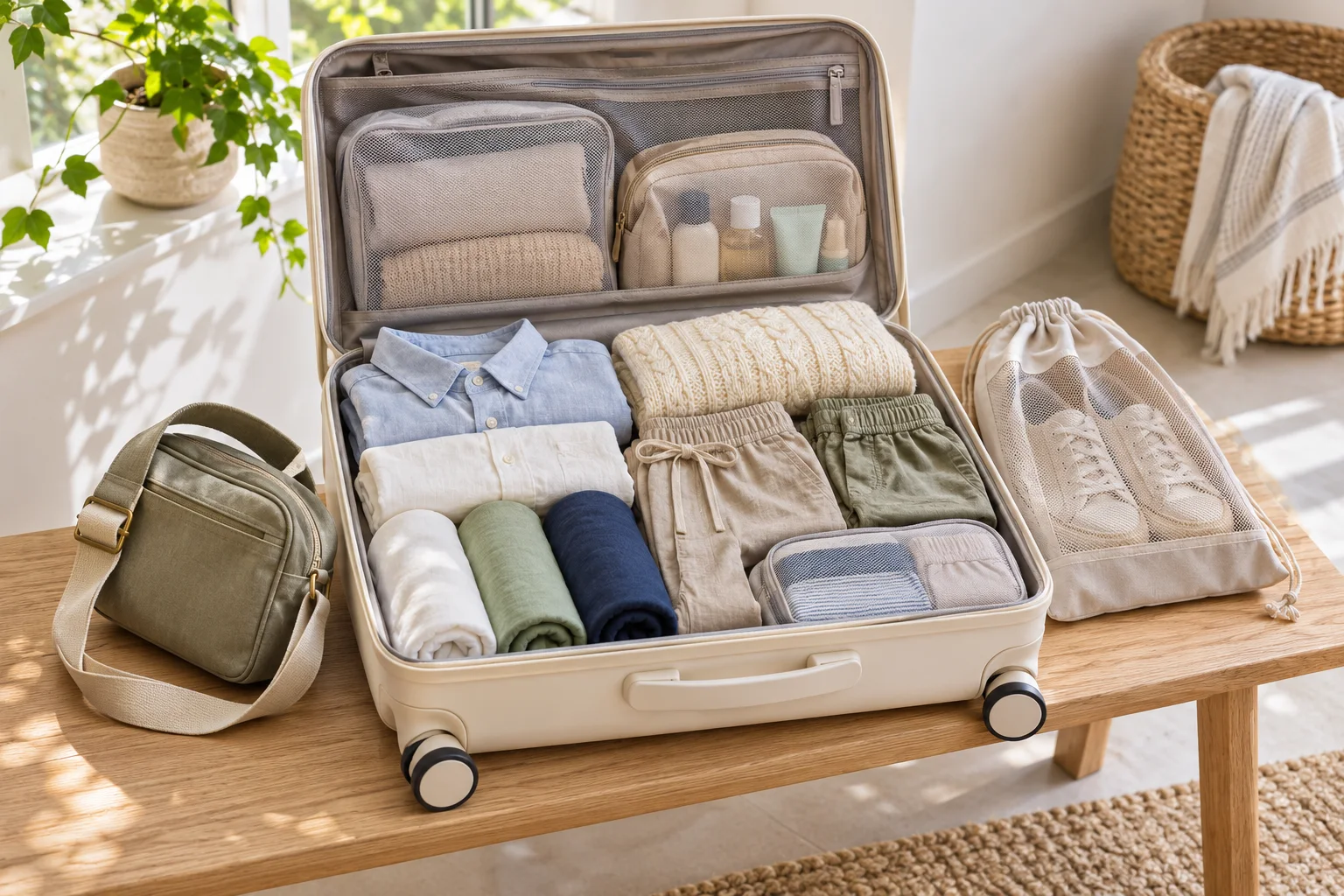
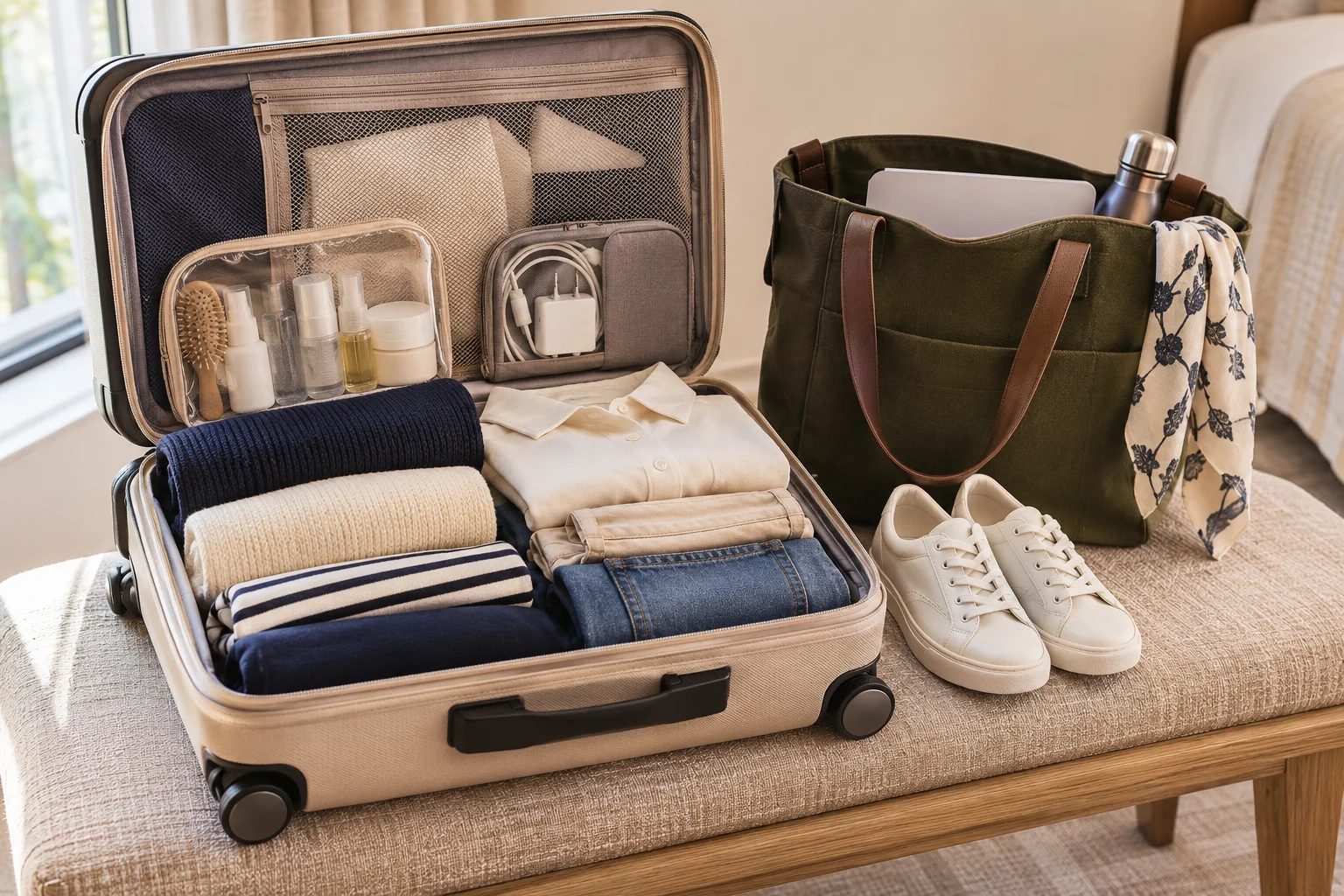
The most useful cruise packing decision happens before the clothes go in: separate the bag you carry aboard from the suitcase, then make a smaller kit for shore days. That way, documents, medication and a change of clothes are available while you settle into the sailing.
This list is built around a warm-weather seven-night cruise. It covers boarding day, a repeatable week of clothing, the cabin kit and the final night before disembarkation. Add the layers and activity gear your route requires; your operator’s packing and prohibited-item guidance decides what can come aboard.
Packing checklist
Open the companion sheet, mark your choices and print a copy for the trip. Your entries stay in this open page and are not saved after you leave it.

Pack the embarkation-day bag first
Keep everything required to check in, board and settle into the first part of the day with you. If you want to use a pool or change after travelling, pack that clothing in this bag rather than hoping to find it immediately in your main luggage.
- Required travel identification and cruise documents
- Boarding information and any operator-required check-in details
- Payment method and essential contact information
- Regular medication and important personal-care items
- Phone, charging cable and permitted portable battery
- Valuables and glasses
- A light layer and, if useful, swimwear and a change of clothes
Read the document requirements for every person and itinerary. Passport, visa and other entry arrangements depend on nationality, route and circumstances; do not assume that a closed-loop sailing or a previous cruise settles the question.
A sensible clothing list for a week
| What to bring | Suggested starting quantity | How to choose |
|---|---|---|
| Daytime tops | Five to seven | Choose breathable pieces that mix with several bottoms |
| Shorts, trousers or skirts | Three or four | Balance poolside time, sightseeing and indoor comfort |
| Evening outfits | Two or three repeatable combinations | Match the venues and dress guidance for your sailing |
| Swimwear | One or two if you will use it | A second option is useful while the first dries |
| Light layer | One | Choose something comfortable indoors and on deck |
| Shoes | Walking pair, sandals, optional evening pair | Activity requirements matter more than collecting alternatives |
Add underwear, socks and sleepwear for your preferred laundry plan. Check whether your ship offers the laundry option you expect before reducing quantities around it. For a cooler route, replace warm-weather assumptions with layers suitable for time outdoors and the excursions you have actually booked.
Check evening plans before adding formalwear
Choose repeatable evening outfits around the venues and dress guidance for your sailing. Two combinations with interchangeable pieces are often more practical than several outfits that each need different shoes. Make any special event or excursion requirement a deliberate addition to that small wardrobe.
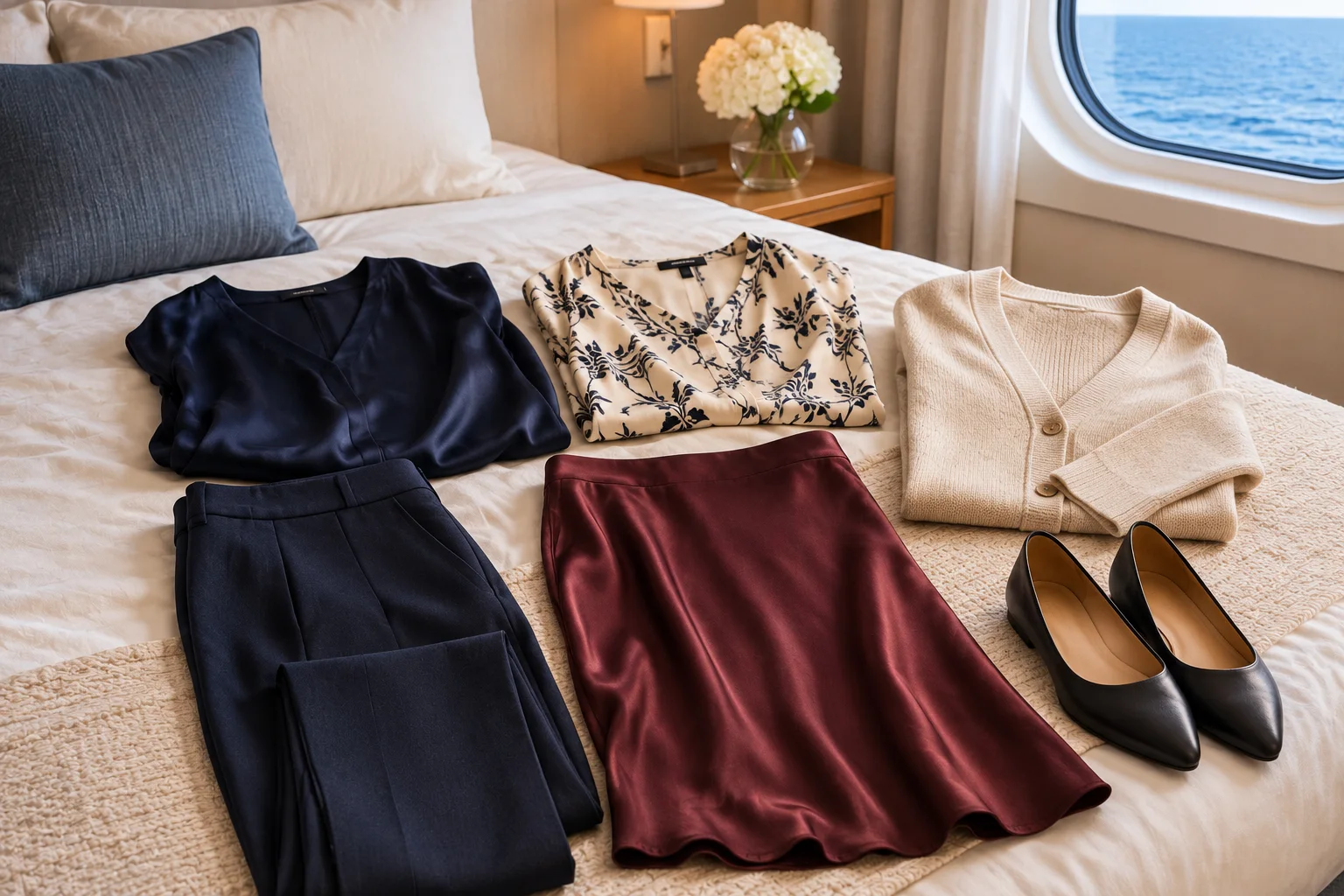
Check excursion clothing too. A sightseeing walk, a religious site, a boat outing and a more active excursion can have different requirements. Pack the minimum clothing that meets those plans, then leave spare space for returning items to the bag.
Use a small, useful cabin kit
A zipped laundry bag, a small toiletries organizer and a pouch for charging equipment can keep a shared room easier to use. Start with those basics before adding a long list of cabin accessories. If an item depends on a particular wall surface, outlet type or storage arrangement, make sure it suits the ship.
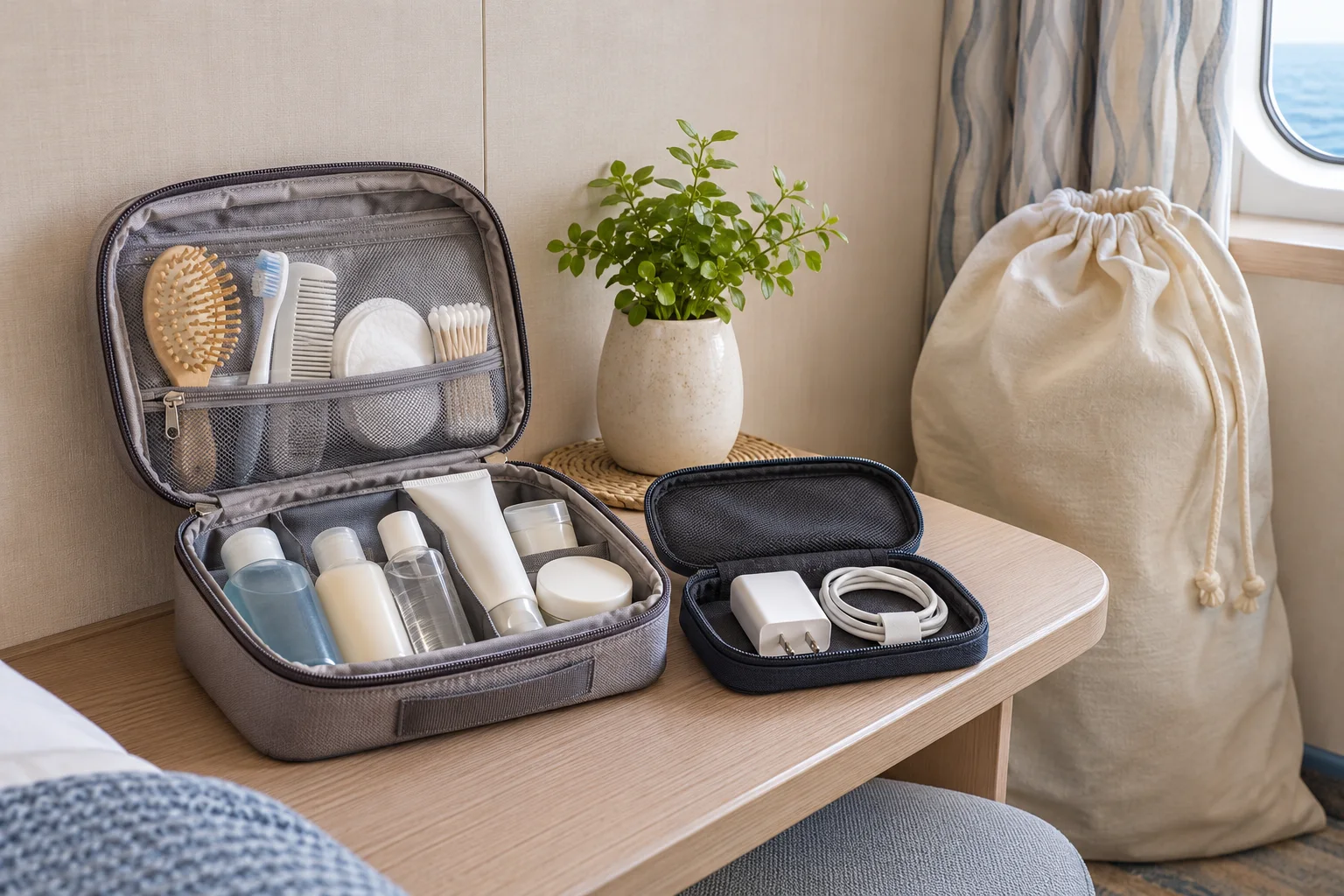
- Everyday toiletries and sun protection
- Personal-care and regular medication supplies
- Charging equipment permitted by the operator
- A laundry bag and a pouch for small loose items
- A refillable bottle if permitted and useful for your plans
- A compact bag for the pool or shore days
Read the operator’s electrical-item policy before packing cabin accessories. Royal Caribbean’s current list, for example, prohibits irons, garment steamers, extension cords and power strips, with its own stated exceptions for certain device chargers. A retailer’s “cruise-approved” label does not establish permission on your sailing.
Build the shore-day bag around the excursion
Keep it light enough to carry comfortably for the full outing. Take the documents and identification the operator tells you to bring, a payment option, your phone, necessary personal items, and clothing suited to the weather. Keep anything you need for reboarding secure and accessible.

For a beach stop, add a towel if needed, swimwear, sun protection and a separate pouch for damp clothing. The beach-day list helps you scale that kit to the walk and facilities ashore. For a walking tour, prioritize comfortable footwear, water where appropriate and a light weather layer. Read the excursion details before adding snorkeling gear, specialist shoes or a bulky camera setup.
Save the return arrangements and the required boarding time before leaving the ship. A packing checklist cannot replace the instructions for the particular port call.
Leave prohibited and unnecessary items at home
Check your operator’s rules for electrical items, alcohol, food and other restricted objects together before final packing. Keep the cabin kit simple enough that you can identify what each accessory is and why you need it. If the trip includes flights, the same luggage also has to satisfy the air journey. Use the carry-on packing guide for the airport bag, screening items and batteries, then apply your cruise operator’s separate boarding rules.
Also remove the things that are permitted but unlikely to earn their space: multiple evening shoes, large bottles, duplicate bags and accessories for hypothetical activities.
Prepare for the last night before it arrives
Keep your travel clothes, toiletries, documents and necessary medication out of any luggage you hand over before disembarkation. Put the homeward journey on the same short checklist as embarkation day. This is especially helpful when you need a change of clothes or a charging cable after the main bag has been collected.
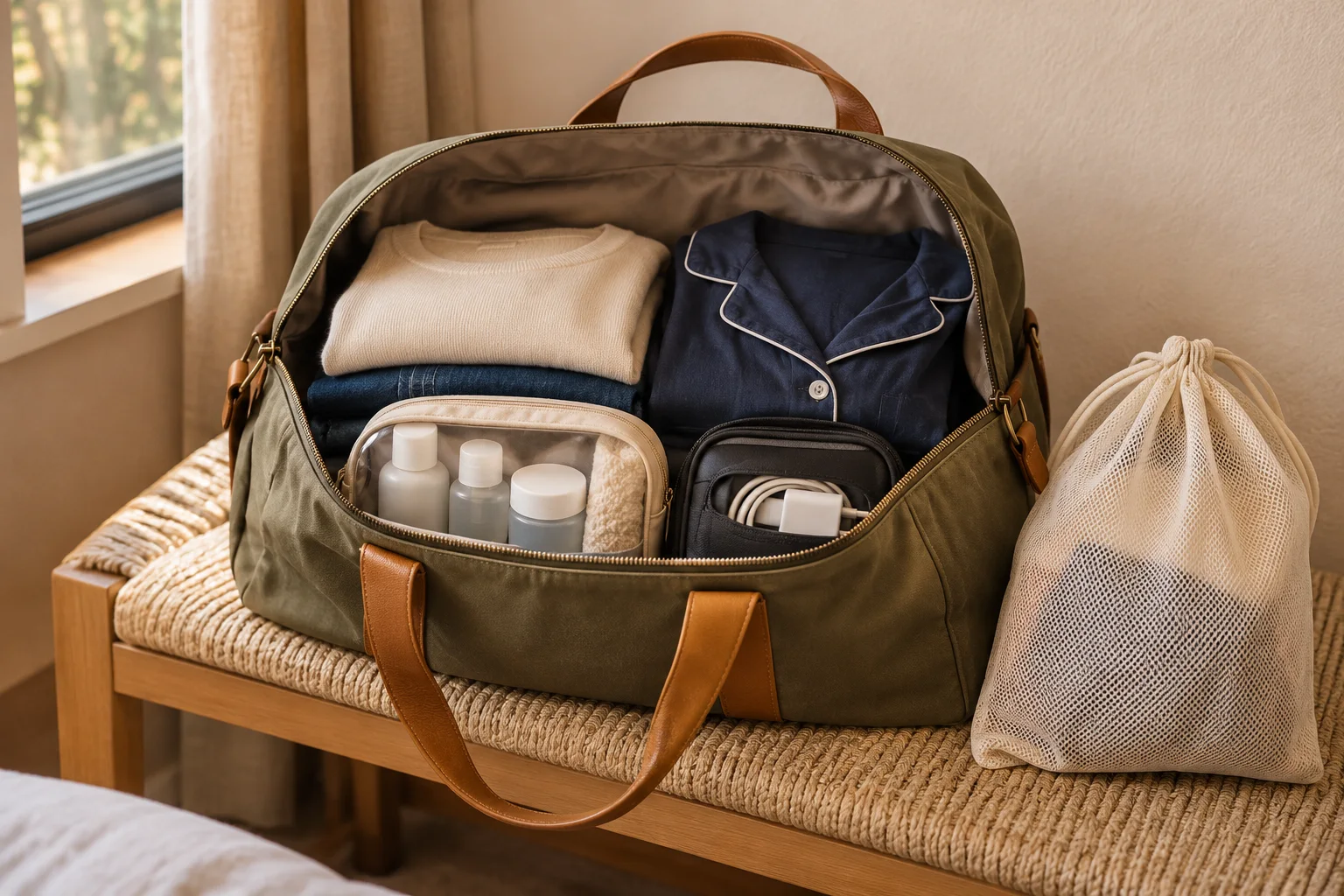
The three-bag handoff
| Moment | Keep with you | What moves later |
|---|---|---|
| Boarding | Carry-aboard bag with documents, medication, valuables, charging kit and the first change | Main clothing goes in the suitcase; keep the carry-aboard bag manageable while waiting for room access |
| Shore outing | Compact shore bag with the required identification, reboarding items and excursion kit | Refill it from the cabin; return damp clothing to the separate pouch afterwards |
| Final night | Overnight bag with sleepwear, morning clothes, toiletries, documents and necessary medication | Only hand over the suitcase under your sailing’s collection arrangements once these items are out |
The companion checklist uses these same carry-aboard, shore-day and final-night groups. Mark the final-night line before closing the suitcase so the outfit for leaving the ship stays available.
Cruise packing questions
Do I need a different outfit every evening?
No general packing rule requires that. Choose repeatable combinations that suit the venues and published guidance for your sailing.
Should I bring my own towel?
Check what your ship and excursion provide and how any loan or return system works. Pack your own only when it serves a real need.
Can I use the same list for Alaska?
Use the documents, boarding bag and organization sections, then replace the warm-weather clothing plan with one built around the route, forecast and excursions.
Useful official planning links
- Liquids, Aerosols, and Gels Rule | Transportation Security Administration
- PackSafe - Lithium Batteries | Federal Aviation Administration
- What Items Are Prohibited Onboard A Cruise Ship? | Royal Caribbean Cruises
- What should I pack for my cruise vacation? | Royal Caribbean Cruises
- How much luggage can I bring onboard? | Royal Caribbean Cruises
Check the arrangements for your travel dates before booking or departure.