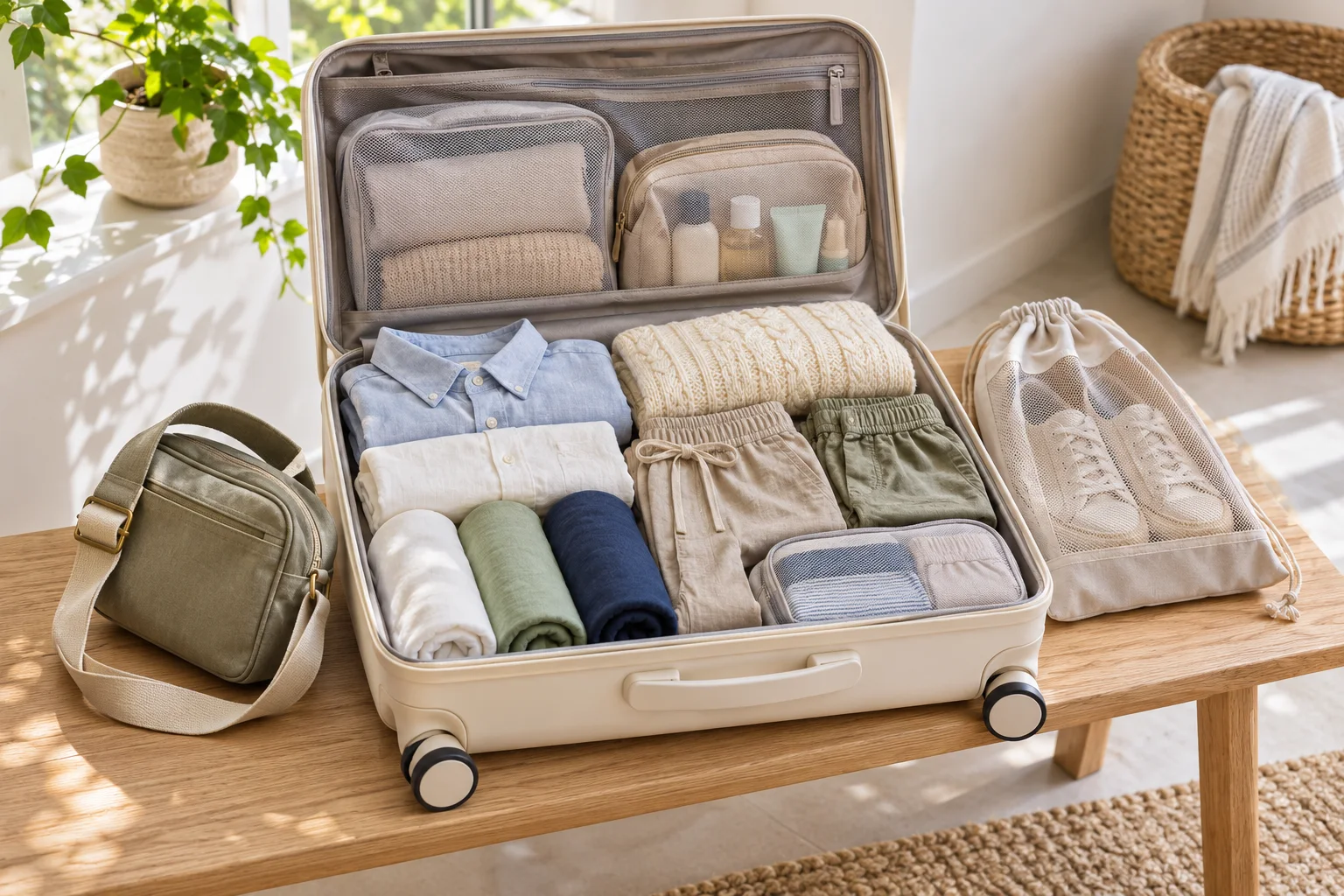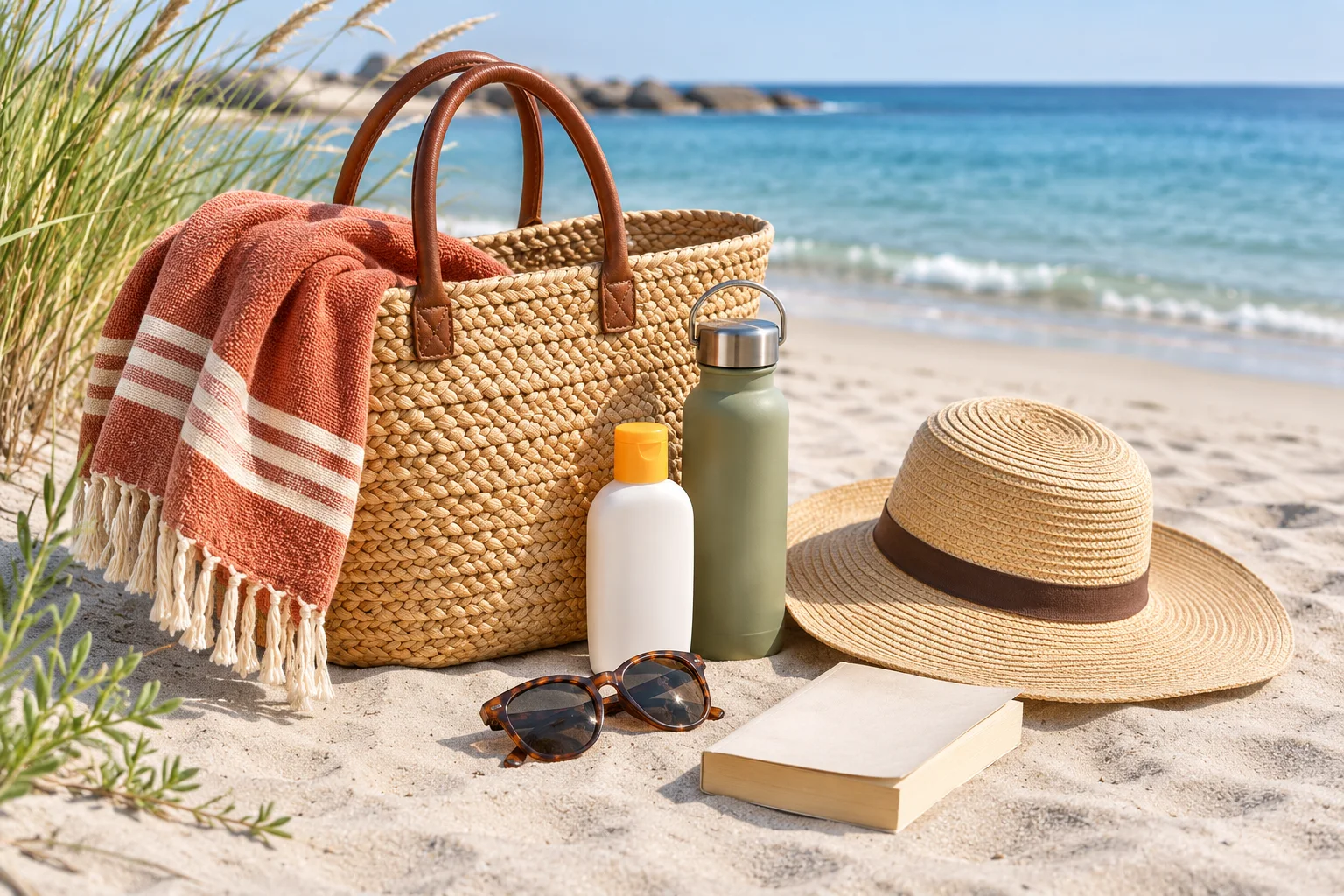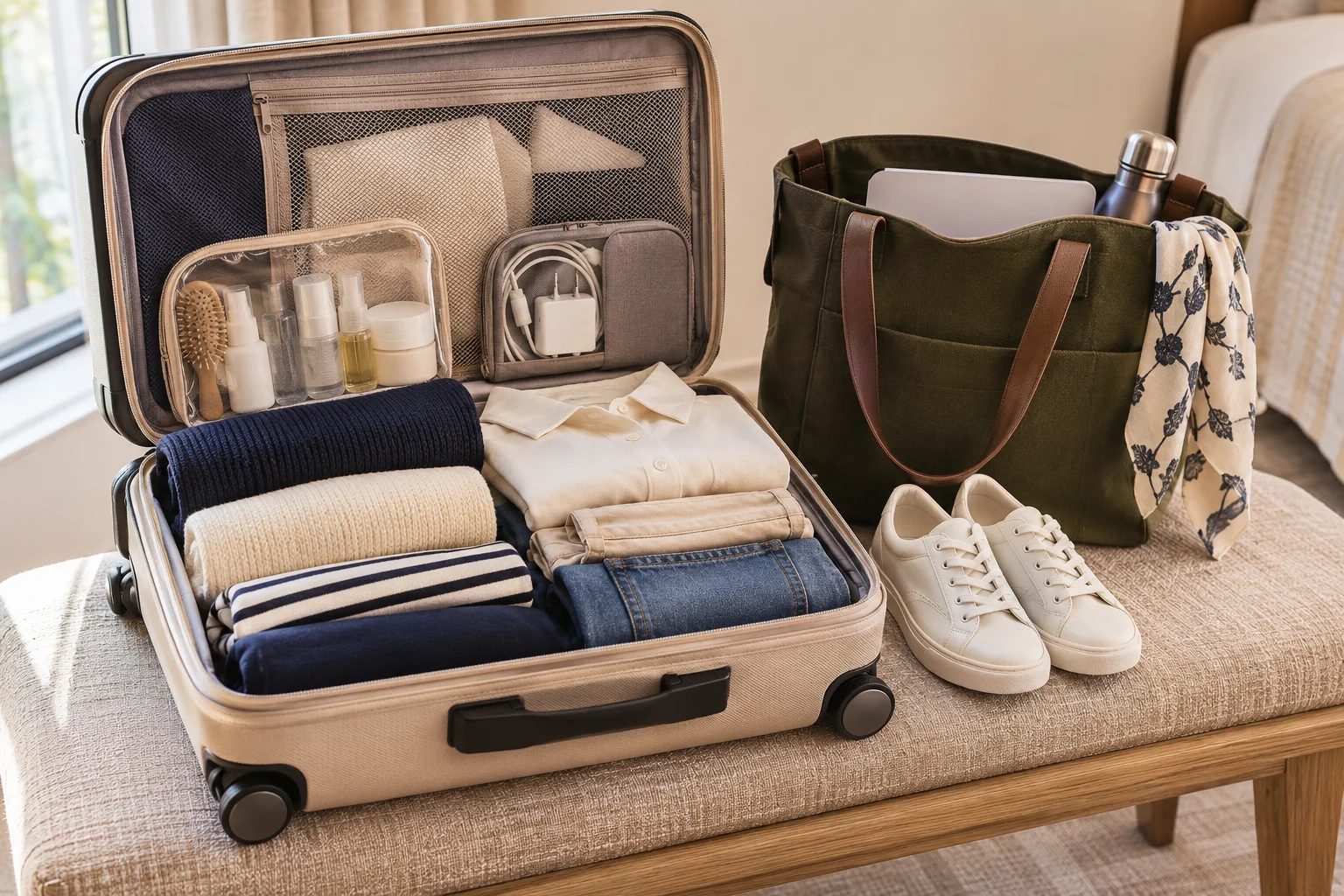
A lighter carry-on starts with a coordinated clothing rotation and a personal-item bag that does a different job. The suitcase holds the stay; the smaller bag keeps documents, regular medication, charging essentials and the things you want during the journey within reach.
This carry-on packing list uses seven nights away with a realistic laundry option as its starting point. Choose repeatable outfits, keep the toiletries compact and leave room to use the bag comfortably. Your booked fare and operating airlines set the actual size, weight and bag allowance.
Packing checklist
Open the companion sheet, mark your choices and print a copy for the trip. Your entries stay in this open page and are not saved after you leave it.

Check the allowance before choosing the bag
Read your airline's cabin-bag and personal-item rules, including dimensions, weight and whether the fare includes both. A bag marketed as “carry-on size” does not establish that it is included or accepted on every flight. Check connecting flights and any different operator too.
Measure the bag as the airline instructs, including the parts it counts. Test the packed weight rather than the empty suitcase. A soft bag can become much larger once every exterior pocket is full.
A one-week carry-on clothing plan
| Clothing | Suggested starting point | Purpose |
|---|---|---|
| Tops | Four or five, including the travel outfit | Repeatable combinations with the same bottoms |
| Bottoms | Two or three | Walking, travel and any dressier plan |
| Layer | One versatile piece | Cool evenings and the journey |
| Weather layer | One if conditions call for it | Rain, wind or colder outings |
| Underwear and socks | Enough until the planned laundry day | A realistic rotation, including drying time |
| Shoes | Wear the main pair; pack another only if needed | Avoid several bulky alternatives |
| Other | Sleepwear and activity-specific items | Only what the actual itinerary requires |
Make outfits before making piles. Each bottom should work with several tops, and the main layer should work across the small wardrobe. Add a specific event outfit only when it fits the trip, then see which of its pieces can also serve an ordinary day.
Put the pieces into an actual week
Choose five tops—three casual tees, one shirt and one smarter top—and two bottoms: comfortable trousers and a skirt or second pair of trousers. Wear one tee, the comfortable trousers, walking shoes and the versatile layer on the journey. Pack the other four tops and the second bottom, with sleepwear and the underwear and socks your washing plan needs.
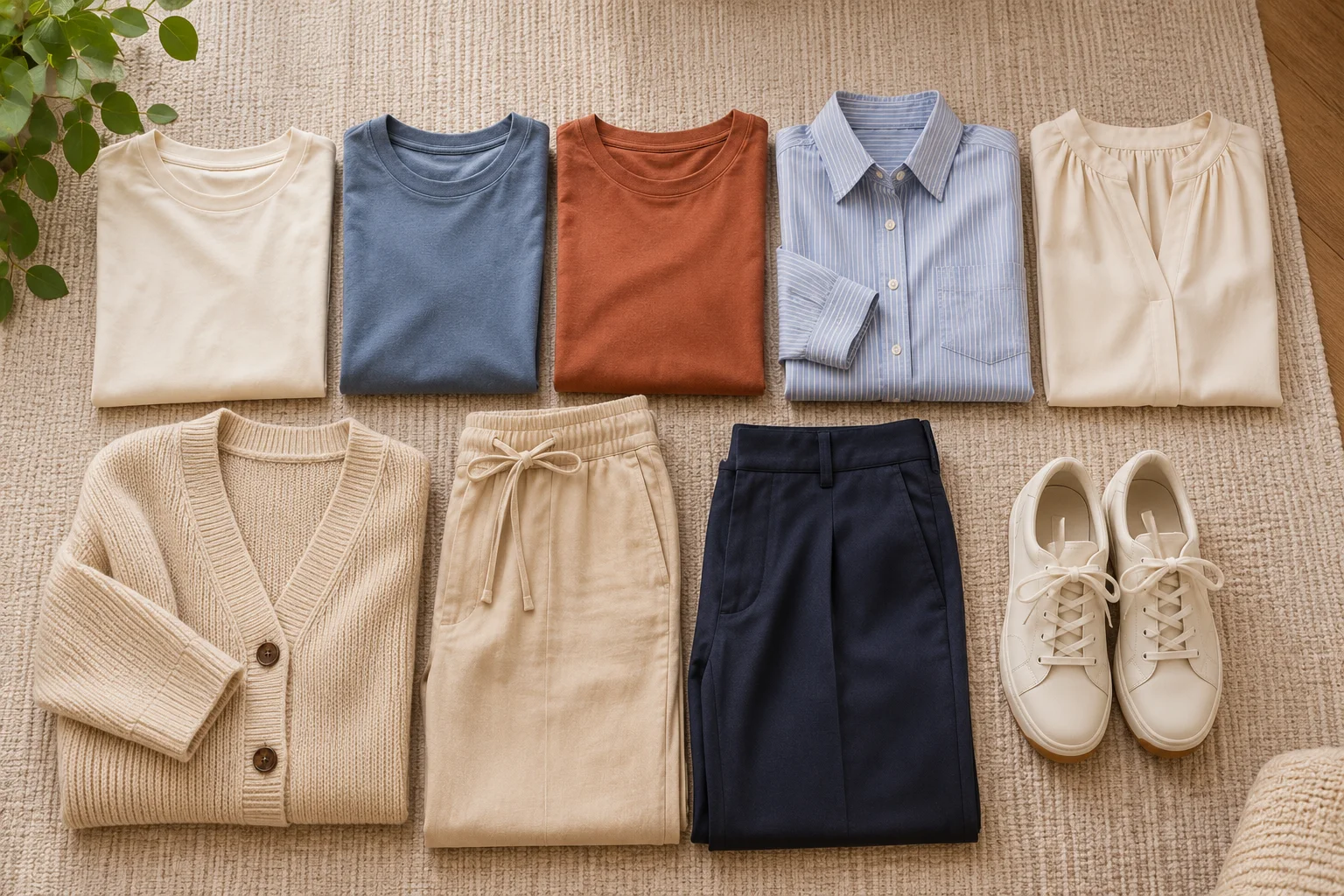
Use the tees with either bottom for sightseeing. Put the shirt or smarter top with the trousers for a casual dinner, then reuse that bottom the next day. After Day 3, wash the worn tees and underwear with time to dry before the next transfer; repeat the clean pieces during the second half of the week. The fifth top gives breathing room while laundry dries. A sweaty hike or a formal event changes this example and earns its own deliberate addition.
For bulkier clothing, start with the winter packing list and see how the twelve-piece winter capsule combines its garments. Neither wardrobe guarantees compliance with an airline allowance: check the packed bag’s actual weight and dimensions.
Give the personal item a separate job
Keep the things you need during transport together: documents, payment, regular medication, glasses, phone, charging equipment, headphones if you use them, and a useful layer. Add the work or entertainment device you actually intend to use.
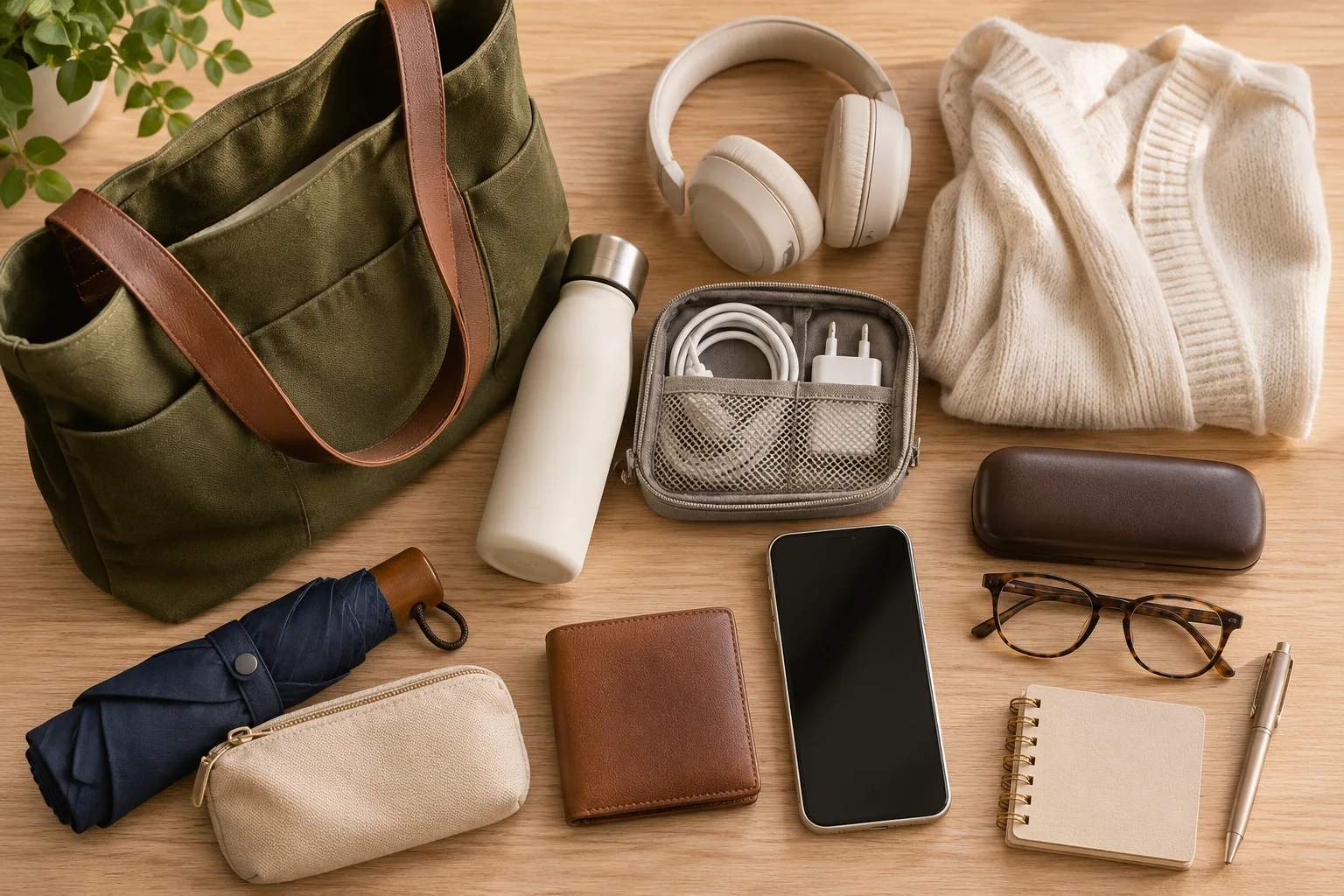
Use the personal item as a small working bag: documents and valuables together, charging items in a pouch, and the layer or entertainment you will want during the journey easy to reach. Leave a little room for things temporarily removed at the airport. Keep cabin-only items easy to separate if the suitcase is checked at the gate.
Pack toiletries for the airports on your route
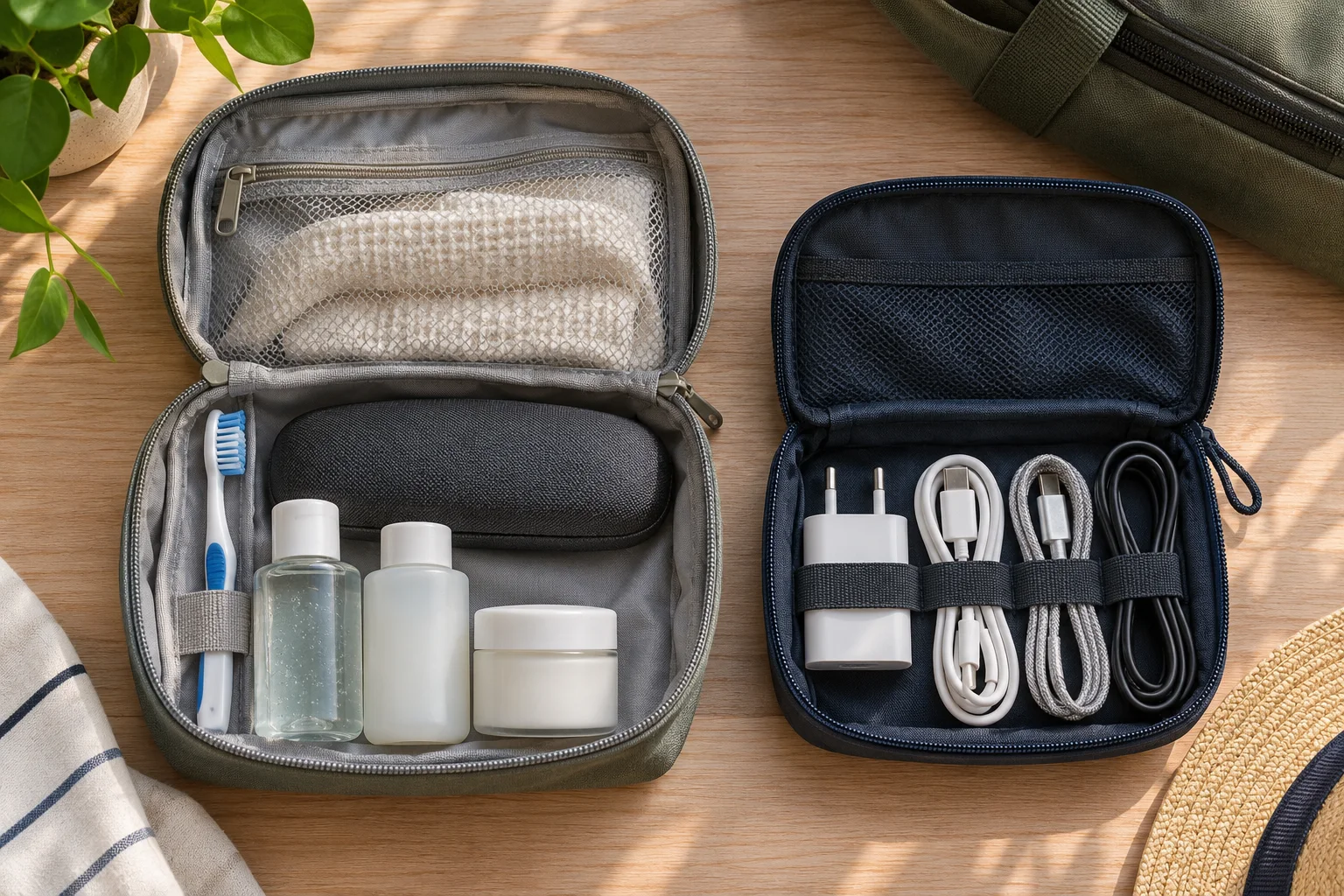
Screening requirements depend on the airport and authority. For a US checkpoint, the TSA publishes the familiar 3-1-1 rule for liquids, aerosols, gels, creams and pastes: containers of 3.4 ounces (100 milliliters) or less in one quart-sized clear bag, with one bag per passenger. Exceptions have their own requirements; read the official guidance when they apply to you.
The container size matters, not just how much product is left in a larger bottle. Choose the items you will use, keep the bag accessible, and check the return journey too. A rule or screening arrangement at the departure airport does not automatically describe every later stop.
Keep portable batteries out of checked luggage
Portable power banks and spare lithium batteries have specific air-travel restrictions. Read the FAA's current guidance and your airline's requirements, including capacity limits and protection against short circuit. Do not bury a power bank in a bag that may be checked without a plan to remove it.
Choose a compact charging kit with the cables your devices use. Check the destination's socket and electrical requirements before bringing an adapter or appliance. A plug that physically fits does not establish that every device is electrically compatible.
Pack the suitcase in useful layers
- Place shoes and heavier, less frequently used items where the bag carries them comfortably.
- Group the main clothing so one overnight stop does not require unpacking everything.
- Keep the toiletries and any checkpoint items easy to remove.
- Leave the personal-item essentials separate rather than filling spare suitcase gaps with them.
- Close the bag, weigh it and carry it for a short practical check before departure.
Packing cubes can help group clothing, but they do not reduce the weight of the contents. Choose the organization method that makes the bag easier to use, not the one that creates the most impressive packing photograph.
Make the laundry plan real
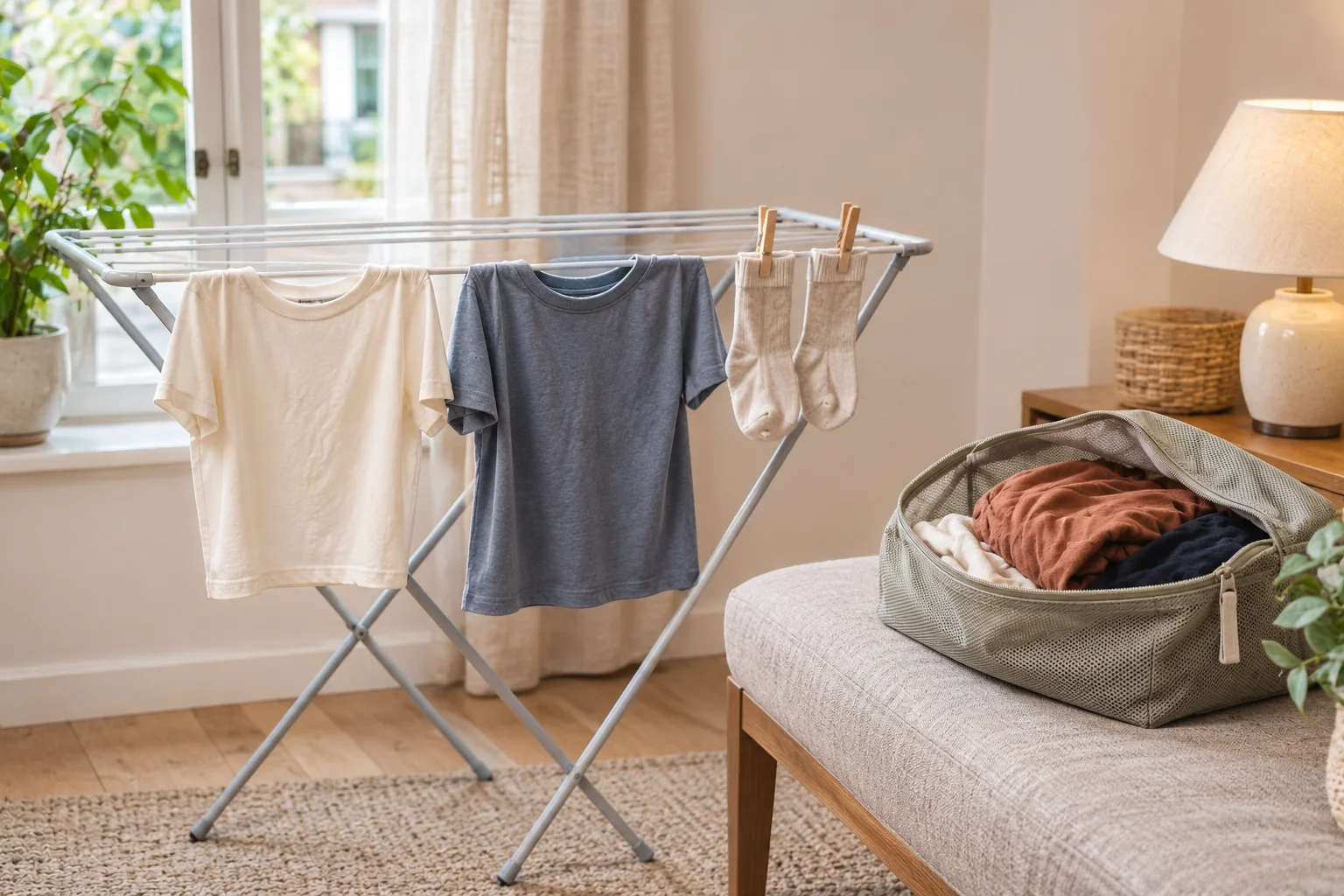
Check whether the accommodation offers the facilities you expect, when you can use them and how clothes will dry. A short stay between travel days may not leave enough time. If there is no dependable laundry option, increase the essentials rather than relying on a plan that cannot happen.
Plan a mid-trip reset around the facilities you actually have: collect used clothes in the laundry pouch, wash with enough drying time and return the clean pieces to the same rotation. Outer layers, exercise clothing and underwear can need different schedules; choose a comfortable routine rather than a theoretical minimum wardrobe.
What to remove when the bag is too full
Start with duplicate shoes, bulky single-use outfits and full-size toiletries. Then look at electronics: do you need every device, or one device that serves several purposes? Keep the things that meet actual travel needs, and remove the things that only cover unlikely scenarios.
For a larger luggage allowance, the vacation packing list offers a more generous baseline. For a route that includes beaches, mountains and changing weather, use the destination plan to decide which layers deserve the space.
Carry-on packing questions
Can a backpack count as my personal item?
It may, if it meets the operator's rules and is included in your fare. Check the specific size, placement and allowance rather than relying on the bag's category.
Is rolling always better than folding?
Use the method that suits the fabric and makes the bag easy to use. Packing technique cannot compensate for too many items or an overweight bag.
Can I use this for two weeks?
Often the clothing system can work with laundry, but the itinerary, climate, activities and personal needs decide the final list. Increase the rotation when you cannot reliably wash and dry items.
Useful official planning links
- Liquids, Aerosols, and Gels Rule | Transportation Security Administration
- PackSafe - Lithium Batteries | Federal Aviation Administration
Check the arrangements for your travel dates before booking or departure.