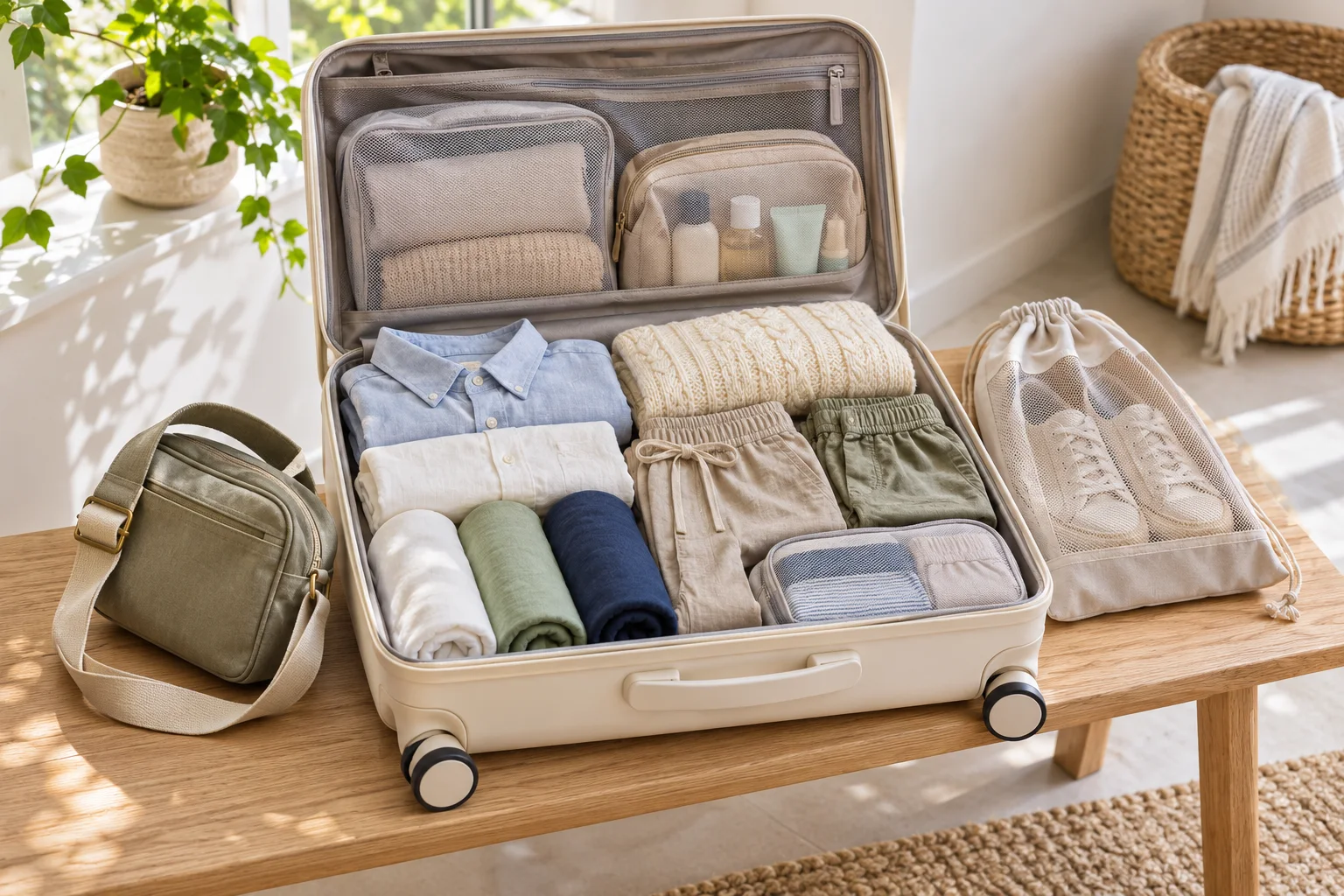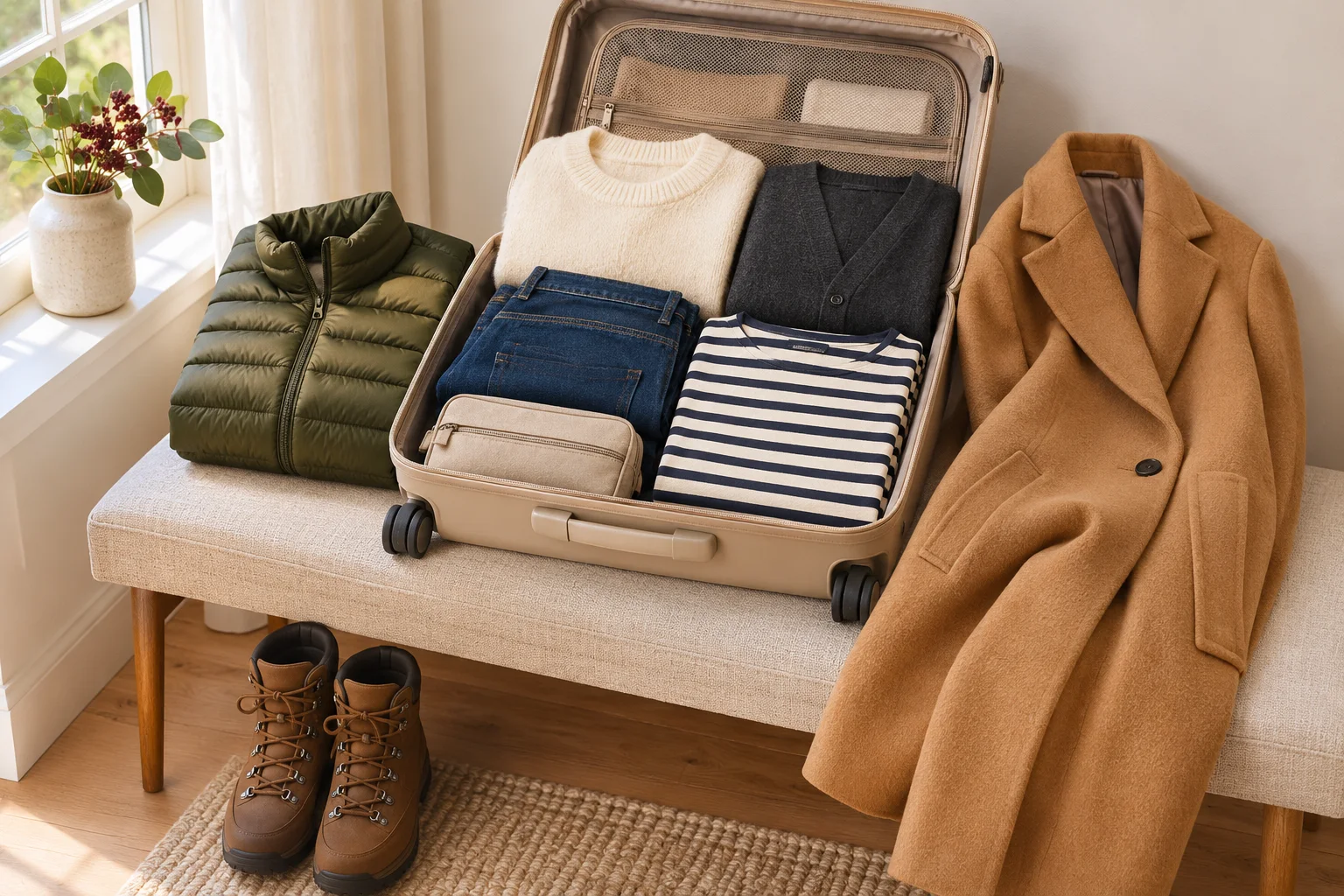
A winter travel capsule works when the pieces fit together before they go into the suitcase. Start with a coat you can comfortably walk in, add thin layers that work indoors as well as outside, and repeat the same two or three outfit foundations. You get variety from how the layers combine, rather than from a different bulky sweater for every day.
This twelve-piece example is for seven nights of city sightseeing in cool to cold weather, with a laundry opportunity around the middle of the trip. It includes outerwear and shoes; underwear, socks, sleepwear and small accessories are separate. It is a useful starting point for a London, Paris or New York visit, rather than an equipment list for skiing or prolonged outdoor exposure.
The twelve pieces at a glance
| Piece | Role in the capsule |
|---|---|
| One coat | Your main outdoor layer; choose weather protection for the trip |
| One light puffer | An optional extra insulating layer that fits comfortably with the coat |
| One crewneck knit | A repeatable mid-layer |
| One cardigan | A second mid-layer that opens easily indoors |
| One close-fitting base top | A comfortable first layer |
| One everyday long-sleeve top | A second base or casual indoor top |
| One button-down shirt | A smarter indoor option and light extra layer |
| One pair of trousers | The main walking and dinner option |
| One pair of jeans | An alternative bottom when conditions suit |
| One pair of thermal leggings | An additional under-layer when needed |
| One pair of walking boots | Outdoor footwear suited to expected conditions |
| One pair of comfortable sneakers | An alternative for travel and suitable dry-day walks |
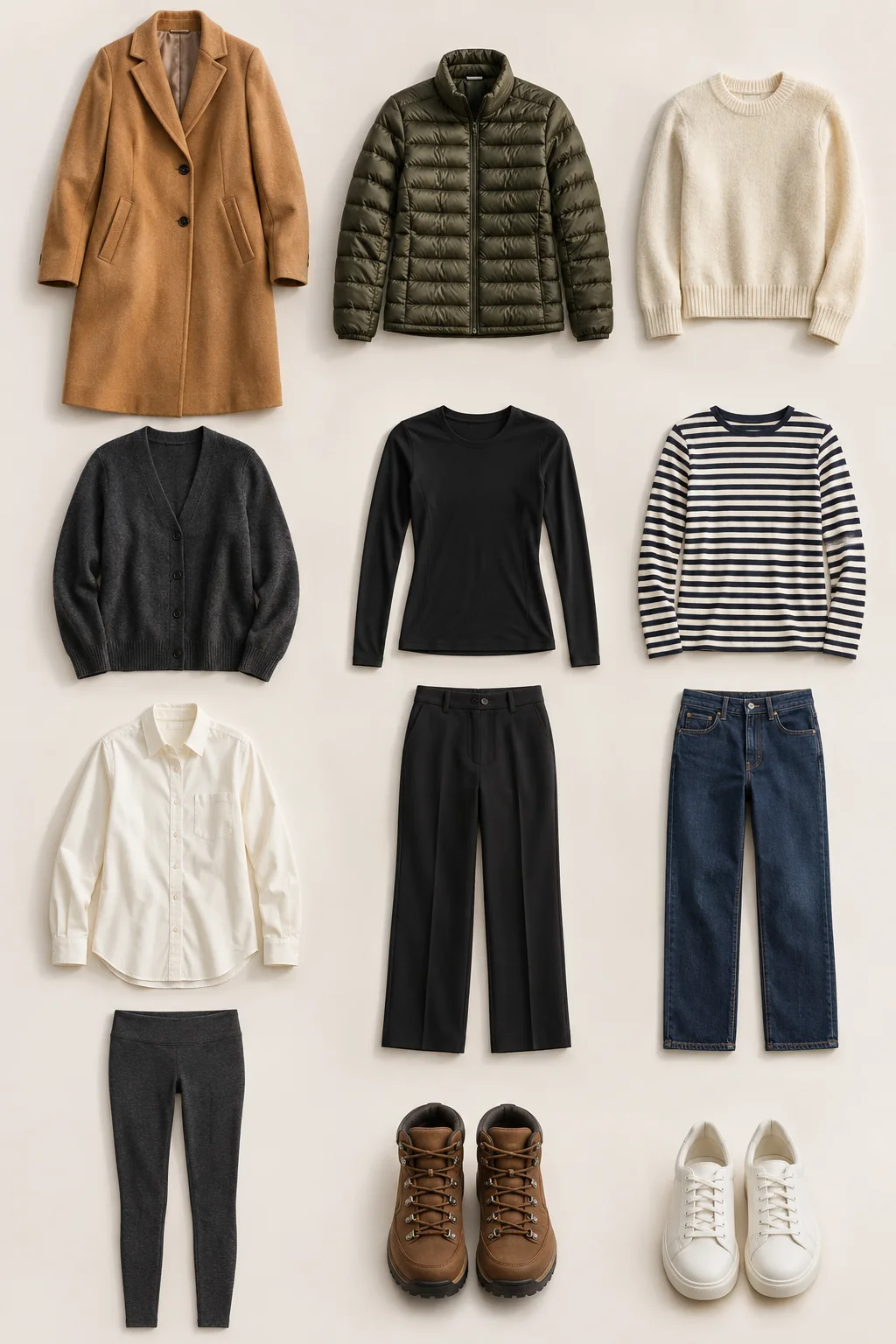
Twelve is the size of this example, not a rule that every traveler must meet. If you will never use the shirt, replace it with the piece your actual plans require. If the sneakers will be unsuitable for the whole trip, use a more appropriate second pair or travel with one proven pair. The point is a coherent wardrobe, not winning a packing-number challenge.
Choose the coat and shoes first
The coat and shoes determine what the rest of the capsule needs to do. A coat suited to a relatively mild, damp city break can be the wrong choice for hours outside in much colder conditions. Look at the forecast for each destination and think about the longest outdoor stretch: a riverside walk, a market evening or a long wait can feel different from short trips between museums.
Try the coat over the layers you intend to wear. You should be able to move your arms and close it without compressing everything underneath. A light puffer is useful only if the combination fits; adding it automatically can create bulk without a comfortable outfit. In wetter weather, prioritize appropriate rain protection rather than assuming a wool-style coat will do every job.
Wear both proposed pairs of shoes on a substantial walk before departure. Check comfort with your intended socks and inspect the soles for the conditions you expect. A good-looking boot does not become a suitable winter walking shoe simply because it appears in a capsule. Choose known comfort over an untested purchase made just before the flight.
Build three outfit foundations
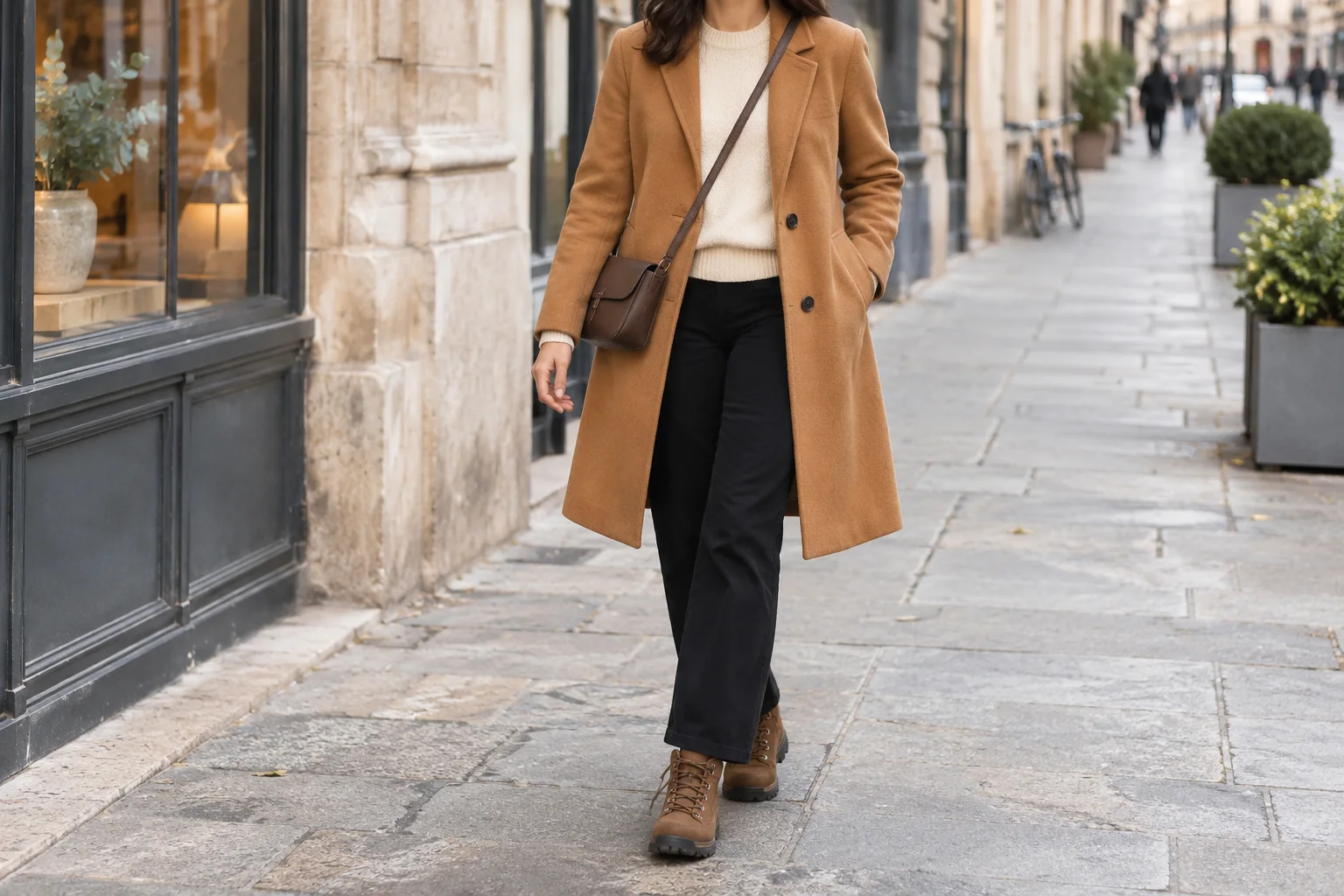
For a full sightseeing day
Start with the base top, trousers, crewneck knit and walking boots, then add the coat and the accessories that suit the day. This is the outfit to test with your day bag. Make sure the bag strap works over the coat and that you can reach your phone or travel card without opening several layers.
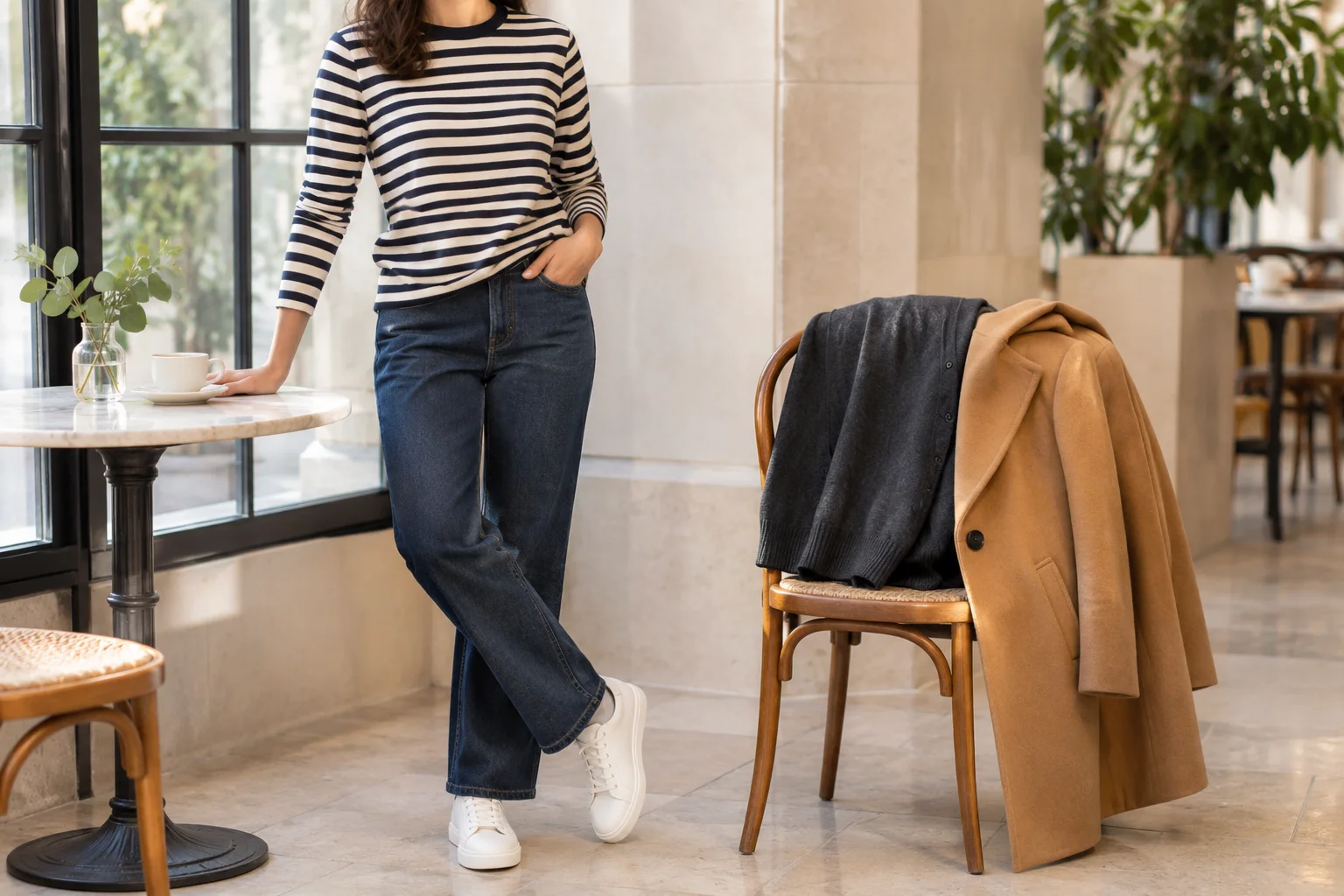
For a museum and café day
Use the everyday long-sleeve top with jeans and the cardigan. Choose the shoes according to the walking and weather. An opening cardigan makes it easy to adjust indoors without removing your whole outfit. Keep a practical outer layer with you even when most of the day is inside.
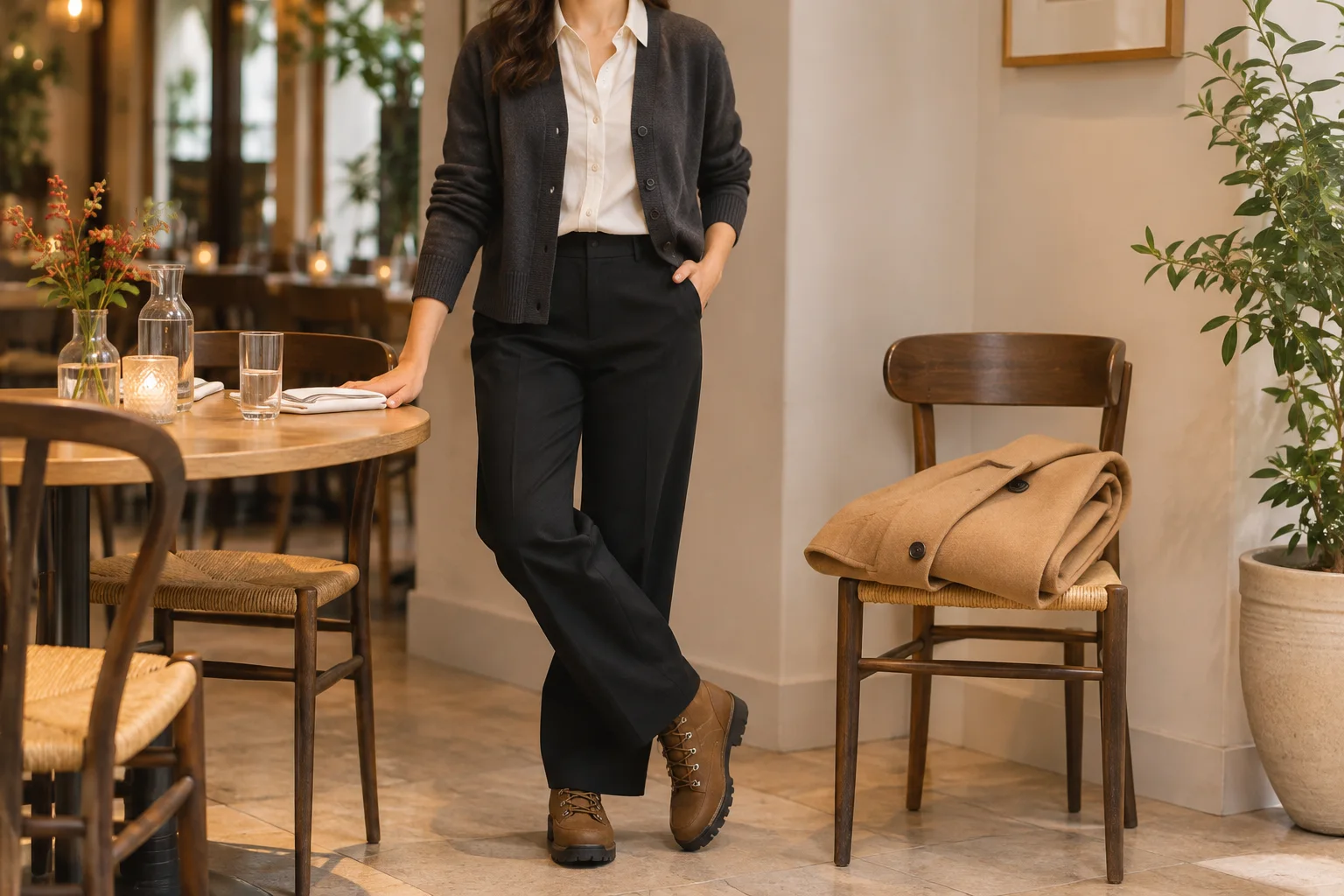
For an easy dinner after exploring
Pair the trousers with the shirt and cardigan, or keep the knit if that suits the venue. A clean, comfortable version of the daytime capsule can be enough for many casual dinners. If your plans include a venue with a specific dress code, use its actual requirements to choose a replacement piece instead of adding an entire speculative evening wardrobe.
These are three foundations, not a promise of a calculated number of unique outfits. Repeat combinations you like. A scarf, a different mid-layer or the shirt worn open can change the appearance without changing the whole bag.
| Foundation | Pieces from the twelve | Weather adjustment from the same inventory |
|---|---|---|
| Sightseeing | Base top + trousers + crewneck knit + walking boots + coat | Puffer and thermal leggings only if the conditions and full outfit call for them |
| Museum and café | Everyday long-sleeve top + jeans + cardigan + coat; sneakers only if suitable | Use the boots instead when the day's walking/weather requires them; remove the cardigan indoors |
| Casual dinner | Button-down shirt + trousers + cardigan + the suitable existing shoe pair + coat | Use the crewneck instead of the cardigan if preferred; add tested puffer insulation for the return only when needed |
Every garment above is already in the twelve-piece inventory, including both shoe pairs. The puffer and thermal leggings count in this full example even when you leave them at the accommodation for an indoor-heavy day. Removing them from the bag creates a smaller adaptation, not a new twelve-piece claim. Underwear, socks, sleepwear and small accessories still sit outside the wardrobe count.
Make laundry part of the plan
Seven nights with a compact capsule works better when washing is a real plan. Find out whether your accommodation has usable laundry facilities, or allow time for a laundrette. Keep a small laundry bag and leave space for clean and worn clothing to stay separate.
Choose underwear and socks around that plan, your activities and your preferences. Do not assume a quick sink wash will dry overnight in a cool room. Give frequently washed pieces enough drying time and avoid relying on one freshly washed item for an early departure. If laundry will be impractical, add the necessary basics deliberately and accept the extra space.

Pack the bag with the outfit
Set out the travel-day outfit before packing. Wearing your main coat and a suitable pair of boots can free space, but the outfit must remain comfortable for the journey. Keep an accessible layer for the cabin and a place to put the coat when you take it off. Bulky footwear is a poor trade if you cannot walk comfortably through the airport in it.
Pack the remaining pieces into your actual bag and check its dimensions and weight against the transport operator’s current allowance. A capsule is a clothing system, not proof that a particular airline will accept the luggage. Use the carry-on packing guide for the personal-item kit, toiletries and travel documents that still need room.
Adapt it to the trip you booked
For a milder city break, the puffer or thermal leggings may be unnecessary; remove them if the forecast and your activities support that choice. For a colder trip, select more appropriate outerwear, insulation and footwear before adding random extra tops. For an activity-led holiday, start with that activity’s actual kit rather than stretching a sightseeing wardrobe into a technical one.
Use the companion checklist to mark what you already own, note your travel-day outfit and choose the pieces that need a wear test. For the complete bag beyond clothing, continue with the winter packing list. For the cities themselves, the Christmas in London guide and Paris Christmas guide organize walks around useful indoor breaks. Use the New York winter itinerary for the January/February museum-and-neighborhood application, or Christmas in New York when the festive Midtown evening is the goal.
Winter capsule questions
Do I need a different outfit every day?
No. Repeat the pieces and combinations that work, keeping the items that need washing on a realistic laundry cycle. A travel capsule is designed around repeat wear.
Are two pairs of shoes essential?
No. This example includes two, but the better decision depends on weather, activities, comfort and space. Choose a second pair because it serves a real purpose.
Is this enough for snow or a ski trip?
It is a city-trip example. Use the ski-trip packing list and the resort’s own guidance for a skiing holiday, including suitable equipment and weather protection.
Useful planning links

Take the plan with you
Open the companion packing checklist, add your own notes and print it for the trip.
Open the packing checklist