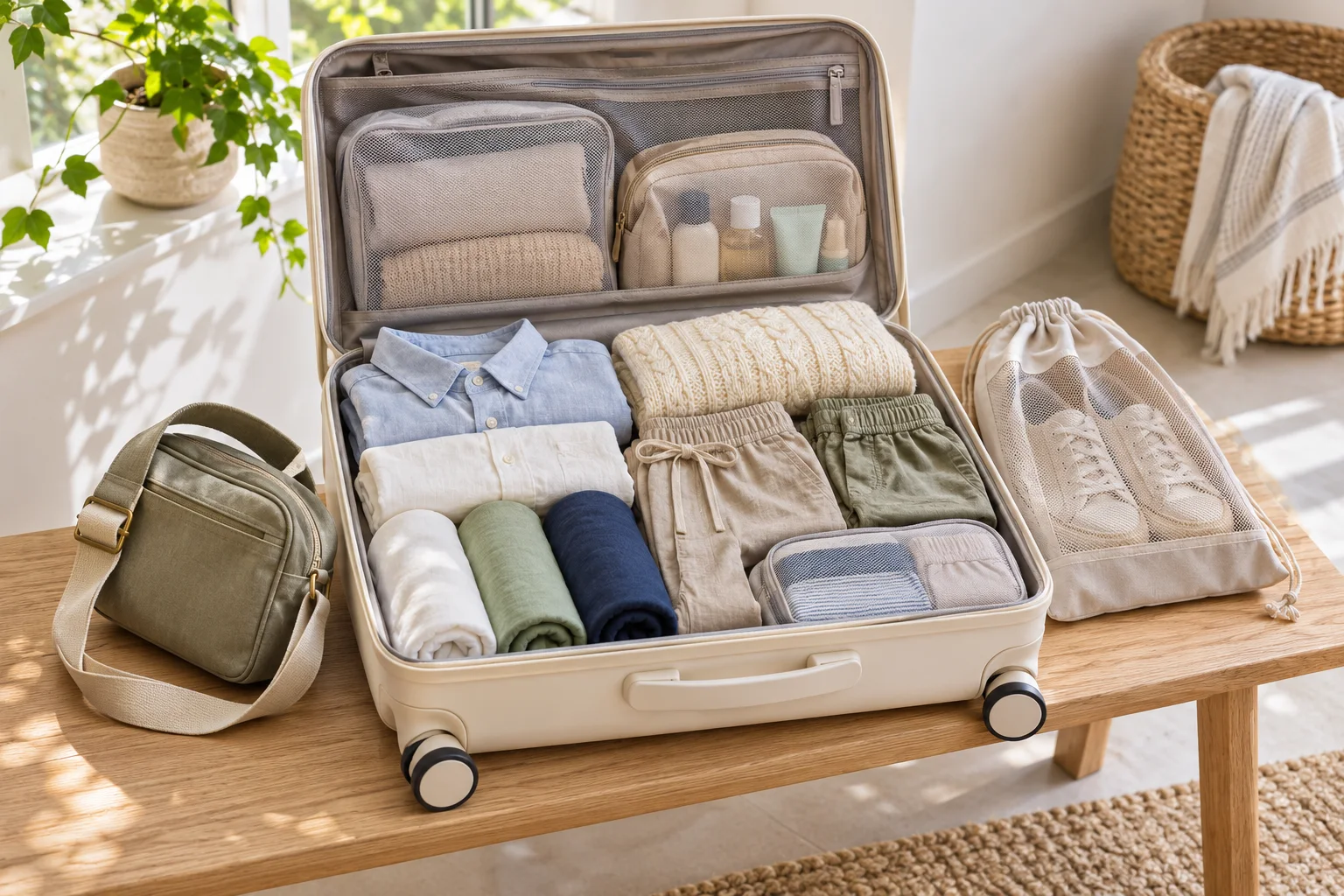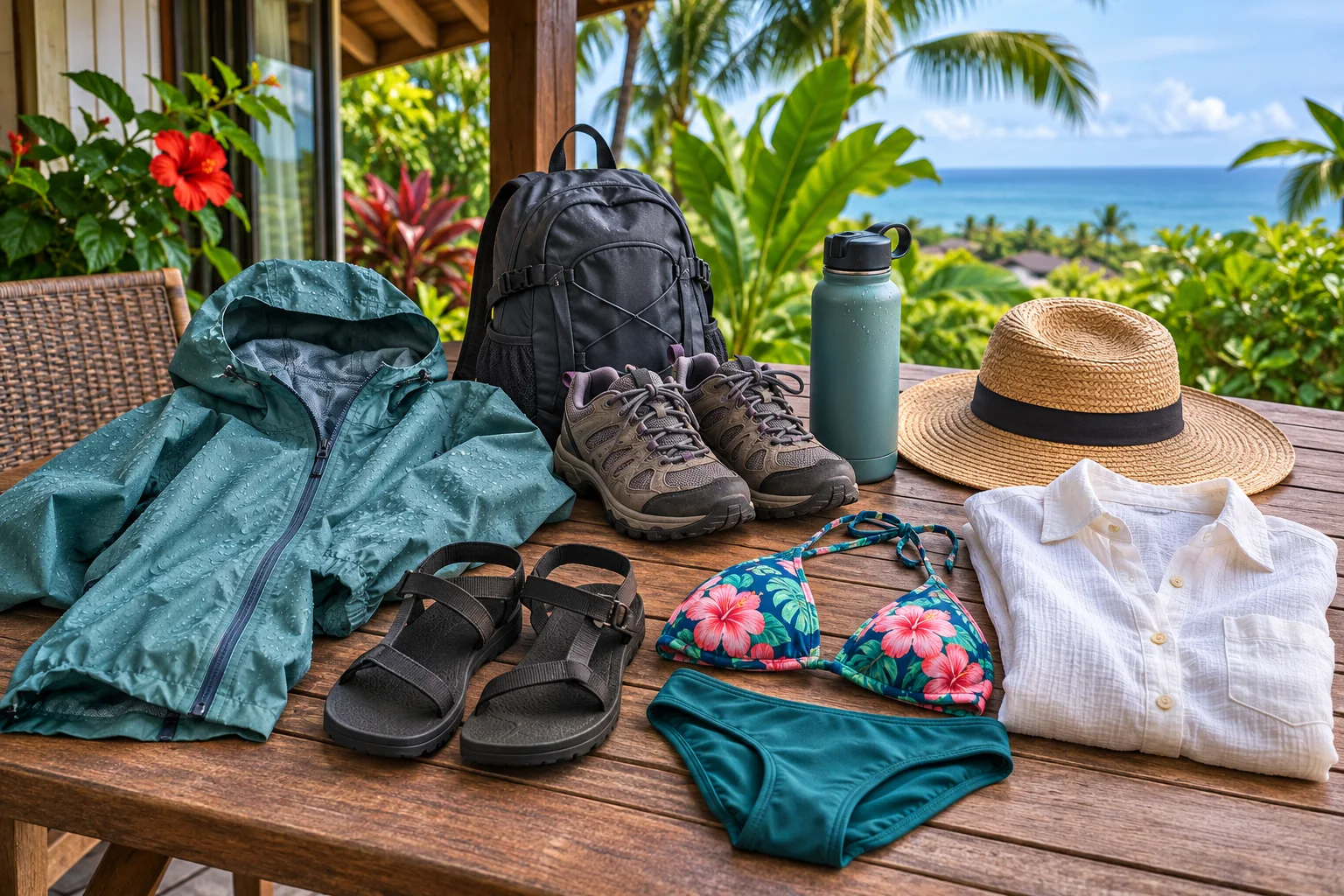
Pack for the Hawaii days on your itinerary: beach time, town walks, damp trails and any higher-elevation outing. Those plans call for a more useful mix than swimwear alone—comfortable walking clothes, a small beach kit and layers chosen for the places you will actually go.
This Hawaii packing list starts with a week of mixed sightseeing and beach days. It separates everyday clothing from rain protection and the pants and layers needed for an appropriate mountain or volcano-area visit. A specialist hike or summit plan still gets its own official preparation check.
Packing checklist
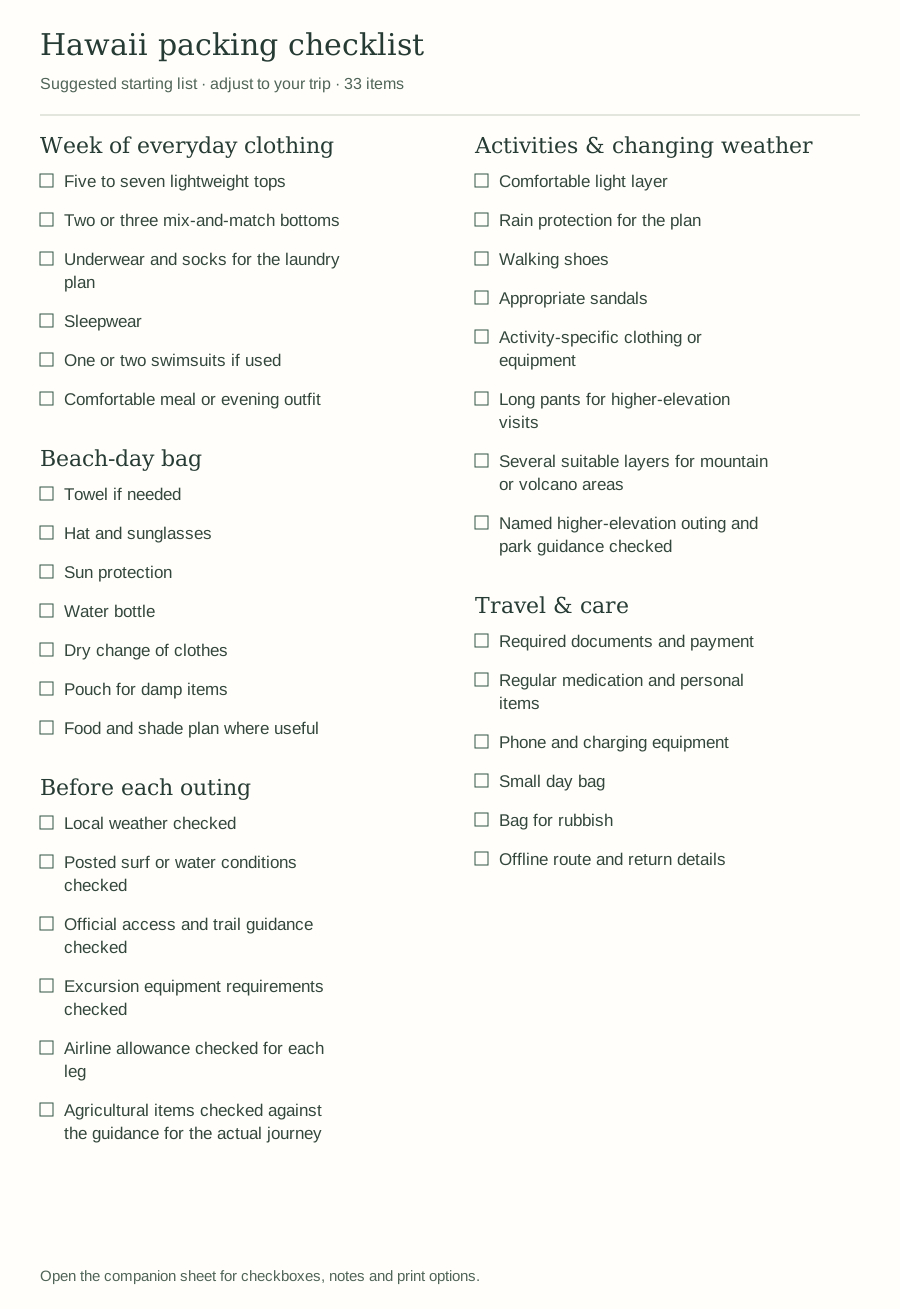
Open the companion sheet, mark your choices and print a copy for the trip. Your entries stay in this open page and are not saved after you leave it.
The core Hawaii packing list
- Lightweight tops and bottoms you can mix and repeat
- Swimwear and a dry change for the journey back
- A comfortable light layer
- Rain protection suited to your plans
- Walking shoes and appropriate sandals
- Hat, sunglasses and sun protection
- A refillable water bottle and a small day bag
- Documents, payment, charging equipment and personal essentials
Keep one set of dry clothing away from damp beach or activity items. If you are moving between islands or accommodations, make sure the packing arrangement works for those travel days as well as the first arrival.
Build a week of outfits from a few useful pieces
As a starting point, choose five to seven tops, two or three bottoms, underwear and socks for your laundry plan, sleepwear, and one or two swimsuits if you will use them. Add a comfortable outfit for an evening meal and the clothing your booked activities require.
These quantities are suggestions. A trip with reliable laundry can use a smaller rotation; an active trip may need more changes. Choose fabrics and fits you already find comfortable rather than treating the holiday as a test of an entirely new wardrobe.
Bring the layers a beach-only list misses
Organize the clothing by the outing. Beach time calls for the small swim-and-dry-change kit; a damp walking day earns the rain layer and appropriate shoes; a higher-elevation visit earns warmer clothing. Use the forecast for the actual place and elevation, since the coastal base does not describe every part of an island.

For a higher-elevation visit, add long pants and several clothing layers: a comfortable base layer, a warmer middle layer and suitable outer protection are a useful starting structure. GoHawaii specifically recommends pants and layers for mountain and volcano areas. Match the warmth to the place and forecast rather than using the coastal temperature to choose every outfit.
A Maui beach afternoon versus Haleakalā
For a coastal beach afternoon on Maui, keep the swimwear, towel, sun kit, water and dry return outfit together. A visit to Haleakalā National Park’s Summit District changes the bag: keep the sun kit, but add long pants, warm layers, cold/wet-weather outerwear and sturdy shoes, plus food and water. The park’s own preparation guidance explains the sharply different climates and what to bring; it also notes that food is not sold in the park.
This comparison explains the clothing decision for a visitor outing, not a complete summit-hiking or sunrise plan. Use the Summit District visitor information for the activity and access arrangements before turning a beach day into a mountain day.
Choose shoes for the activities
Bring a comfortable walking pair and footwear that suits the beach or accommodation. If you plan a hike, check the route's terrain and current conditions before deciding what shoes you need. Wet or uneven trails can change the decision.
A specific excursion may have footwear requirements. Read those before departure, especially if the activity involves boats, uneven ground or equipment supplied by an operator. Water shoes are not permission to step on coral or enter a place that should be avoided.
Make a beach-day kit inside the larger bag
Keep the beach basics together: towel if needed, swimwear, hat, sun protection, water and a pouch for damp clothing. Add food and shade arrangements that suit the location and any local restrictions. Use the beach packing list to separate the small daily kit from the rest of your luggage.
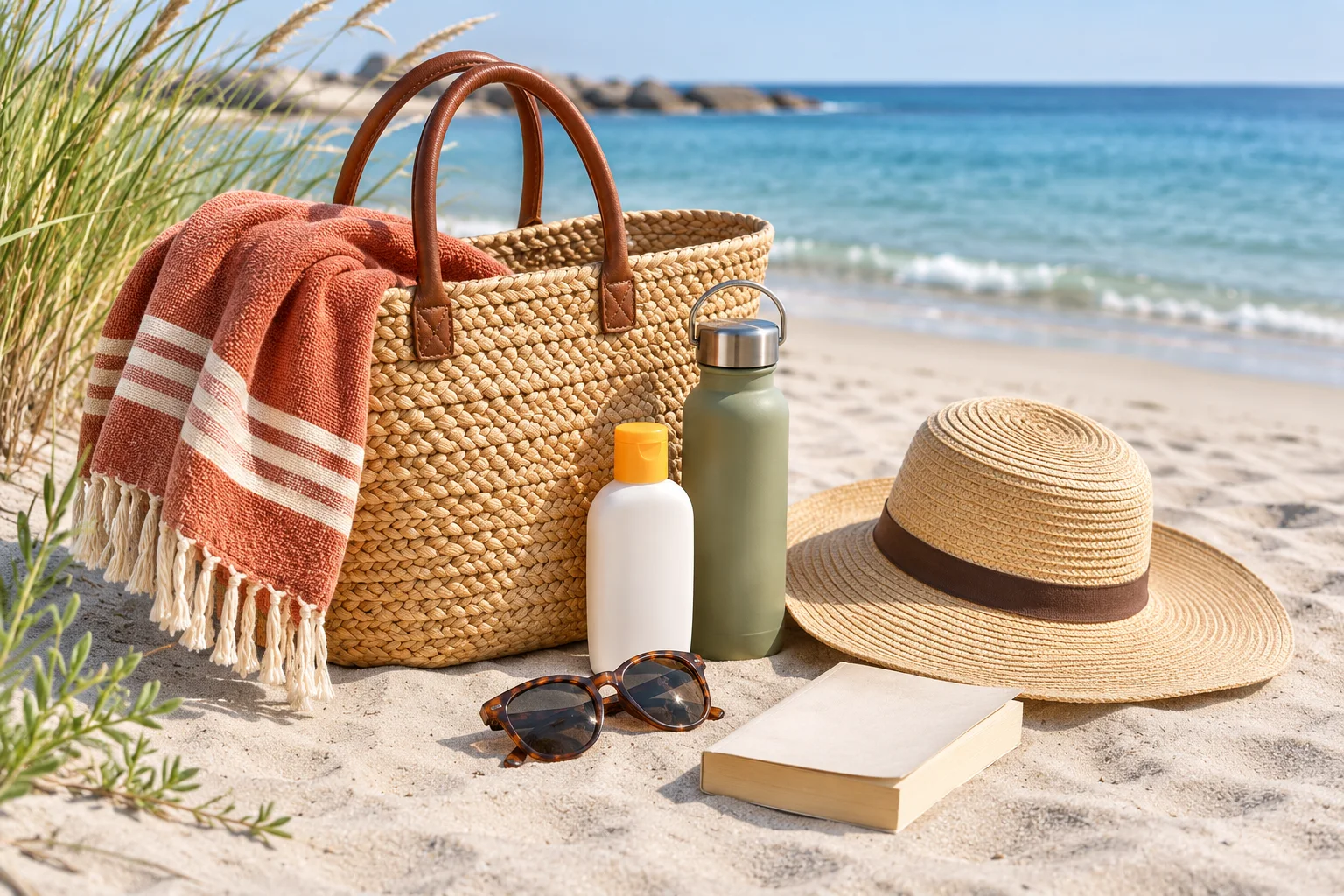
Do not assume every beach has the same facilities or water conditions. Check posted notices and local guidance, and choose activities appropriate to the conditions and everyone's ability. A convenient place in a photograph is not enough information to plan a swim.
Leave room for a small walking bag
A day bag should carry the water, weather layer, personal items and food your outing calls for. Keep it light enough for the actual walk. Save the route and return details before departure, especially when a working mobile signal is part of your usual navigation routine.

Put route-specific equipment on a separate line for a longer or remote walk, using the official trail or operator guidance. Keep the everyday day bag light enough to use comfortably; specialist gear belongs because the outing requires it.
Check the items with destination-specific rules
Before putting fruit, plants or other agricultural material into the bag, use the Hawaiʻi agriculture agency’s travel guidance for your journey: mainland arrival, interisland travel and the journey home have separate instructions. Its mainland-to-Hawaiʻi page requires declaration and presentation for inspection of agricultural items. Check the item itself rather than assuming a snack or souvenir can travel because it fits in the suitcase.
Keep regular medication, valuables and essential documents in the bag that remains with you during travel. If you are flying between islands, check each operator's allowance and any differences between the fare you booked and the luggage you used on the international or mainland journey.
Pack with the places you visit in mind
Bring a bag for rubbish, stay on designated routes and follow the instructions at protected and culturally significant places. Do not pack a collecting container for sand, rocks or natural objects. A useful travel kit should make it easier to leave a place as you found it.
Use NOAA’s Hawaiʻi marine-wildlife viewing guidance for species-specific distances and instructions. View with binoculars or a camera zoom, leave resting turtles and seals undisturbed, and never touch, chase or feed them. Packing a zoom lens is more useful than planning a close encounter.
Hawaii packing questions
Do I need a jacket?
A comfortable layer is useful on many mixed itineraries. Higher-elevation or cold-weather outings need a more deliberate plan based on official guidance and the forecast for that location.
Can I pack for Hawaii in a carry-on?
Possibly, especially with laundry and a simple itinerary. Check your allowance and use the carry-on guide, then add the layers and activity items your route actually requires.
Should I bring snorkeling equipment?
Bring it only when it fits your activity plan and baggage allowance. Check what a booked excursion supplies and follow location-specific guidance. Owning equipment does not establish that conditions are suitable for using it.
Useful official planning links
- Liquids, Aerosols, and Gels Rule | Transportation Security Administration
- PackSafe - Lithium Batteries | Federal Aviation Administration
- Travel Tips | Go Hawaii
- Hawaii Weather | Weather in Hawaii | Go Hawaii
Check the arrangements for your travel dates before booking or departure.