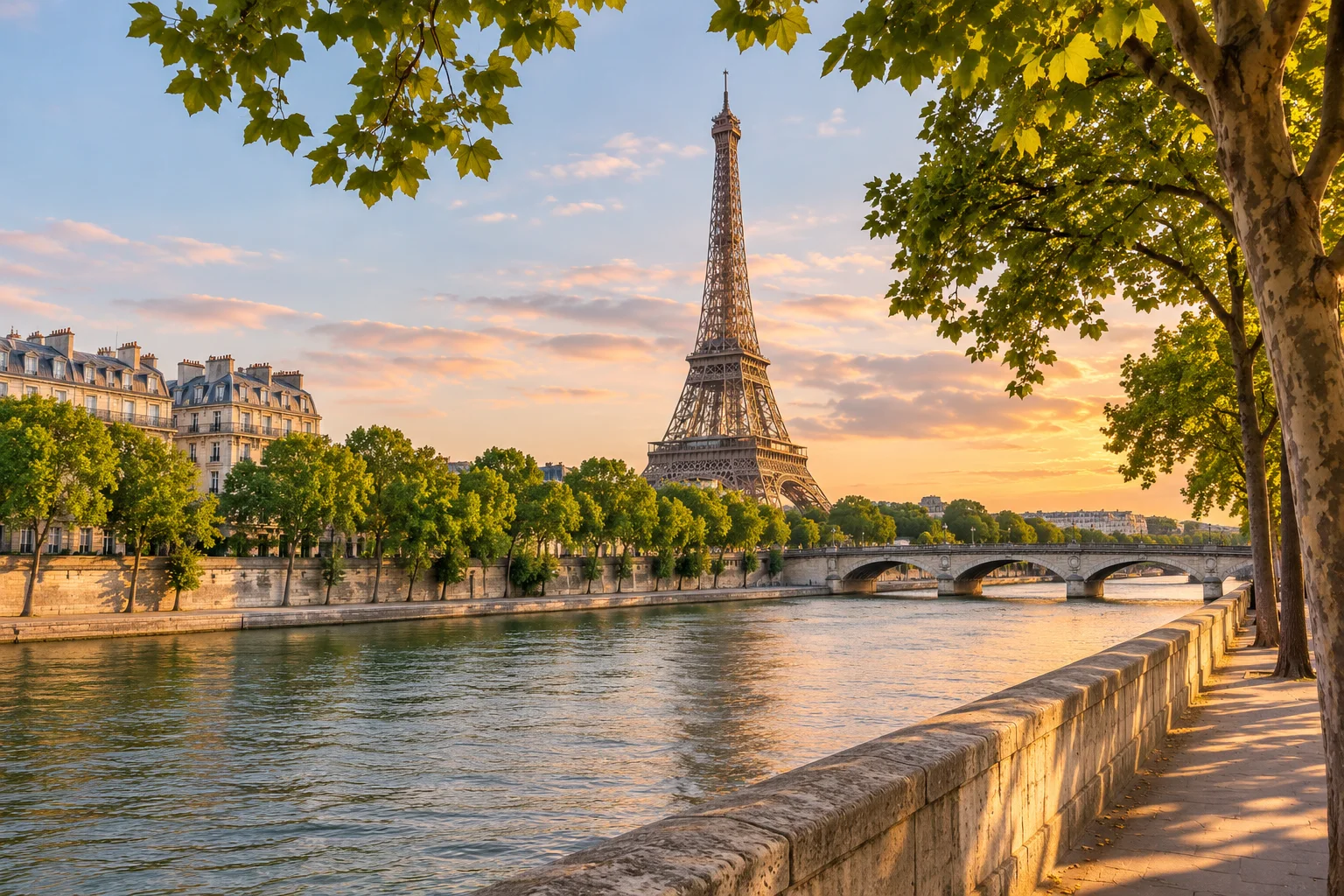
Start beside the Seine, give the Louvre a proper afternoon and leave room for the smaller streets between the famous sights. This three-day Paris itinerary groups the city into days that make sense: the historic center, the Eiffel Tower and Left Bank, then Montmartre and one final afternoon choice.
It is a first-visit plan for three usable sightseeing days with a base inside Paris. You get a clear daily route and a manageable main focus, with enough flexibility to swap a museum, pause for lunch or shorten the walk. If arrival or departure takes a large part of a day, use the shorter version below.
Day-by-day route planner
Open the companion sheet, mark your choices and print a copy for the trip. Your entries stay in this open page and are not saved after you leave it.
Why this plan works
This route suits a first visit that mixes one major museum, the Eiffel Tower and time in the neighborhoods. Each day has a clear area or focus, so you can change one visit without rebuilding the entire trip. Keep the main reservation and the meal break; shorten the optional walk when you need an easier day.
Three days in Paris at a glance
| Day | Route | Main planning decision |
|---|---|---|
| 1 | Île de la Cité, the Louvre, Tuileries and the Seine | Choose a realistic Louvre visit and work the walk around it |
| 2 | Eiffel Tower, Saint-Germain and Luxembourg Gardens | Book the tower level and access option you want |
| 3 | Montmartre, then the Marais or a second museum | Choose one afternoon direction instead of crossing the city repeatedly |
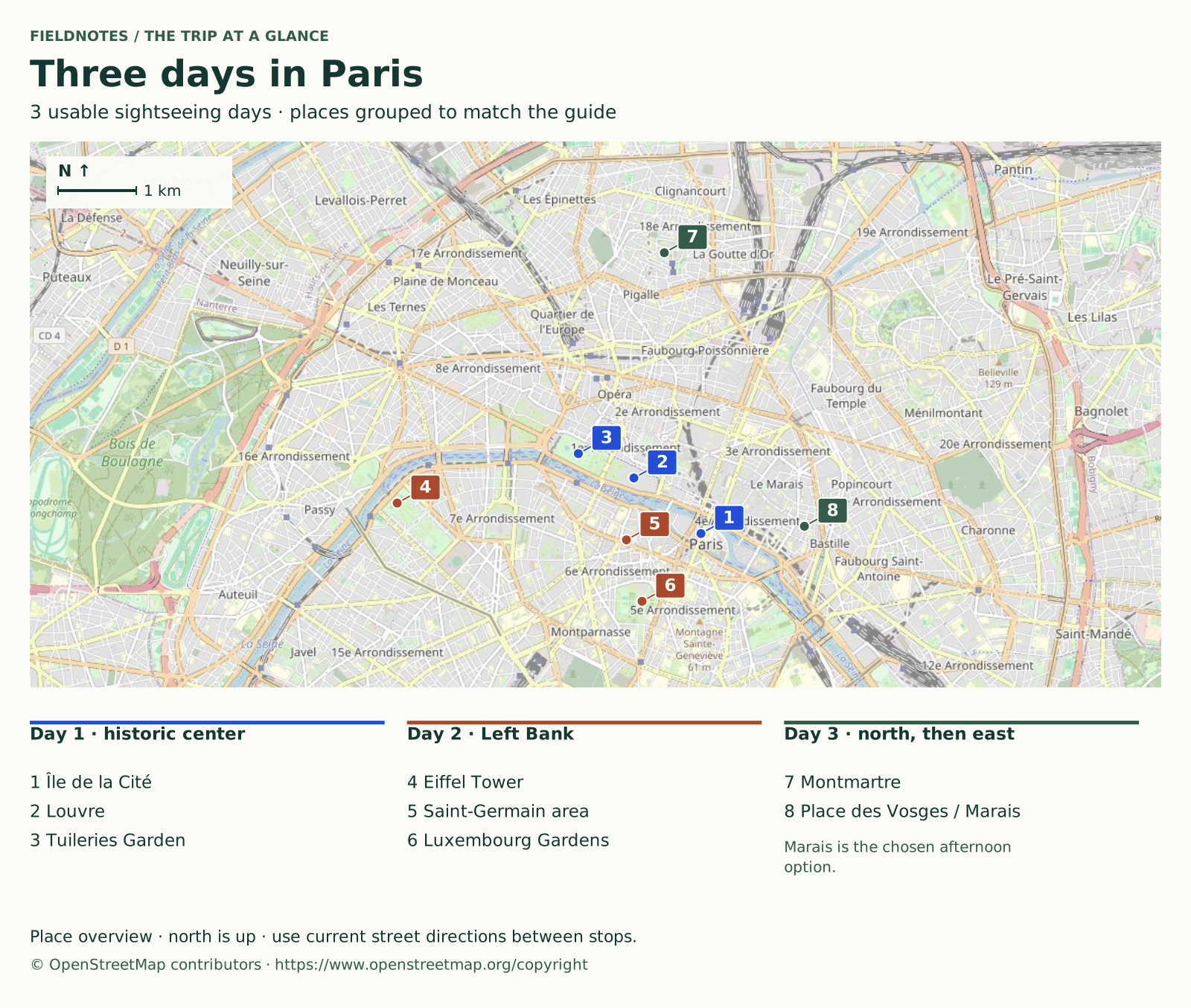
Open places in Google Maps
- 1. Île de la Cité — Day 1 · historic center
- 2. Louvre — Day 1 · historic center
- 3. Tuileries Garden — Day 1 · historic center
- 4. Eiffel Tower — Day 2 · Left Bank
- 5. Saint-Germain area — Day 2 · Left Bank
- 6. Luxembourg Gardens — Day 2 · Left Bank
- 7. Montmartre — Day 3 · north, then east
- 8. Place des Vosges / Marais — Day 3 · north, then east
The Louvre is closed on Tuesdays. Swap the first and third days when necessary, and check the opening arrangements for your actual dates. A sensible route matters more than following the day numbers exactly.
Day 1: the historic center, the Louvre and the river
Morning: start around Île de la Cité
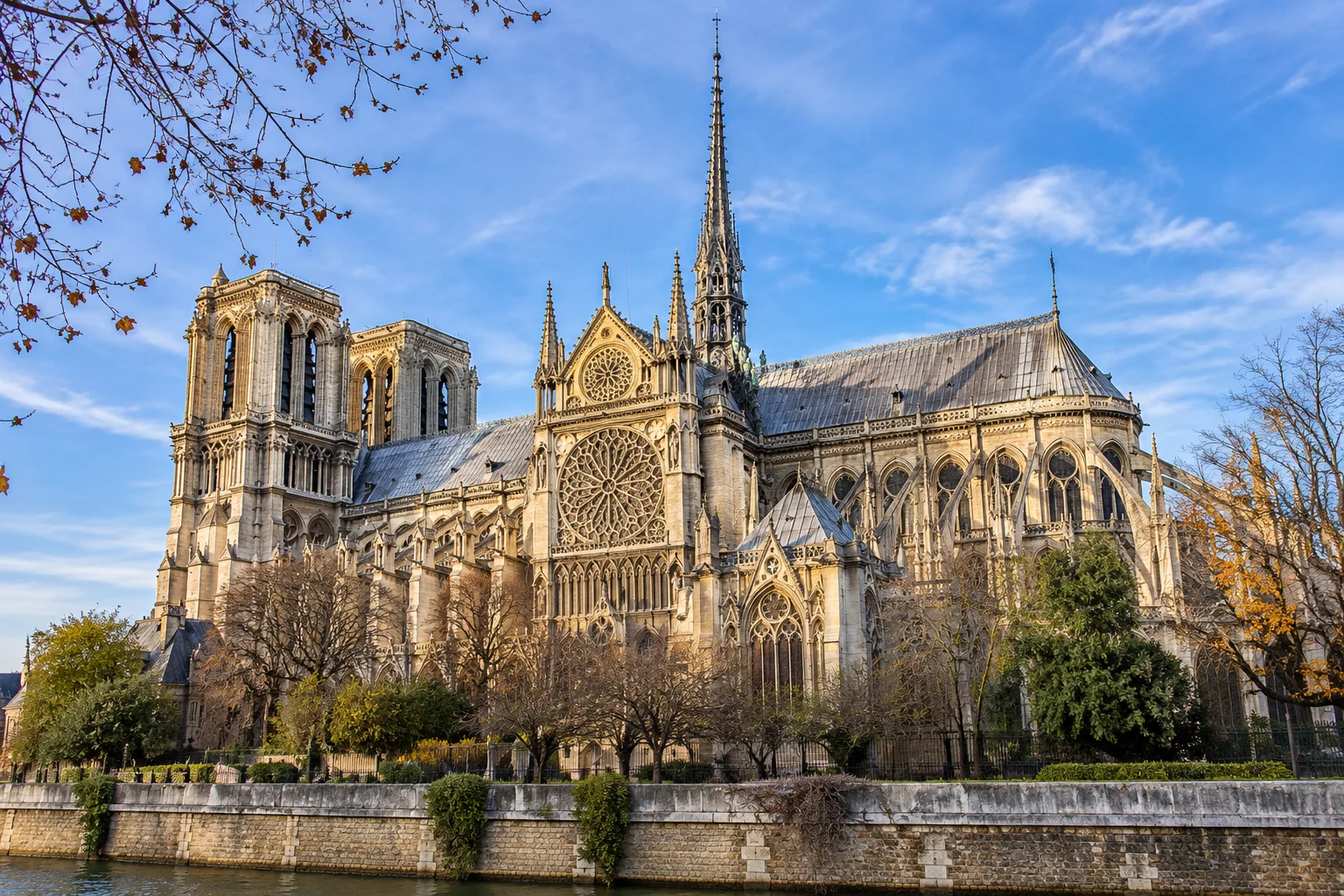
Begin around Île de la Cité and the riverbanks: bridges, pale stone and changing views across the Seine give the morning a clear setting. Keep this first walk unhurried, then leave space for lunch before the Louvre. A particular chapel or cathedral interior can be the morning’s booked focus if it matters more to you.
If you want one interior here, choose Sainte-Chapelle for its stained-glass setting and arrange that visit around the Louvre. Use its official ticket and security instructions; the monument asks visitors to arrive at the stated booking time. Otherwise, walk from the Notre-Dame exterior toward Square du Vert-Galant and Pont Neuf, then cross toward the Louvre. Leave the chapel out rather than adding it to an already full morning.
Afternoon: choose a manageable Louvre visit
Book through the official Louvre visit and ticket route, check the entrance instructions and choose the parts of the collection that matter most to you. A first visit works better with a short list of priorities than with a plan to see every famous room.
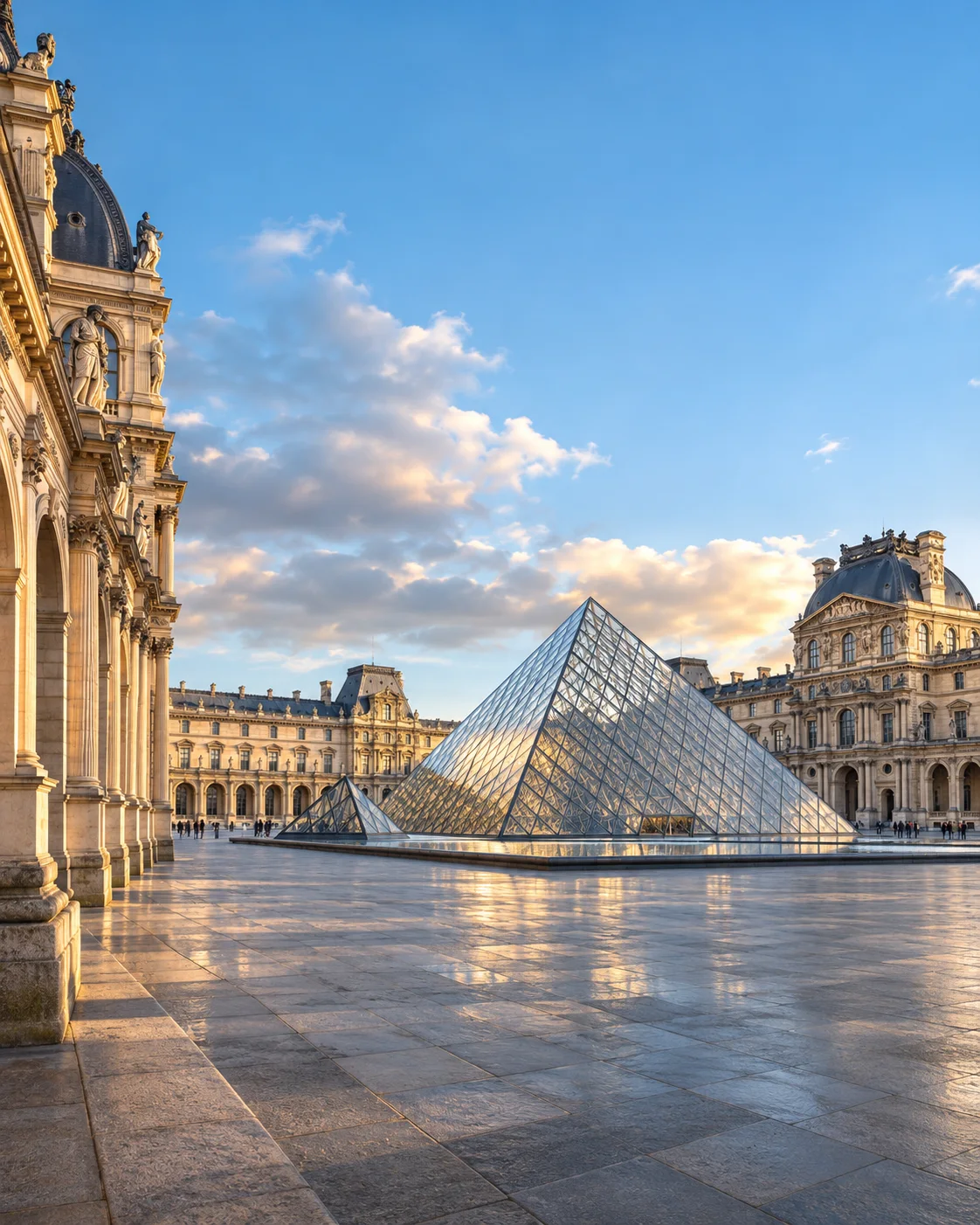
The museum's published closing time is not the moment to arrive at the final gallery: the official page states that last entry is one hour before closing and rooms begin clearing earlier. Keep a margin rather than putting the whole visit at the end of the day.
Afterwards, walk through the Tuileries if you still have energy. If the museum has filled the afternoon, make the gardens the gentle ending instead of adding another major attraction.
Evening: keep dinner close to the final stop
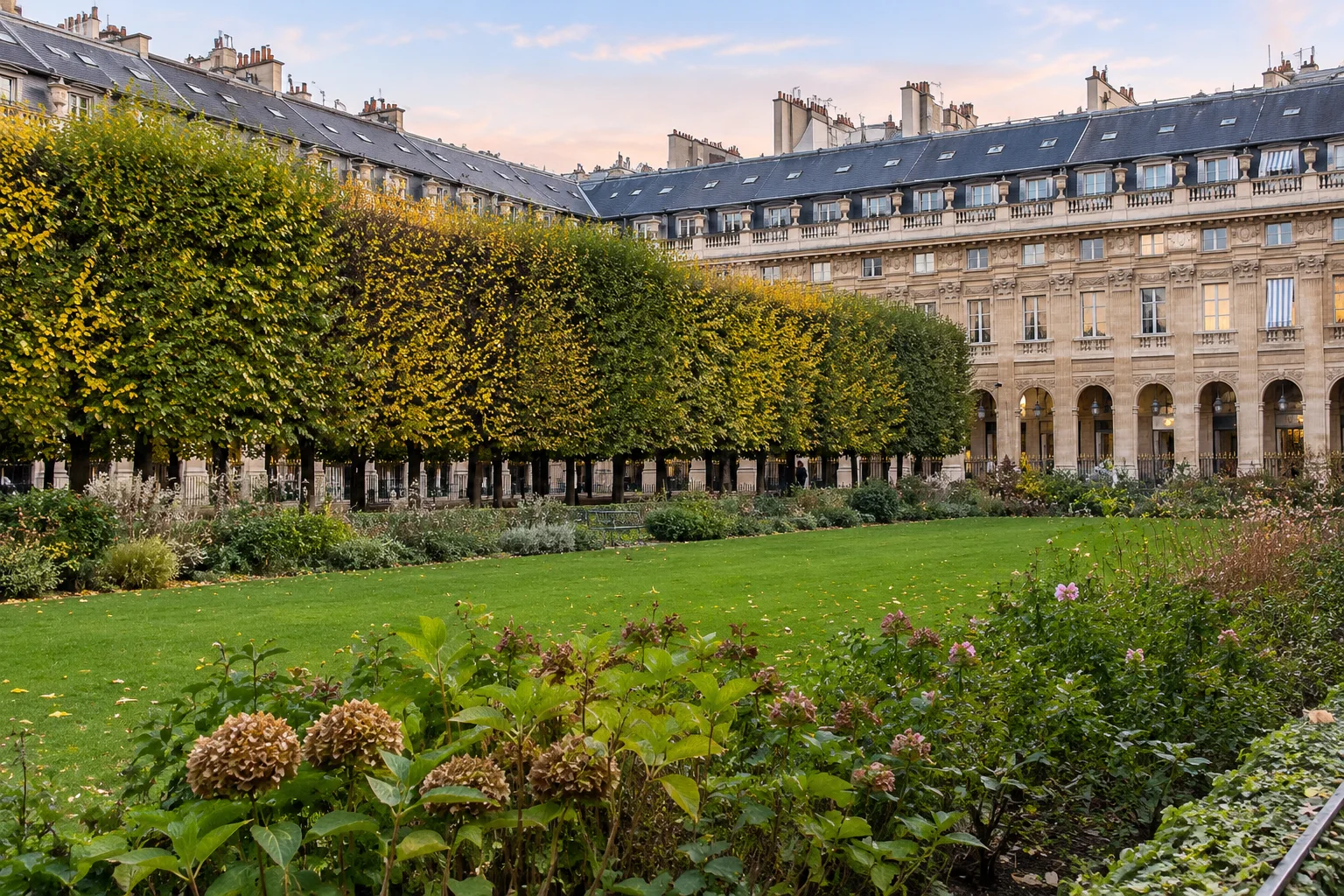
From the Tuileries, choose dinner around Rue Saint-Honoré and the Palais-Royal area if you want to stay on this side of the river. The arcaded Palais-Royal setting gives the day a smaller-scale finish after the Louvre. Keep dinner near the final walk rather than fixing a reservation across town.
Day 2: the Eiffel Tower and the Left Bank
Morning: make the Eiffel Tower the anchor
Use the official Eiffel Tower ticket information to choose what you want to do: second floor or summit, and the available stairs or elevator options. These are different products, so read the inclusions before paying. The official tower website notes that summit access can be restricted by severe weather or peak conditions; avoid treating the highest level as a guaranteed last-minute option.
Travel light. Large luggage is not permitted and the tower does not provide luggage storage. Keep bags with your accommodation or use an appropriate separate storage arrangement before the visit.
Allow time around the reservation for security, the visit itself and the views nearby. Do not schedule an important lunch immediately after an optimistic estimate of when you will finish.
Afternoon: move toward Saint-Germain and Luxembourg Gardens
After lunch, use transport to reach Saint-Germain-des-Prés. Start at the church square, follow Rue de Furstemberg for a quieter small-square stop, then walk through Rue de Buci toward Saint-Sulpice. Rue de Buci is a useful food-and-café area for a proper break; choose somewhere with a menu and price that suit you rather than making a famous terrace another compulsory queue.
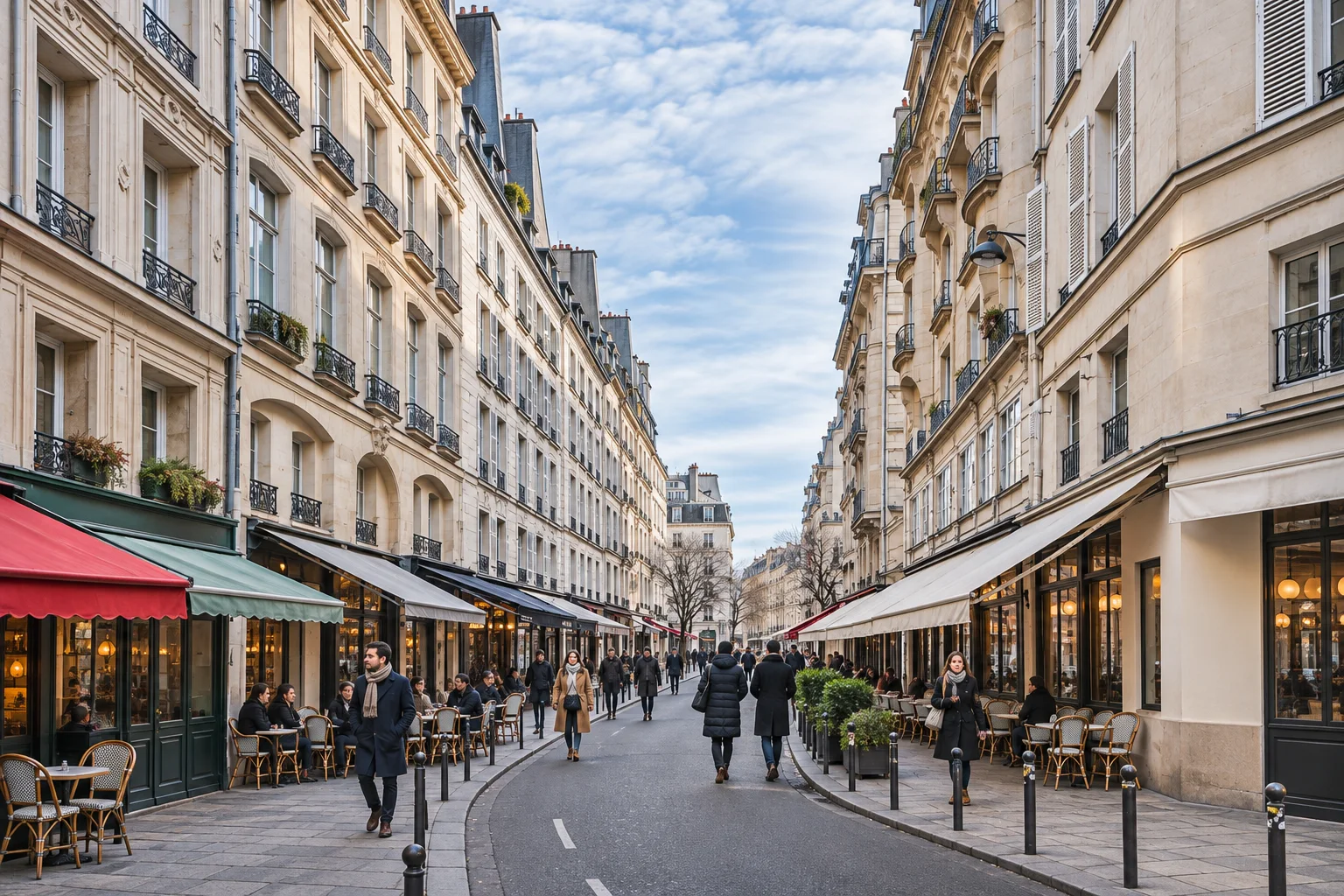
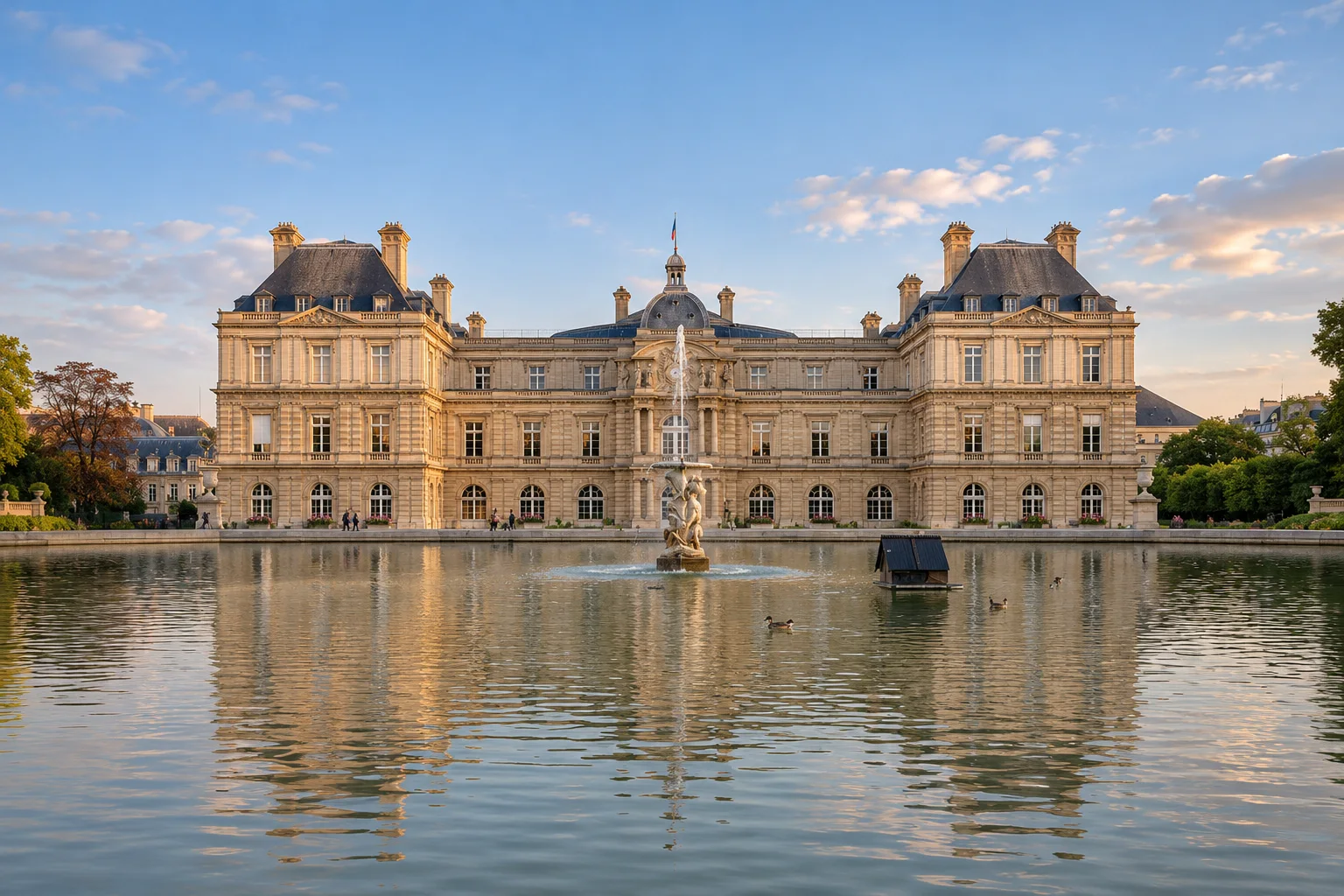
Continue toward Luxembourg Gardens for the outdoor finish. This sequence moves from busy café streets to a church square and garden, giving the afternoon a different rhythm from the tower. If the morning ran long, keep Saint-Germain and leave the garden out.
Rainy-day alternative
Choose the Musée de Cluny in the Latin Quarter for a medieval-art afternoon. It replaces Luxembourg Gardens and the longer Saint-Germain walk, so travel to the museum after the tower and keep only a nearby café stop. Its current practical page lists Monday as the closing day; check your date before making it the wet-weather default.
Day 3: Montmartre, then choose your final afternoon
Morning: explore Montmartre at walking pace
Montmartre changes the mood with hills, smaller streets and the white domes of Sacré-Cœur. Give the neighborhood a proper morning and choose a route suited to your mobility, using transport where it helps. Leave time to stop and look around instead of treating the climb as a transfer to the next attraction.
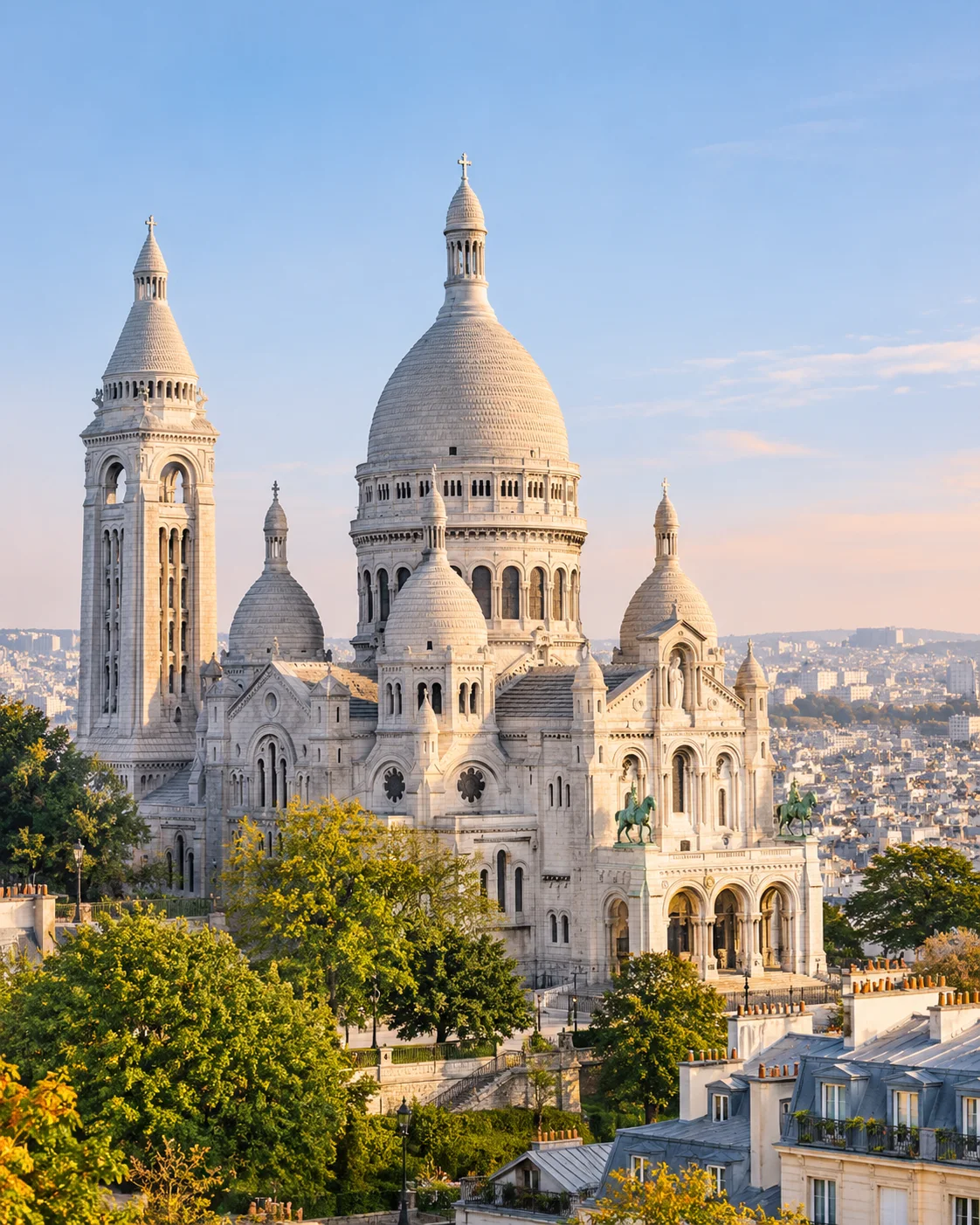
After the Sacré-Cœur exterior and views, take Rue de l’Abreuvoir and Rue des Saules for a small-street circuit, then descend toward Rue des Abbesses for lunch or a bakery stop. The hills and cobbles matter more than the short distances suggest; use a shorter route or transport when needed. Leave a proper break before travelling to the final afternoon area.
Afternoon option A: the Marais
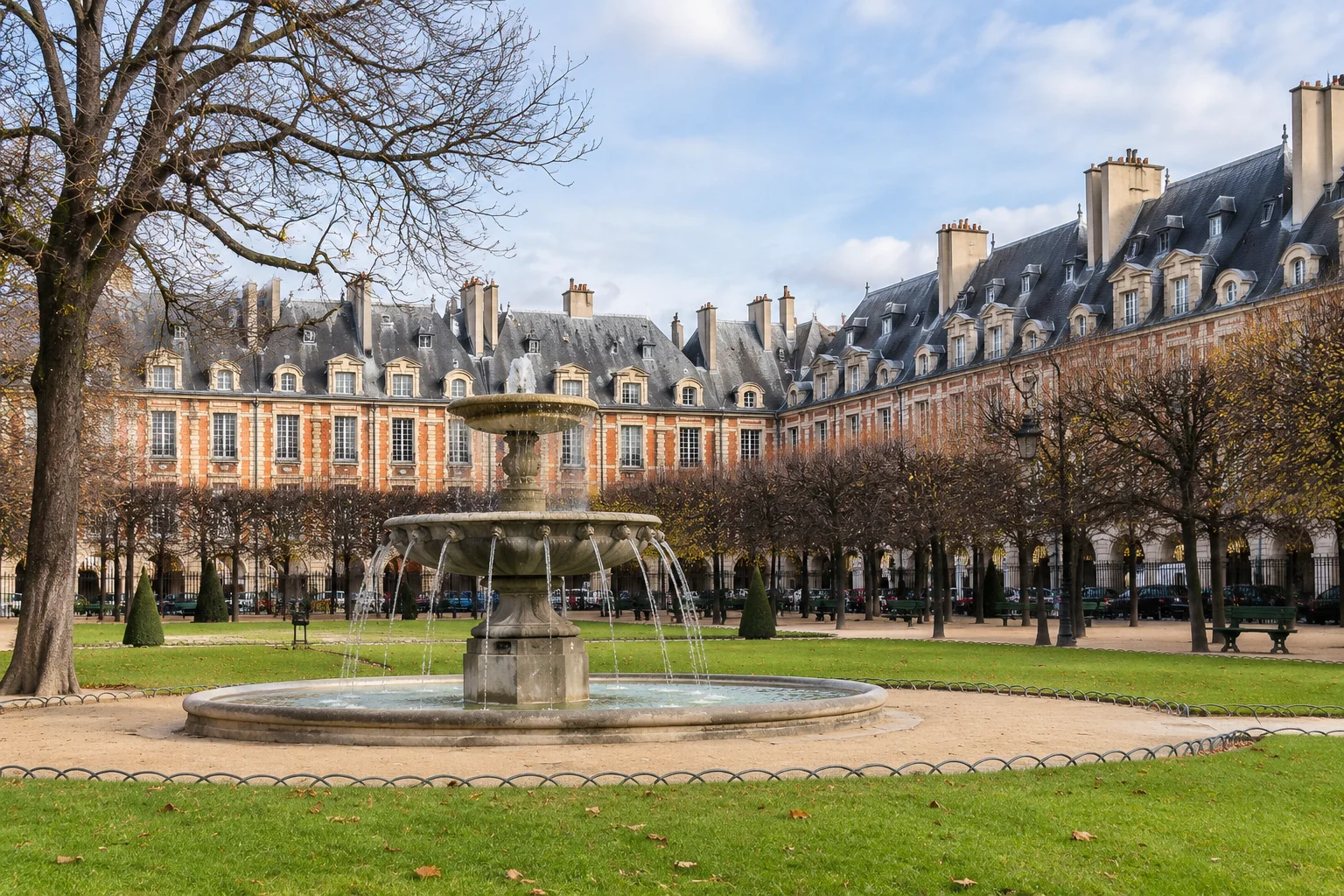
Choose the Marais for more neighborhood walking, shops, cafés and time around Place des Vosges. Travel there from Montmartre rather than treating the two as one continuous short stroll. This option works well if the first two days already provided enough museum time.
Afternoon option B: one more museum
If medieval art appeals, use the Musée de Cluny as the final afternoon’s museum choice, provided you did not already use it on Day 2. It is in the Latin Quarter, so travel there from Montmartre and leave the Marais out. Check its opening calendar and keep departure luggage elsewhere. If you already visited Cluny, choose the Marais rather than adding a second museum for its own sake.
Where to stay for this itinerary
| Base area | Why choose it for these days? | Tradeoff to check |
|---|---|---|
| Saint-Germain / Odéon | Café streets and an easy Day 2 finish near the Left Bank walk | Useful for lingering over dinner; the tower and Montmartre still need transport |
| Châtelet / Les Halles edge | A central transport-oriented base for the historic center and crossings to other areas | Busy streets and large station interchanges; inspect the exact walk with luggage |
| Marais / Saint-Paul | Neighborhood evenings and the Day 3 Marais choice on your doorstep | The airport or mainline arrival may require a change; compare it with your real arrival point |
Choose the area after testing the exact accommodation address in the RATP planner. A convenient arrival transfer can matter more than saving one short sightseeing journey, particularly with heavy luggage or accessibility needs.
Check the exact address and late-arrival instructions before booking. A hotel described as “near Paris” can produce a very different three-day experience from a base inside the city.
Transport and booking order
- Place the Louvre on an open day and choose the tower visit you want.
- Book any other essential attraction, keeping the same-day route realistic.
- Use the official RATP planner for your dates, arrival point and accessibility needs.
- Check service changes before travel and again before an important transfer.
- Leave unbooked time for meals, walking and changes in the weather.
Do not compare a pass with separate tickets until you know which attractions you will actually enter. A long list of included places is not useful if your three days cannot sensibly accommodate them.
If you have less time or different priorities
With two full days, keep the historic-center/Louvre day and the Eiffel/Left Bank day, then replace a lower-priority stop if Montmartre matters more to you. With children, shorter museum visits and more breaks may work better. If you dislike museums, swap the Louvre interior for more neighborhood time while keeping the same area-based route.
Versailles is not included in this plan. Treat it as a substantial separate outing and replace a Paris day if it is a priority. Adding it without removing anything makes the timetable much less useful.
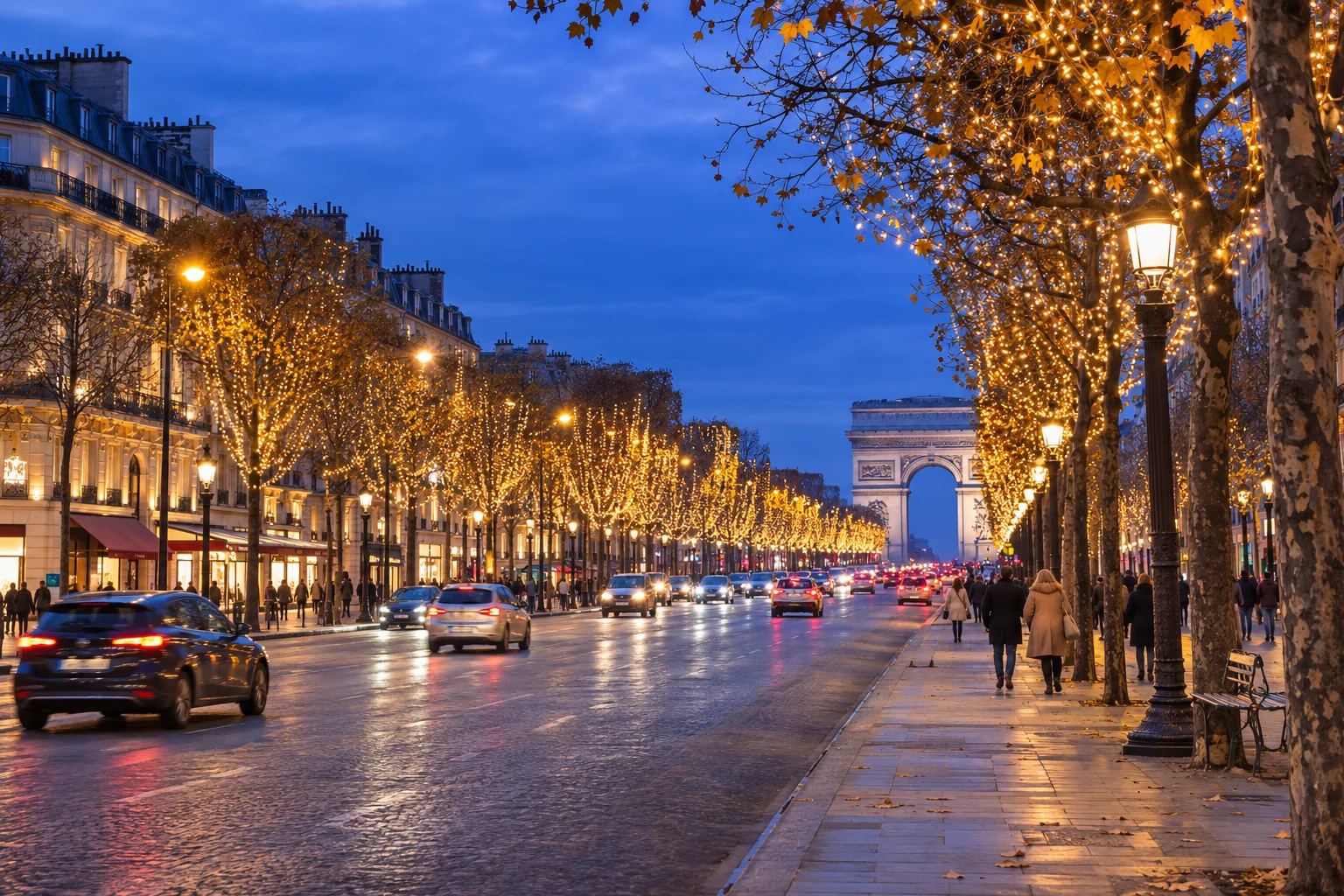
For a festive visit, use Paris at Christmas to replace part of this general route with winter lights and window displays. Keep the museum and tower decisions that matter to you, then remove an outdoor afternoon to make space for the seasonal plan.
Paris itinerary questions
Can I walk the whole itinerary?
Not comfortably for every traveler. The plan groups places to reduce unnecessary crossings, but Montmartre and the other areas still need deliberate transport decisions. Check the actual route and use transit when it helps.
Should I book everything?
Book the attractions that matter most and require or benefit from a reservation. Keep meals and lower-priority walks flexible unless you have a specific reason to fix them.
What should I pack?
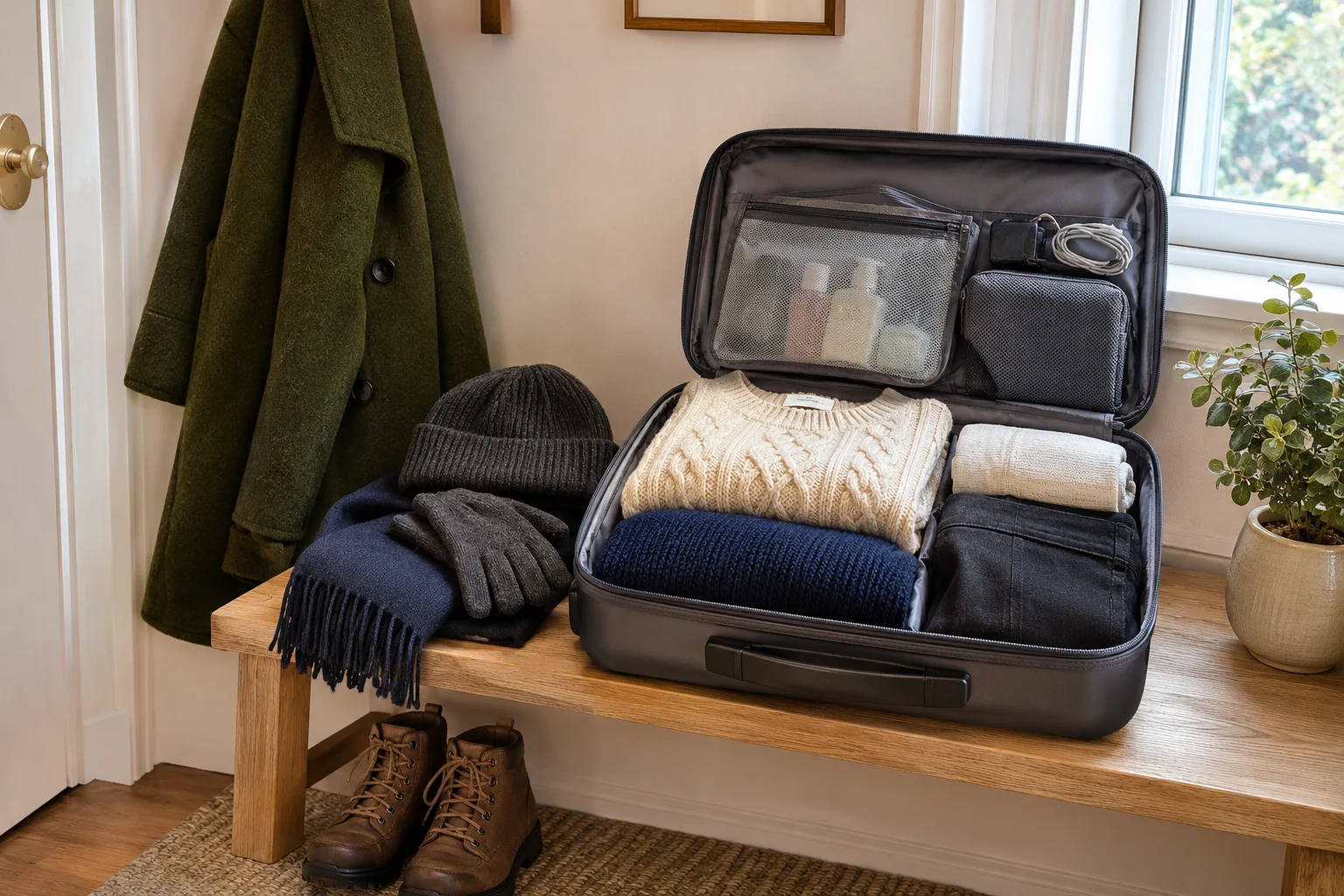
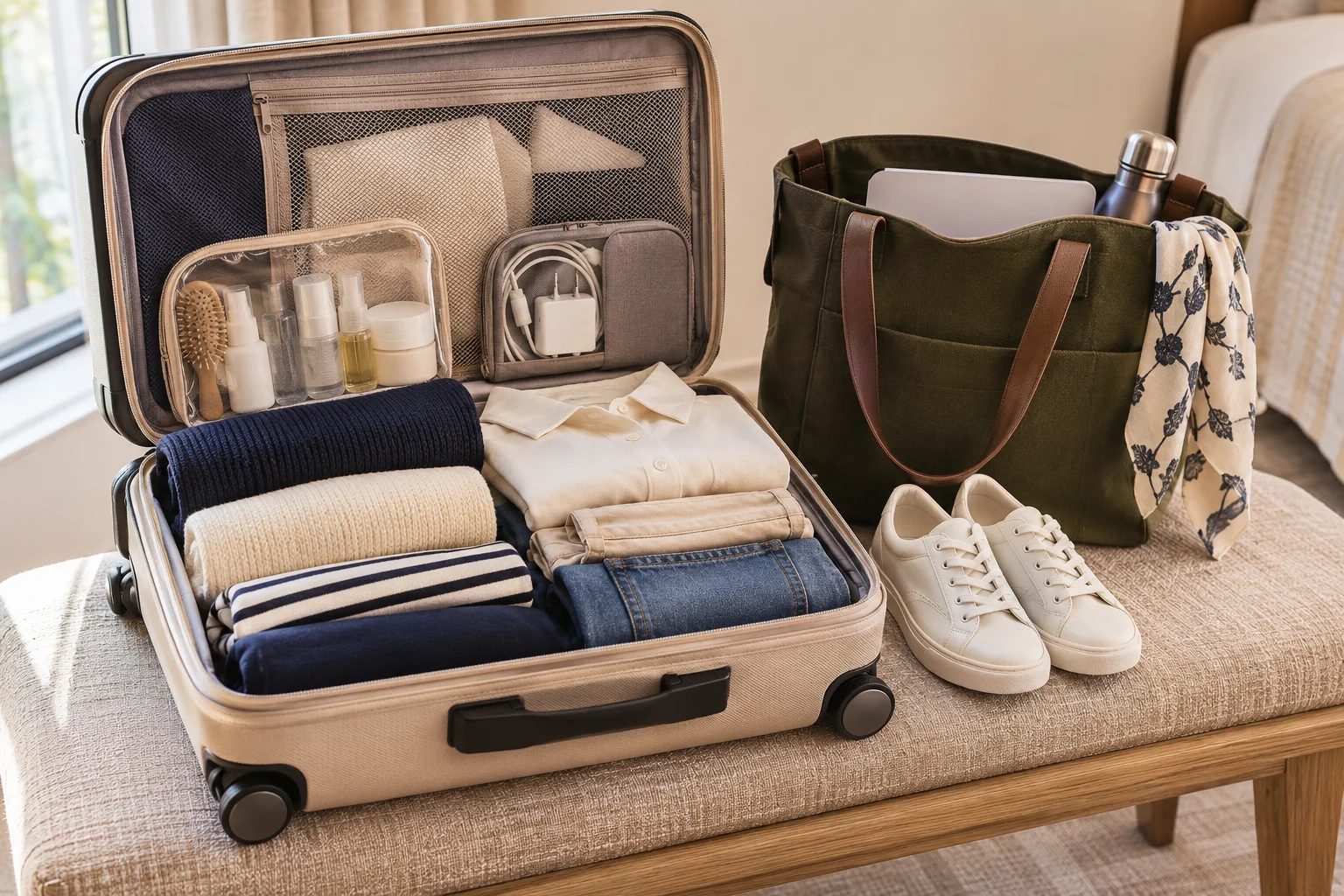
Comfortable walking clothes, a weather layer and a manageable day bag are a useful start. Use the carry-on packing list for the wider trip, then adjust it for the forecast.
Useful official planning links
- Hours & admission - Plan and book your visit
- Ticket rates and opening times - OFFICIAL Eiffel Tower website
- RATP : transports à Paris et en Ile-de-France : bus, métro, tramway, RER En | RATP
Check the arrangements for your travel dates before booking or departure.