A good winter road trip is built around daylight, realistic driving legs and the option to change plans. The car kit matters, but it comes after the route. Start with the roads you can reasonably use in the conditions, choose an overnight stop with a little flexibility, and keep the first day easier than your most optimistic estimate.
This guide is a planning framework for an ordinary road trip in a winter climate. It does not establish that a particular route is safe or open. The relevant road authority, forecast, vehicle guidance and local requirements govern the actual journey. The companion sheet helps you organize those decisions without turning them into a last-minute search beside the car.
Plan the route before the kit
Choose the essential destination and the acceptable alternatives first. A direct route on maintained roads can be a better winter plan than a scenic detour that adds an exposed pass, an uncertain opening or several hours after dark. Decide which viewpoint or stop you would remove if the day becomes slower.
Check the responsible road authority for closures, current restrictions and maintenance information. A map application showing a line between two places is not proof that the road is suitable for the date or conditions. Save the official road-status source with the accommodation and route details so it remains easy to find.
Use the forecast for the places you will actually pass through, including changes in elevation where relevant. A pleasant city forecast does not describe every part of a mountain transfer. Keep a practical alternative or the option to postpone rather than treating a booking as a reason to continue regardless of conditions.
Build a daylight-first timetable
Plan the longest driving section for useful daylight and leave a margin for slower progress, breaks and arrival. Daylight does not remove winter risk; it simply makes a deliberately manageable schedule easier to follow. Check sunset for the destination and date rather than importing a summer driving day into a winter itinerary.
Choose an overnight stop where arrival logistics are straightforward. Record the check-in arrangements, parking location and a contact number. If the parking entrance is different from the reception address, resolve that before departure. A short final leg is especially useful when the day has already included a long flight or train connection.
Keep the itinerary honest about optional stops. A café, viewpoint or short walk is a bonus that can disappear without breaking the trip. Avoid buying several tightly timed activities around a winter driving leg unless you are comfortable losing or changing them.
A worked day with an early decision
Imagine a booked overnight in Town B and an optional lakeside stop between it and your present base, Town A. These are invented planning labels, not a recommended route. The evening before, save the responsible road-status and forecast links, the actual sunset for Town B, its parking/check-in contact and a fallback room option in Town A. Verify that any fallback is available and understand its terms before relying on it.
At breakfast, while parked, make the first decision: if official information supports the planned journey, take the direct leg and keep the lake optional. Reassess at the planned lunch stop before committing to the detour. If delays or changed conditions consume the arrival margin, drop the lake; if the onward route is unsuitable, contact the accommodation and use a suitable nearby stop or stay at the current base as conditions and official instructions allow. Do not wait until the last exposed section to look for a room.
The decision times are breakfast and the planned lunch pause, not universal safe-weather or drive-time thresholds. Your real distances, road authority, vehicle, daylight and accommodation determine whether either leg should happen at all. Write the actual next reassessment point on the winter-drive sheet before setting off.
Prepare the car for the actual journey
Follow the vehicle manufacturer's guidance and arrange appropriate maintenance before travel. Check the vehicle's tires, battery, lights, fluids and visibility equipment through suitable professional or official advice. A long packing checklist cannot compensate for a vehicle that needs attention.
Understand the local rules for winter tires, chains or other equipment along the route, including a rental vehicle's terms. These requirements differ by jurisdiction and conditions. Confirm what is supplied, what you are allowed to use and whether you know the correct procedure. Do not assume the rental desk has prepared the car for every border or mountain road you might choose.
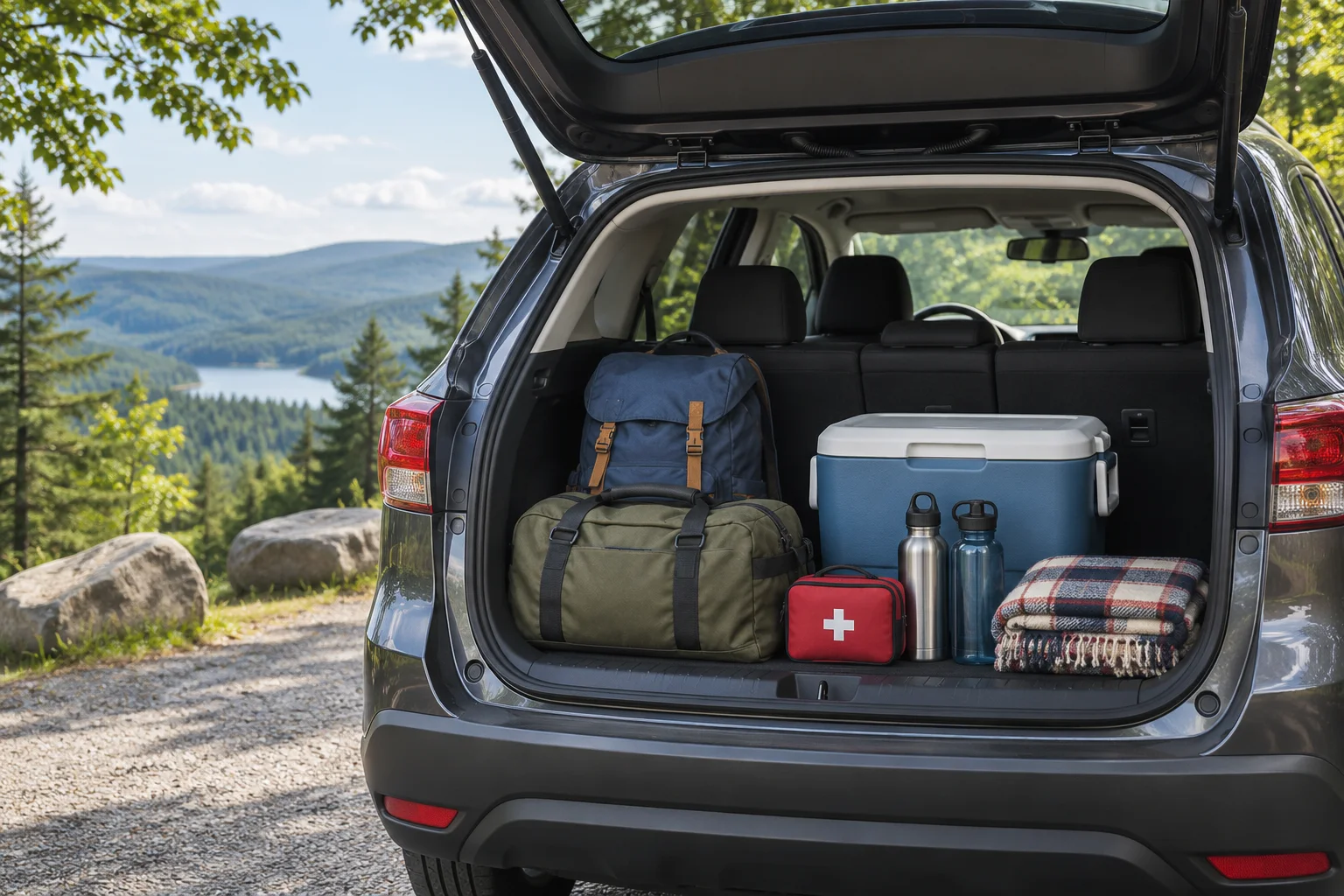
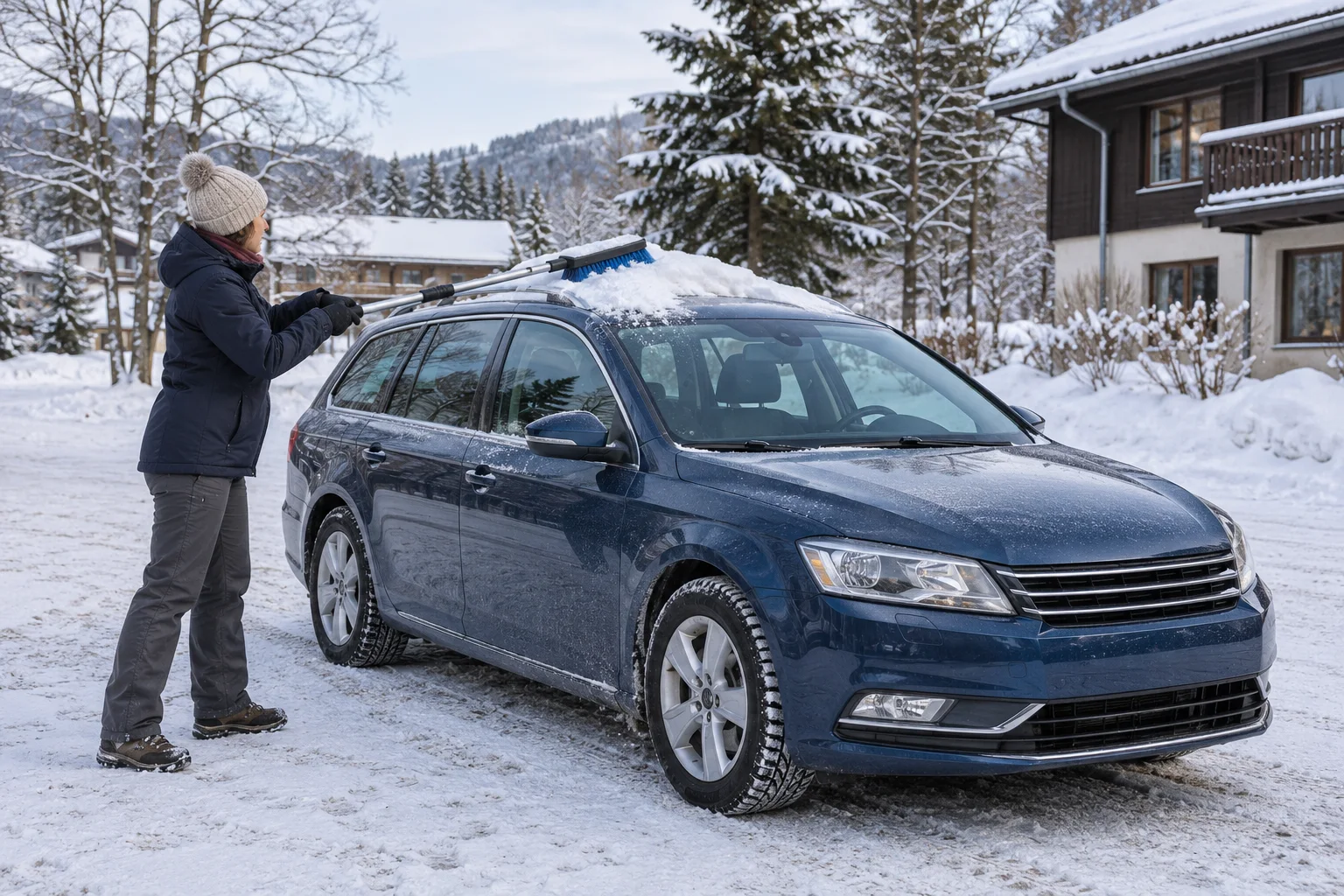
Keep the driving position, windows, mirrors and lights appropriately clear before setting out. Secure luggage according to the vehicle's guidance, leaving the driver good visibility. A photograph of equipment arranged in an open boot is a packing illustration, not a safe loading plan for driving.
Divide the kit into three zones
| Zone | What belongs there |
|---|---|
| Accessible cabin kit | Essential documents, charging cable, water, food and personal items needed during stops |
| Vehicle and winter kit | Suitable road equipment, visibility tools and emergency supplies selected for the route |
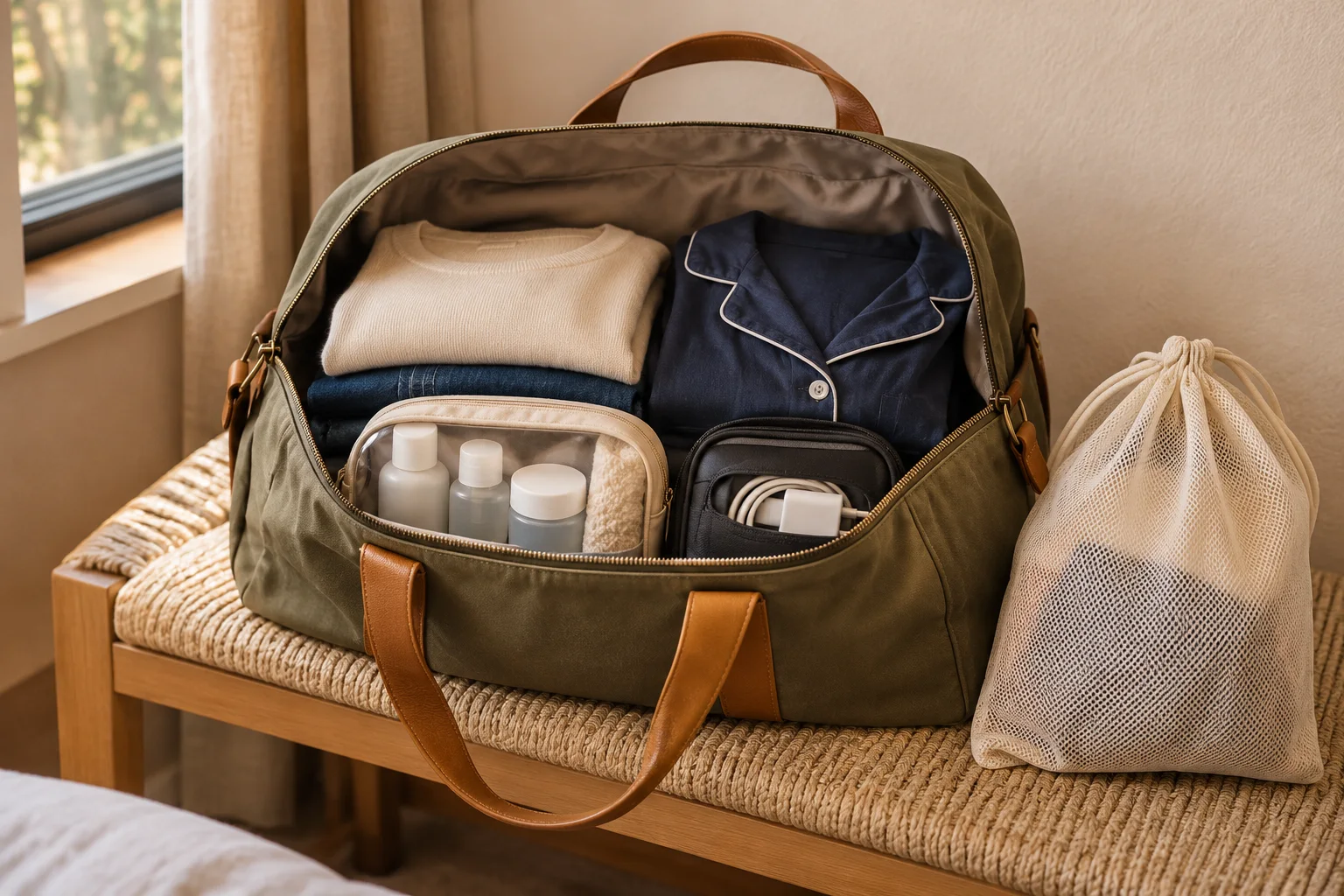
| Overnight bag | One change, toiletries, medication and the first night's essentials |
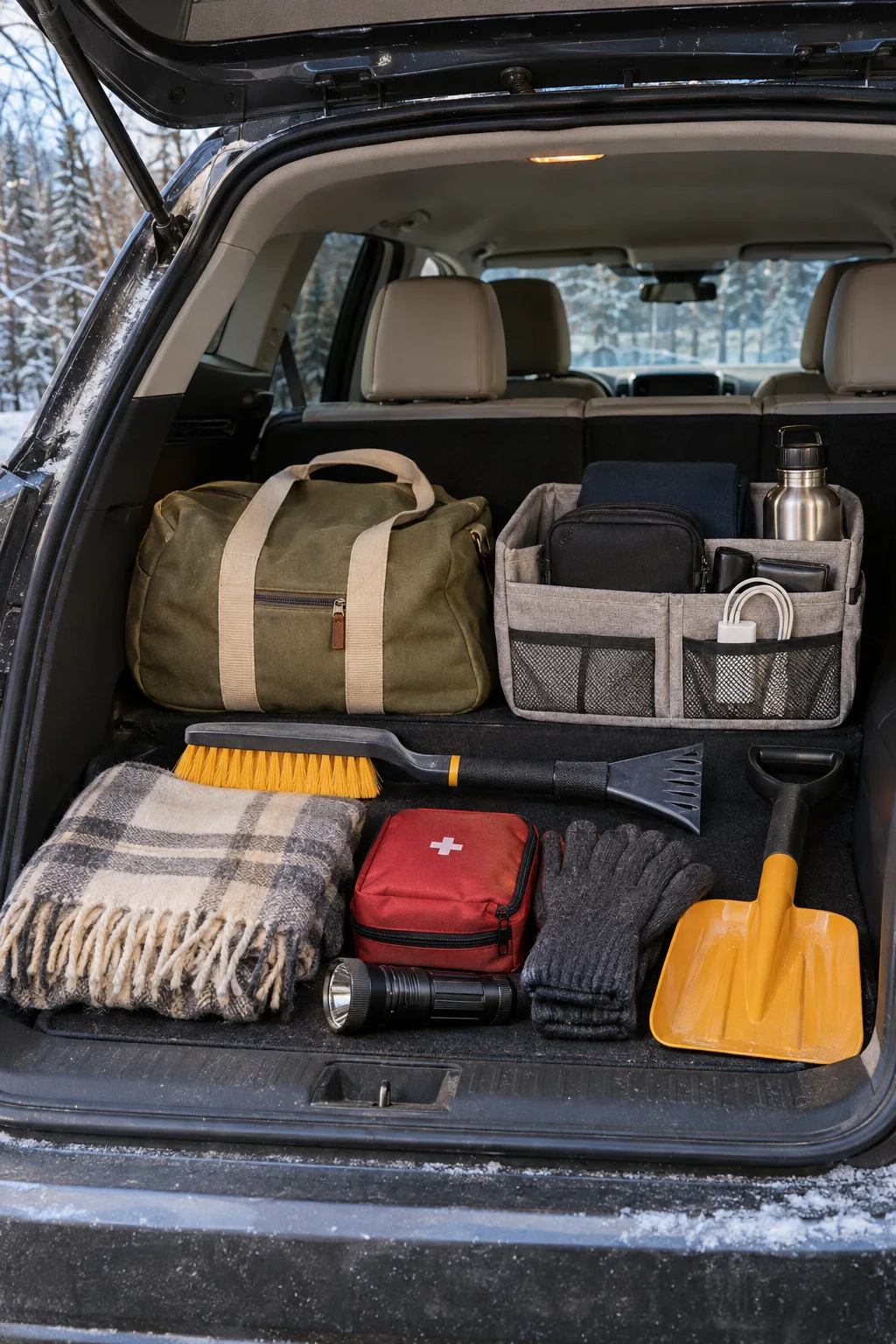
The accessible kit should be reachable when the vehicle is safely parked. Keep loose items from becoming distractions, and stop in an appropriate place before looking for documents or changing the plan. Passengers can help with navigation, but the driver's attention stays with driving.
Use official winter-driving guidance to select the vehicle kit. Common categories include an ice scraper and brush, a flashlight, suitable warm items, food, water, a first-aid kit and communication/charging equipment. The exact equipment depends on the vehicle, route, climate and local requirements; inspect it rather than relying on a sealed box you have never opened.
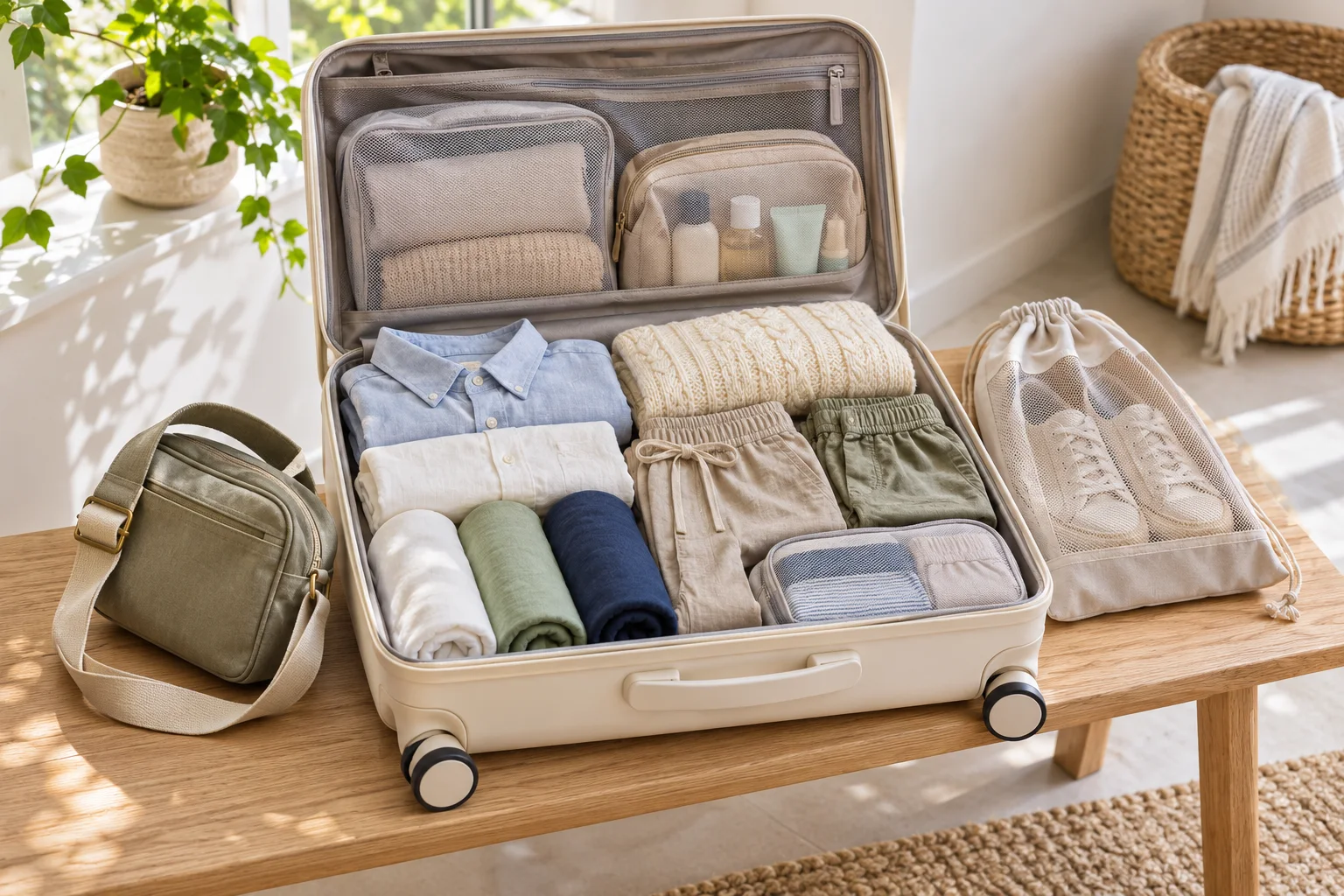
Pack the overnight bag separately so a short stop does not require emptying the main luggage in cold weather. Keep temperature-sensitive essentials with you as appropriate and follow their storage instructions. Add the small winter layers you will use when leaving the car.
Before each driving day
Review the current road information and forecast, then decide whether to follow, shorten, reroute or postpone the leg. Tell someone suitable about the journey when appropriate and keep the accommodation informed if arrival changes. Save the relevant assistance and emergency information for the places on the route.

Make charging or fuel stops part of the plan for your actual vehicle. Check the availability of intended facilities and keep enough margin for a change. A pin on a map does not establish that a charger is working or that a service station will be open when you arrive.
Allow time for breaks and keep the next decision point clear. You do not need to commit to the entire week every morning: decide the next practical leg using current information, then reassess. A shorter winter trip with comfortable stops is a better holiday than a timetable you are struggling to rescue.
If the plan changes
Have one indoor or nearby alternative at the overnight base. A local meal, museum or quiet afternoon can preserve the holiday when the long drive no longer makes sense. Check the cancellation and arrival terms for important bookings before departure so you know which choices remain available.
If conditions deteriorate, follow local instructions and official guidance. Do not use this general article as a reason to continue onto a closed or unsuitable road. The useful skill is changing the plan early enough that you still have straightforward options.
The road-trip essentials guide covers the everyday division between cabin and luggage, while the winter packing list handles the clothes and personal bag. Use the printable winter-drive sheet for the current route links, overnight contacts and daily decisions.
Winter road-trip questions
Can I use the same route as a summer road trip?
Only after checking its actual seasonal access and current conditions. Rework the pace, optional stops and overnight plan for the dates you are traveling.
Does this checklist make a winter drive safe?
No checklist can establish that. Appropriate vehicle preparation, current official information, local requirements and the decision to change or postpone the journey remain essential.
Useful planning links
Take the plan with you
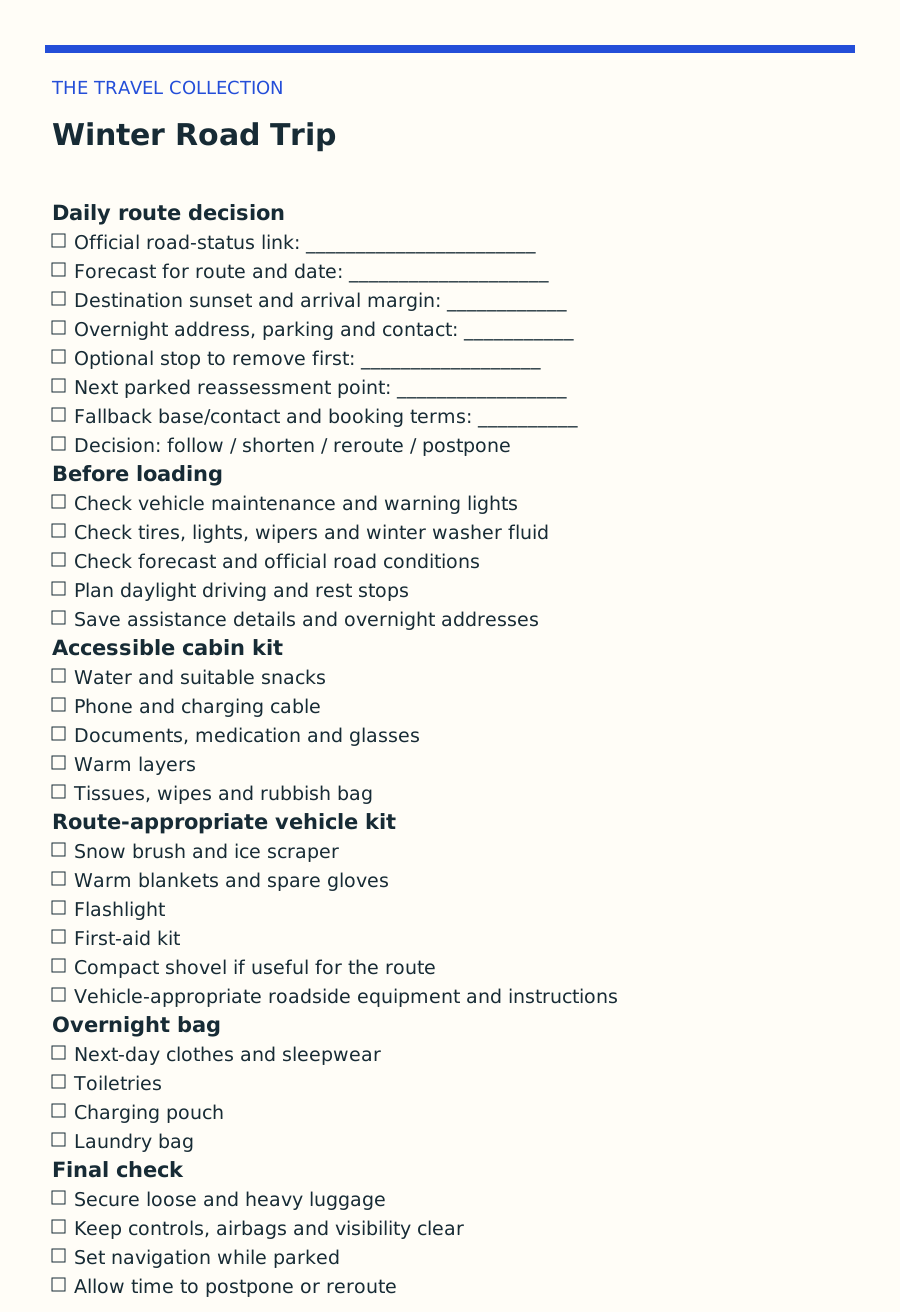
Open the winter-drive planning checklist, save the route links and overnight contacts, and print it for the trip.
Open the winter-drive planning checklist