A ski-trip packing list gets simpler when you separate three jobs: what you will wear on the slopes, what you will rent or bring as equipment, and what you need after skiing. Make those decisions before filling a suitcase. Otherwise it is easy to pack several evening outfits and still arrive without a small item you need on the first morning.
This checklist is for a first resort-based trip with three ski days and four nights away. It assumes you will arrange suitable skis, boots and poles through a rental provider unless you already have your own appropriate equipment. It is a packing guide, not instruction for skiing, off-piste travel or choosing technical protective equipment.
Sort rentals before packing
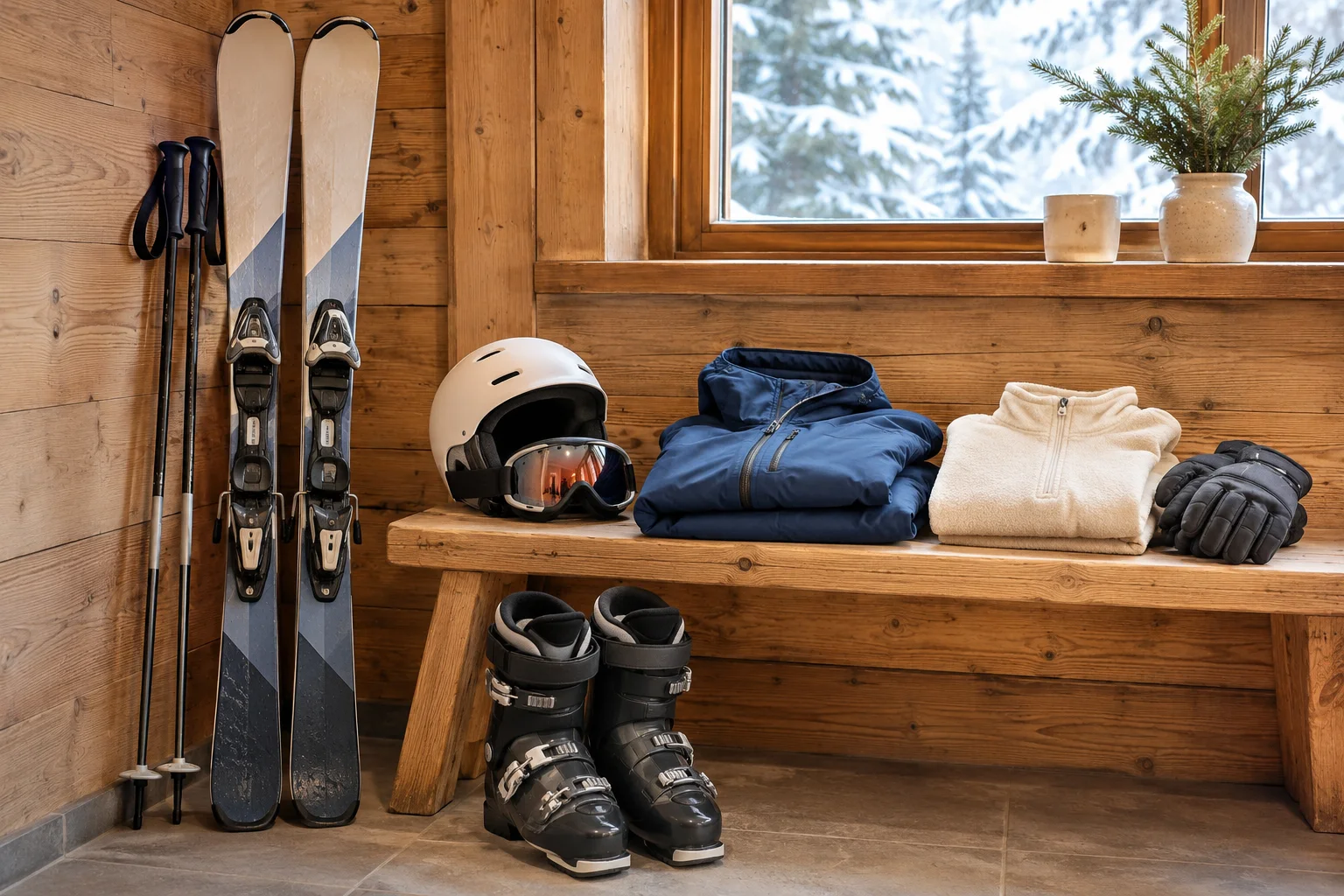
Write down what the rental booking actually includes. Skis, boots and poles may be a standard combination, while a helmet or other item can have its own booking terms. Check the provider's fitting arrangements, collection time and return process. Allow enough time before the first lesson or lift reservation to collect equipment without rushing.
If you are bringing equipment, read your transport operator's sports-baggage terms before booking. A ski bag is not automatically covered by the ordinary suitcase allowance. Keep the dimensions, weight and handling requirements for the actual service in your travel notes.
For a beginner, arrange suitable instruction and understand the resort's access and pass arrangements. Choosing what to pack comes after deciding what kind of skiing day you have booked. Use resort and instructor guidance for activity-specific clothing, equipment and conditions.
Bring, arrange or confirm
| Group | Default for this first trip | Confirm before leaving |
|---|---|---|
| Skis, ski boots and poles | Arrange appropriate rental equipment and fitting | Provider, collection location, fitting time and return deadline; follow the fitter's decisions |
| Helmet | Bring a properly fitted suitable helmet or arrange one explicitly | Whether the booked rental includes it and the lesson operator's requirements |
| Goggles, gloves, base layers and ski socks | Bring personal kit; two base sets and three sock pairs for three ski days | Goggle/helmet compatibility and any genuinely included item; do not assume a rental package supplies clothing |
| Ski jacket/trousers and mid-layers | Bring suitable slope clothing, or organize a specific clothing rental before travel | Fit with the complete outfit and weather; a city capsule is not its substitute |
| Lesson and lift access | Book the actual lesson and required access separately or as a confirmed package | Meeting point, check-in time, pass collection and what each booking includes |
For a concrete resort example, Breckenridge's lesson preparation page separates equipment collection, lesson check-in, lift access and helmet arrangements. It recommends collecting rental equipment the previous day when possible. Those are useful questions to bring to your own resort; its package terms and arrival intervals apply to its lessons, not universally to this checklist.
The on-slope clothing list
| Item | Why it earns space |
|---|---|
| Suitable ski jacket and ski trousers or bib | Outer clothing designed for the activity and expected weather |
| Two base-layer sets | A first-trip example that allows a dry change across three ski days |
| One or two suitable mid-layers | Adaptable insulation within the complete outfit |
| Three pairs of appropriate ski socks | A fresh pair for each ski day in this example |
| Suitable gloves or mittens | Hand protection chosen for the conditions |
| Neck warmer | A compact extra layer suited to the outfit |
| Properly fitted helmet and suitable goggles | Bring or arrange them through an appropriate provider |
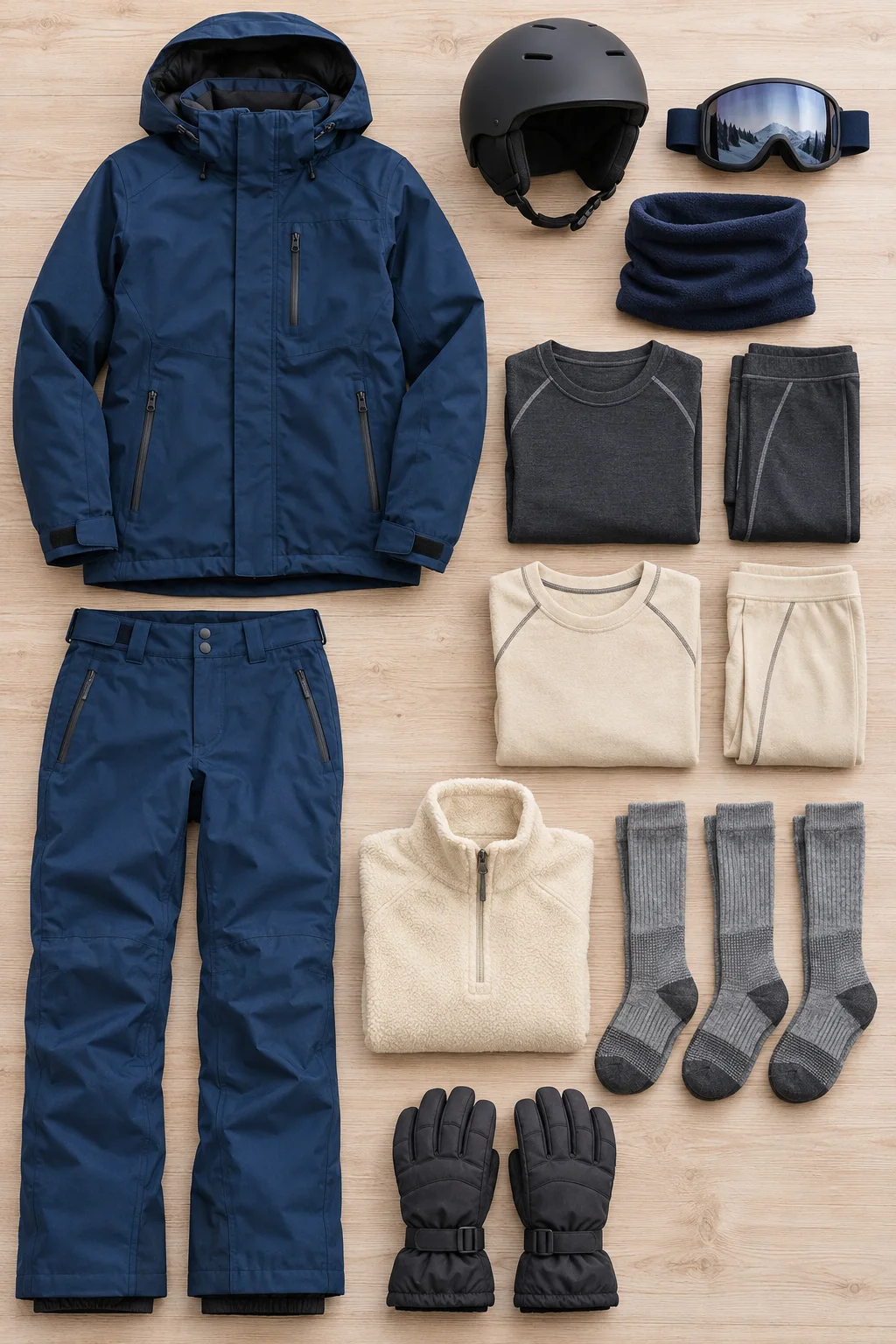
These quantities are an example for the stated trip, not a prescription for every mountain or weather forecast. Check the full clothing system together. You should be able to move comfortably, and the layers need to work with the equipment rather than simply looking warm on the bed.
Keep the first morning easy
Pack the first ski-day clothing together, with socks, gloves, neck warmer and the items needed for equipment collection. Put booking information and any required identification where you can reach them. A single accessible first-morning bundle saves searching through several bags in a rental queue.
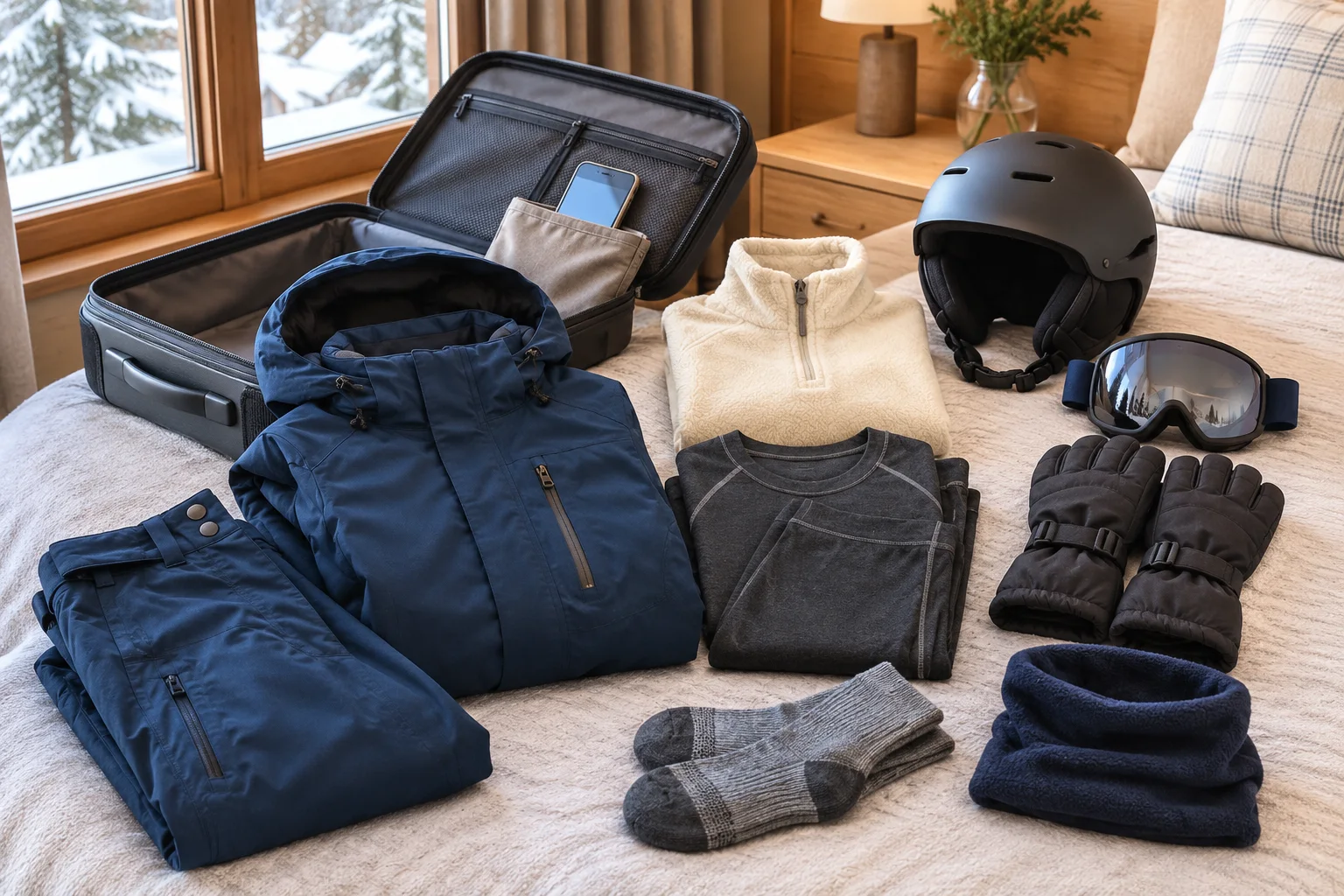
Wear clothing that is practical for a fitting and follow the provider's instructions about socks and footwear. Tell the fitter about comfort problems rather than trying to solve a poor fit by adding random layers or padding. The rental provider and instructor should guide the equipment decisions.
Choose a realistic meeting time after collection. If travel delays mean you will arrive late, contact the provider and lesson operator using their own arrangements. Do not assume an ambitious itinerary will work merely because every reservation appears on one phone screen.
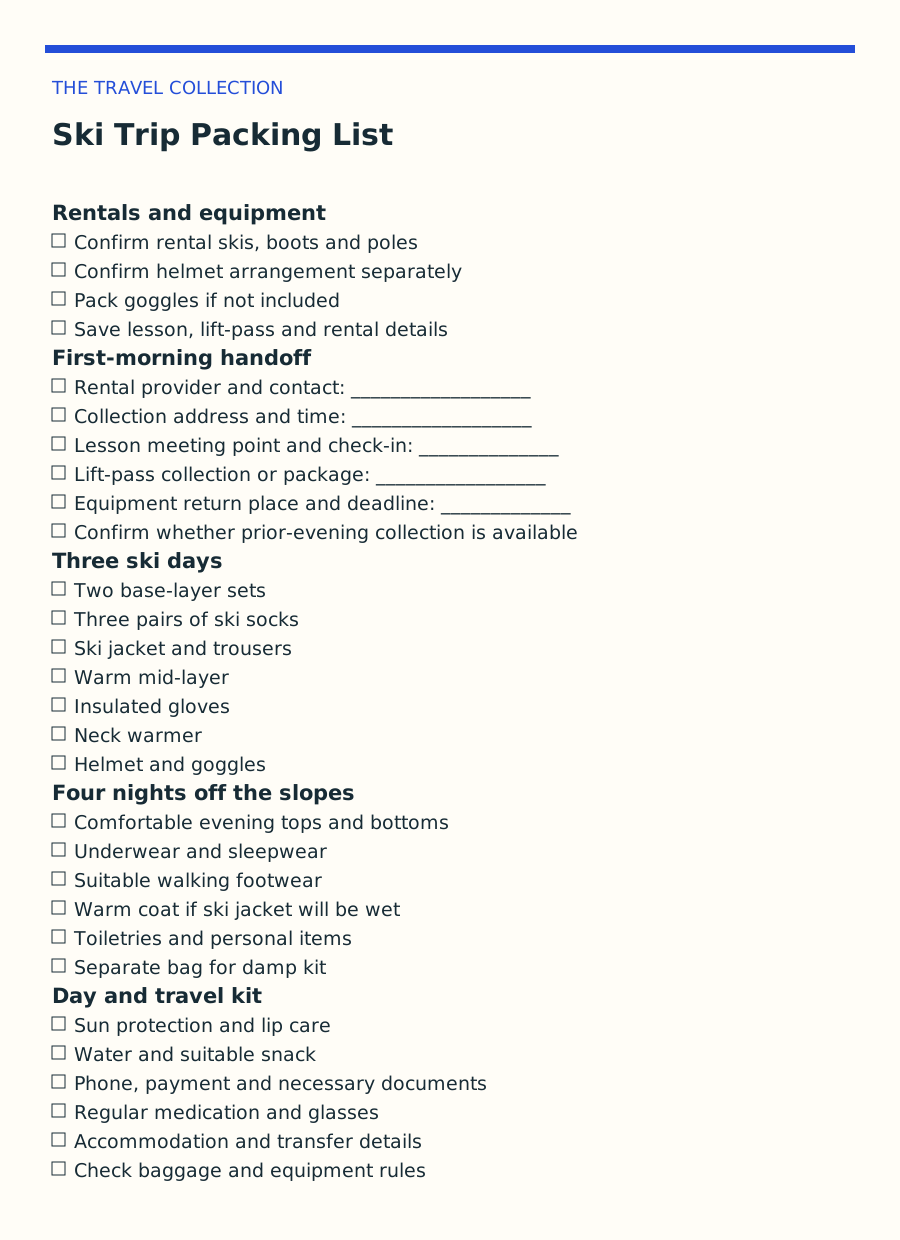
Before departure, fill in this handoff on the companion sheet: rental provider and contact; collection address and time; lesson meeting point and check-in time; lift-pass arrangement; return place and deadline. If prior-evening collection is available and your arrival allows it, use it to remove one task from the first morning. Otherwise work backwards from the provider's instructed check-in, not a guessed queue time.
Pack for after skiing
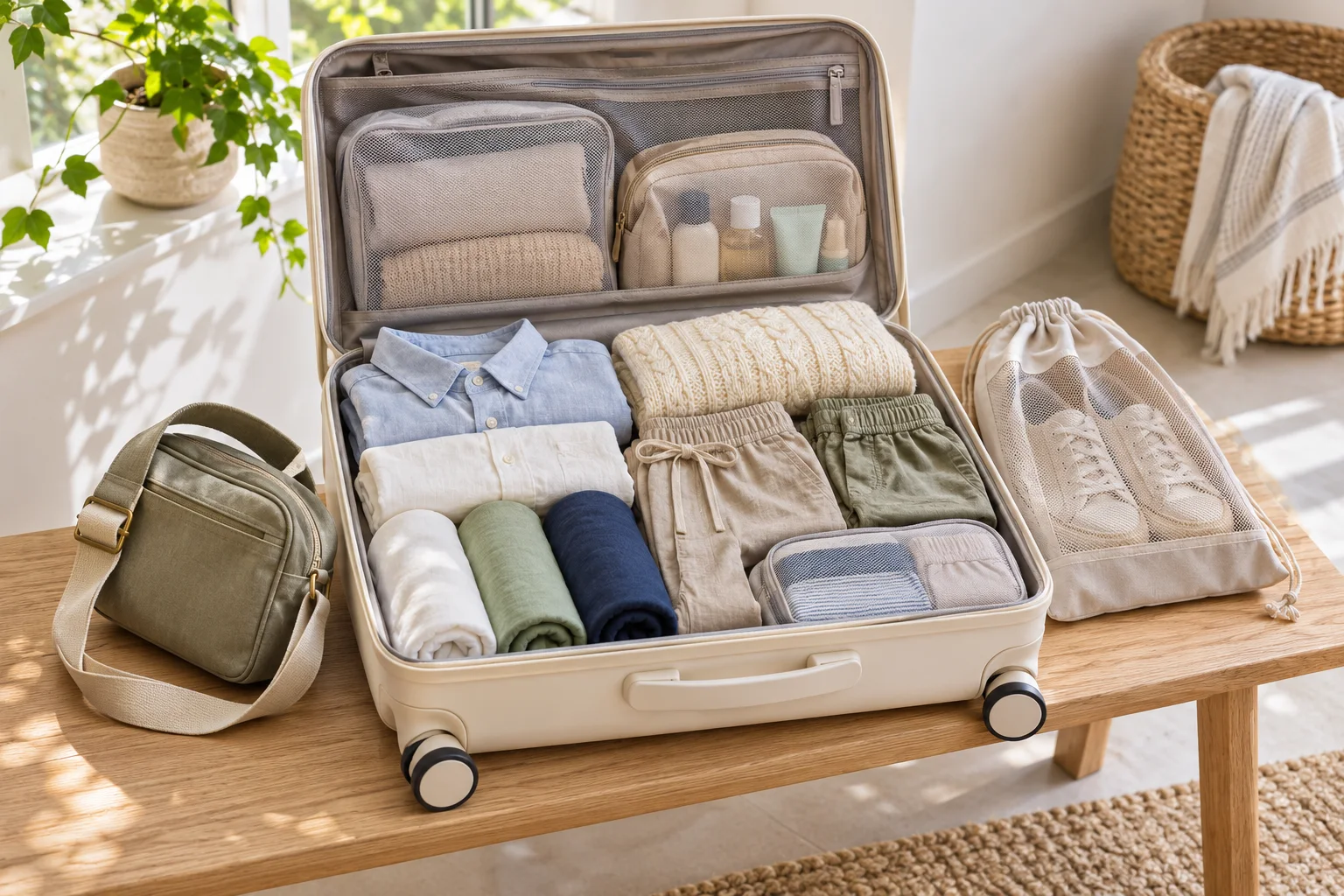
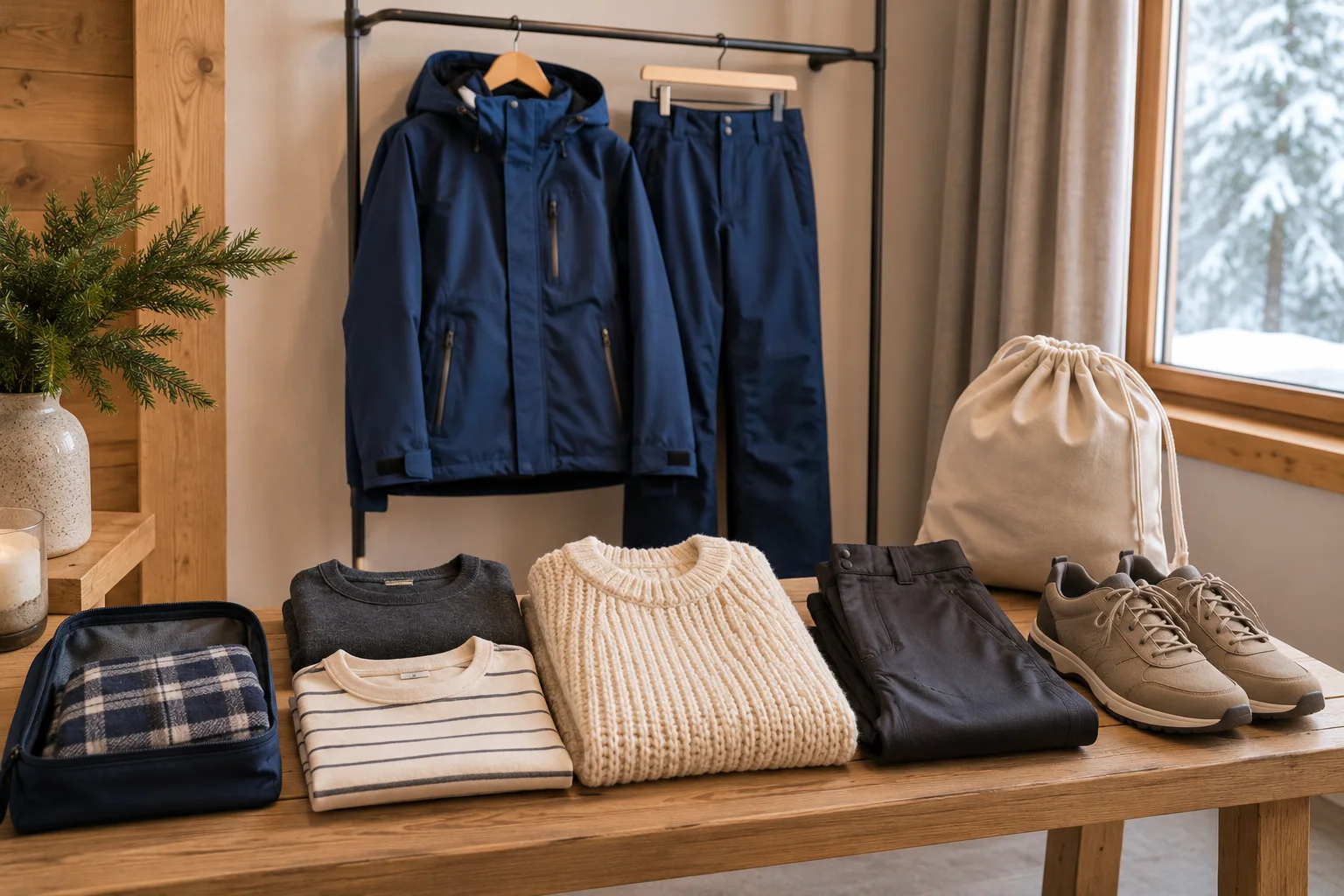
For four nights, start with two comfortable tops, a warm knit, one or two practical bottoms, underwear, sleepwear and suitable off-slope shoes. Wear the bulkiest useful pieces for travel when comfortable. Repeating an evening combination is usually easier than bringing a separate outfit for every dinner.
Check what the accommodation provides before adding towels or other bulky items. Swimwear earns space only if you plan to use a pool or spa and understand its access arrangements. A small laundry bag helps keep worn base layers and socks apart from dry clothing.
Give the wet-kit routine some thought. Know where clothing and equipment are meant to dry or be stored at the property. Follow the care instructions on your equipment and garments rather than placing everything against a hot heater. Set out a dry combination for the following morning.
The small items for the day
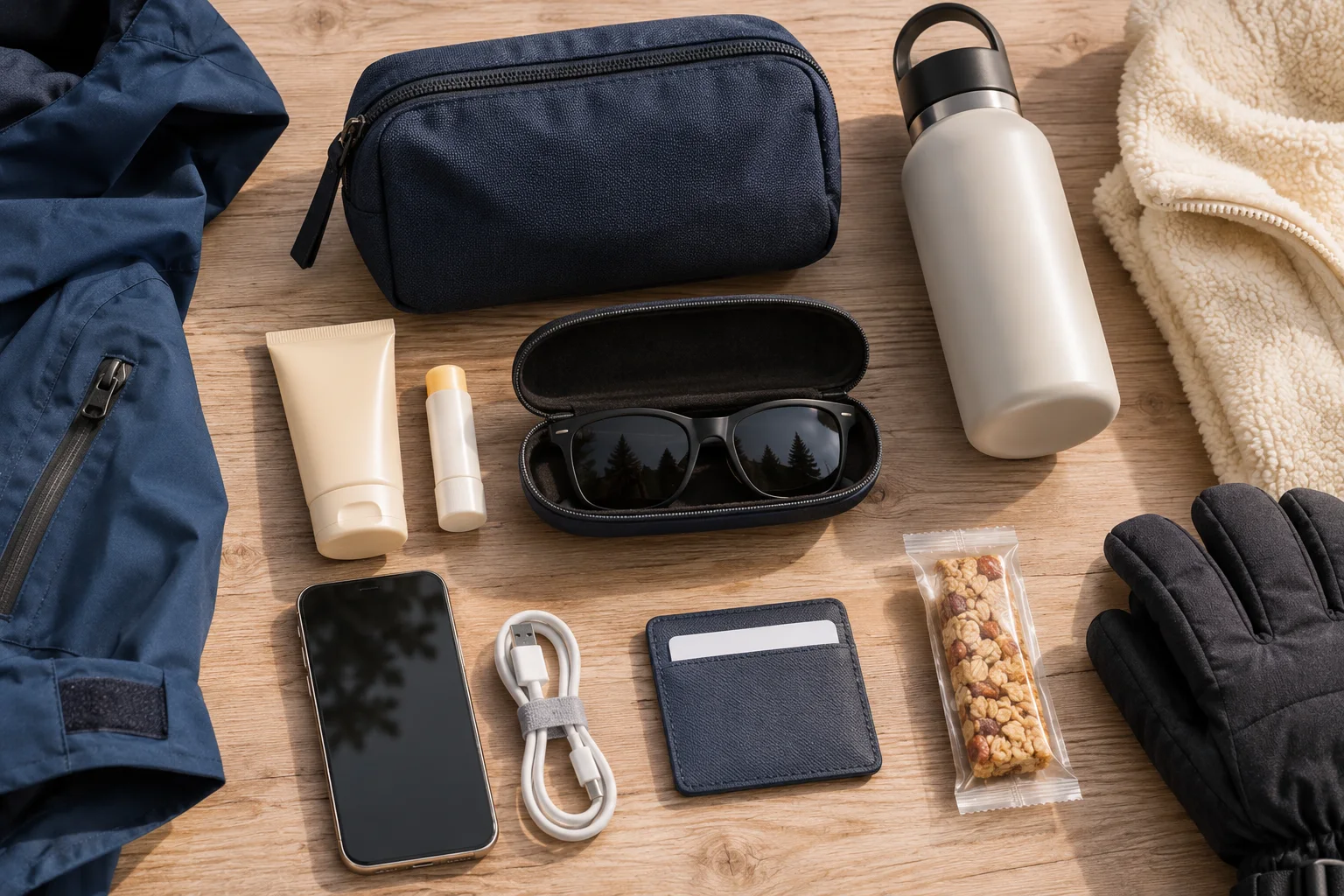
Bring the sun protection, usual personal essentials and eyewear that suit your needs, plus the pass or ticket system required by the resort. Keep payment options and a phone accessible but secure. Pack water or food according to your plan and the resort's facilities and rules.
Choose any small day bag with the activity in mind and use it as directed by the resort or instructor. Avoid loose straps or an overloaded bag that interferes with equipment. A packing list does not replace local guidance on what to take onto lifts or slopes.
Download the resort map and meeting details through the official source. Keep the accommodation's contact information and the day's meeting point in the same place as your booking. Review the official weather, lift and slope information before setting out, and follow closures or local instructions.
Documents and the travel day
Carry the identity and entry documents required for your route, travel bookings, accommodation details and relevant insurance information. Read the activity cover and conditions for the holiday you are taking; the presence of a travel-policy document does not by itself establish that a particular activity is covered.
Include your normal medication, glasses or contact-lens supplies, toiletries and charging equipment. Keep the items you need en route in your personal bag. Reconcile liquids, batteries and sports baggage with the current rules for the journey rather than relying on a general packing graphic.
Use the checklist in three passes
First, mark what you have already booked or rented. Second, pack the slope outfit and first-morning kit. Third, add the much smaller off-slope wardrobe and ordinary travel essentials. The printable sheet separates those groups so rental decisions do not get mixed up with the clothes already inside the case.
For a wider cold-weather city trip before or after skiing, use the winter packing list. If you are driving to the resort, read the winter road-trip planning guide and the destination's official road and equipment requirements.
Ski packing questions
Should a beginner buy all the equipment?
Start by discussing the trip with the resort, instructor and rental provider. Renting appropriate equipment can simplify the first trip; buying and fitting technical equipment is a separate decision.
Is this an off-piste checklist?
No. It is a resort-based packing baseline. Off-piste or other specialist mountain activities require appropriate expertise, equipment and local arrangements beyond this guide.
Useful planning links
Take the plan with you
Open the companion packing checklist, add your own notes and print it for the trip.
Open the packing checklist