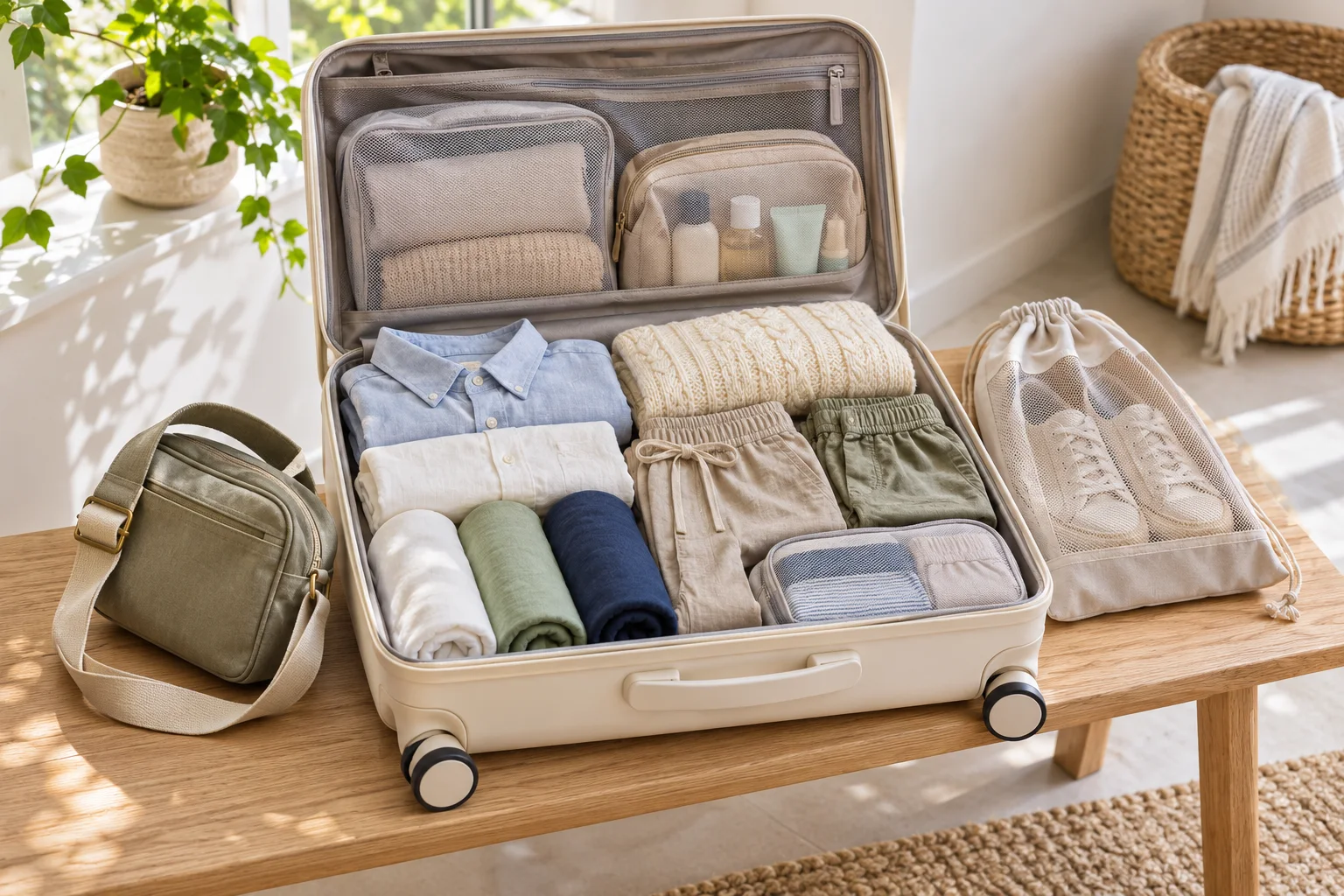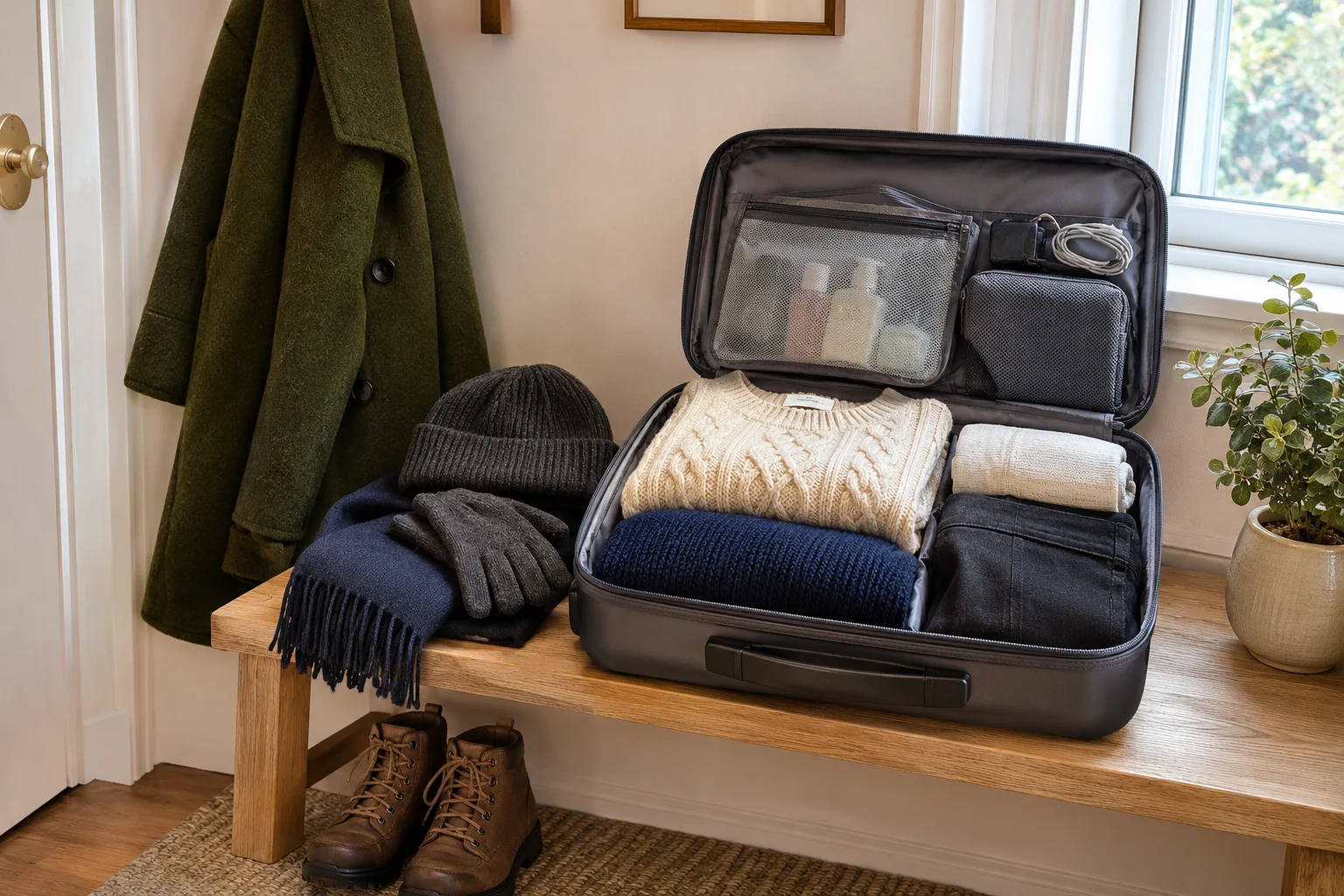
The easiest winter packing list starts with the hours you will spend outside. A museum-heavy city break, an evening at Christmas markets and a mountain holiday need different bags, even if they happen in the same month. Build the list around your booked activities, then choose clothing that layers comfortably instead of filling the case with separate heavy outfits.
This is a seven-night city-break baseline with one mid-trip laundry opportunity. It covers clothes, the day bag, toiletries and travel essentials. Use the separate ski-trip checklist for a skiing holiday, or the winter road-trip guide when the vehicle itself needs preparation.
Your quick winter packing list
| Category | A practical starting point |
|---|---|
| Outer layers | One suitable coat; an additional insulating layer if needed |
| Everyday clothing | Three to four tops, two mid-layers, two bottoms |
| Under-layers | Thermals when needed; underwear and socks for the laundry plan |
| Shoes | One reliable walking pair; a second pair only for a useful different role |
| Small warm layers | Hat, gloves and scarf or neck warmer |
| Personal items | Toiletries, usual medication, glasses and personal-care supplies |
| Travel and day bag | Documents, payment options, phone, charging kit and small essentials pouch |
The quantities include what you wear on the journey. Add sleepwear and any specific event or activity item your trip requires. If there is no realistic laundry option, increase the basics you actually need rather than assuming everything will dry after a quick rinse.
Choose the outer layer for the weather
A coat is the most visible piece of the winter bag, but appearance is only part of its job. Think about precipitation, wind, temperature and the longest period outside. A dry walk between galleries is different from an exposed waterfront or an evening standing around a market.
Try the coat over your intended base and mid-layers before packing. Check that the sleeves move freely and the fastening closes comfortably. If a thin puffer is part of the combination, test it as part of the outfit. Bring a rain solution that suits the forecast; a warm-looking coat is not automatically waterproof.
Keep the warmer combination for the days that need it. Inside a heated museum or train, an easily removable mid-layer can be more useful than one very thick outfit. Follow the familiar base, insulating and protective-layer idea, then adapt the actual fabrics and fit to your activities.
Two trips, two deliberate adjustments
| Actual day | Keep | Change before packing |
|---|---|---|
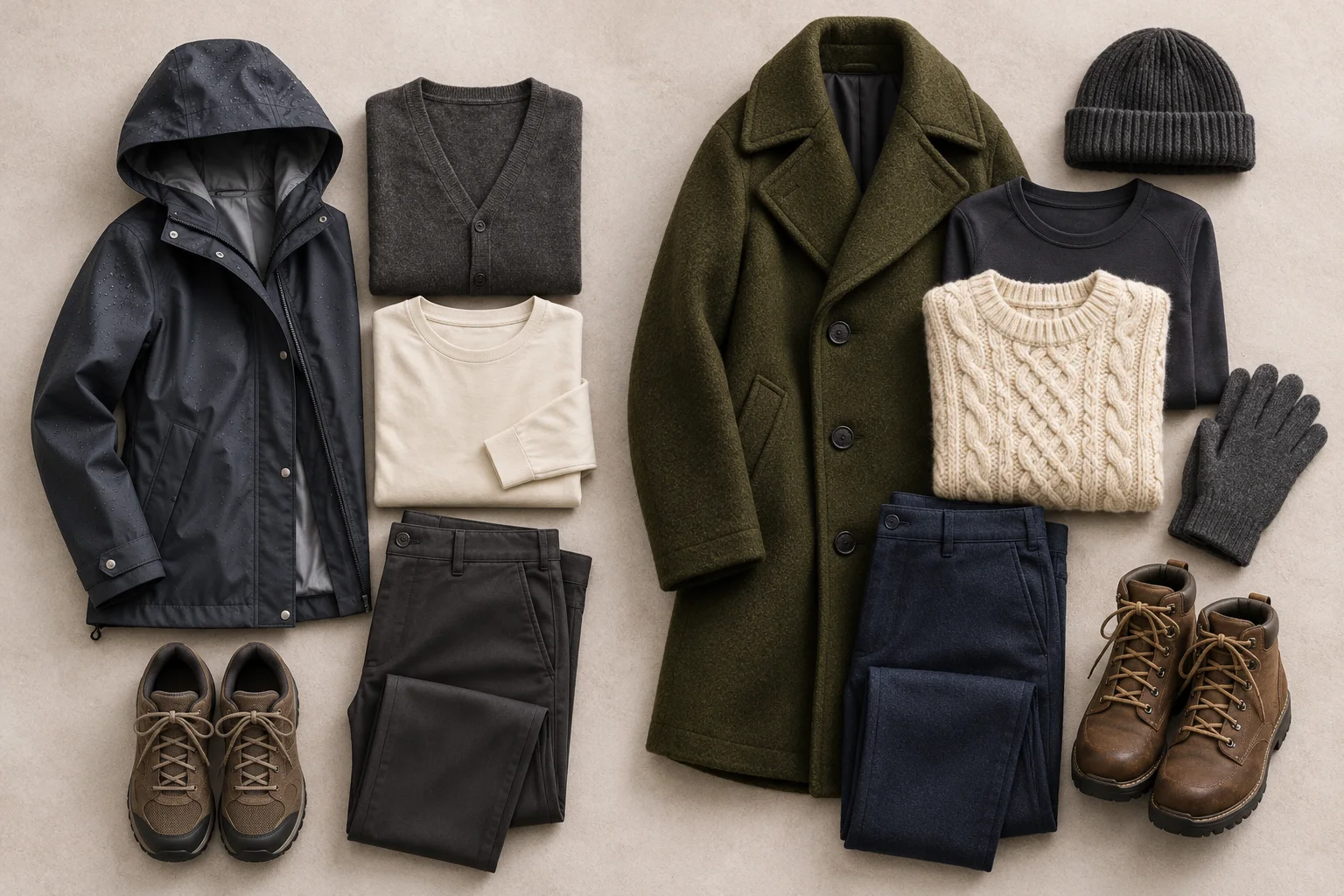
| Mild, damp visit with most hours in museums | Three or four tops, two mid-layers and two bottoms; removable indoor layers | Choose suitable rain protection and walking footwear first. Leave an extra puffer out if the tested coat-and-layer combination is adequate for the forecast; an umbrella belongs only if practical |
| Colder visit with a long market evening | The same repeatable daytime wardrobe | Choose warmer suitable outerwear; add or substitute a fitted thermal base and useful insulation, then test the complete outfit. Replace unsuitable shoes rather than adding another casual pair |
The longer outdoor plan adds bulk through purposeful layers, not extra dinner outfits. Use the German market itinerary to identify those repeated outdoor evenings; the New York winter route shows where shorter park sections and museum time make layers easier to adjust. Neither city name supplies a temperature rating for a coat.
Pack clothes that repeat well
Start with two bottoms that work with the same shoes and coat. Add tops and mid-layers in a palette you already wear, so the combinations feel familiar. Three or four tops, two mid-layers and two bottoms are a useful example when laundry is planned; they are not a requirement to wear an uncomfortable piece twice.
Use a thermal top or leggings when the conditions and your clothing need them. Test the fit under the trousers you are taking. Extra layers can change how a waistband, knee or shoe feels, so do the check at home rather than on the first long walk.
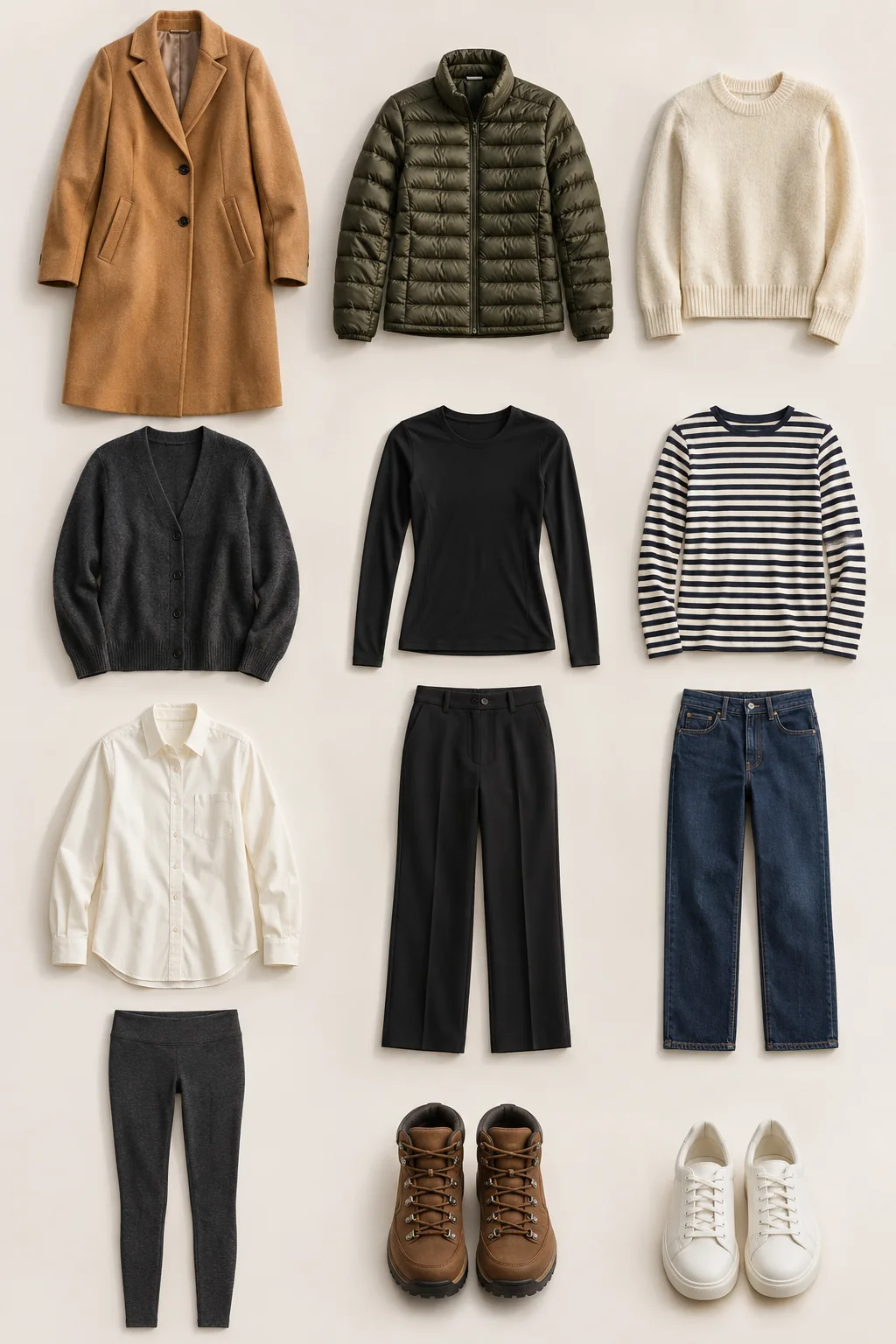
For a ready-made example, the twelve-piece winter capsule shows the roles of the coat, puffer, knits, tops, bottoms and footwear. It is a clothing selection; this wider checklist also makes room for the less photogenic essentials.
A seven-night laundry example
Wear one of four everyday tops on the journey and pack the other three, with both mid-layers and both bottoms counted across worn and packed pieces. Plan a wash after the fourth day's outing, leaving an unworn top, underwear and socks available while the wash dries. Arrange underwear and sock quantities for that actual interval and your own changes; the tops can repeat when clean enough for you. Wash frequently used base layers according to their care labels rather than treating the same top as clean for every outing.

If Day 4 is a hotel transfer, move the wash to a settled afternoon with drying time and bring the extra basics needed to reach it. If laundry falls through, use a confirmed laundry service or add clean essentials; do not make an early departure depend on a damp base layer. This example explains the low clothing range without reducing the separate twelve-piece capsule to a universal limit.
Shoes, socks and the small warm layers
Choose the main shoes for comfortable walking and the conditions you expect. Wear them with the socks you plan to bring. Check how the soles, fastening and fit feel over a proper walk. A familiar, suitable pair is a better starting point than a new pair selected only for how it looks in photographs.
Pack a second pair when it serves a real purpose: a dry indoor alternative, a different activity or useful backup. Keep the rest of the capsule compatible with it. If it adds weight without changing what you can comfortably do, it may be an easy item to leave out.
Hat, gloves and a scarf or neck warmer take relatively little room and are easy to carry in the day bag. Keep them together so you can find them when the light changes or the evening gets colder. Take spare socks for the trip and a separate place for worn clothing.
A day bag that works with a coat
Try the bag over your fully layered outfit. The strap should sit comfortably, and you should be able to reach the items you use often without unpacking everything. A manageable closed bag can be more useful for a crowded city day than a large tote filled with loose objects.
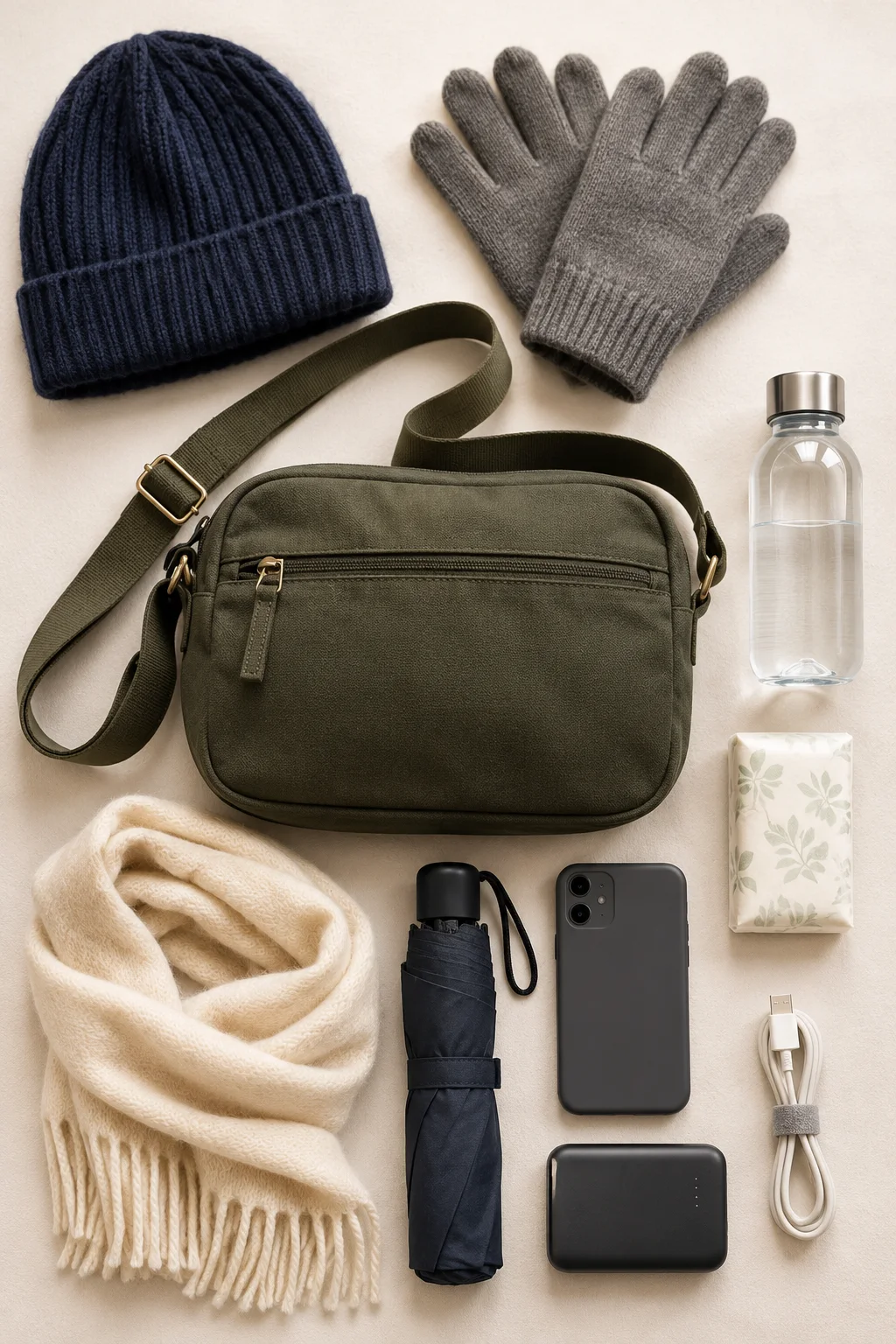
Keep your phone, a charging cable, a suitable power bank, tissues, usual personal essentials and the small warm layers accessible. Add the documents and payment options you actually need for the outing. Bring water and food according to the day's plans and each venue's bag rules.
A compact umbrella or other rain protection can be worthwhile where appropriate. Avoid designing the whole day around a photograph of an open coat and an empty bag: the bag needs to hold the layers you remove indoors as well as the items you leave with.
Toiletries, documents and charging
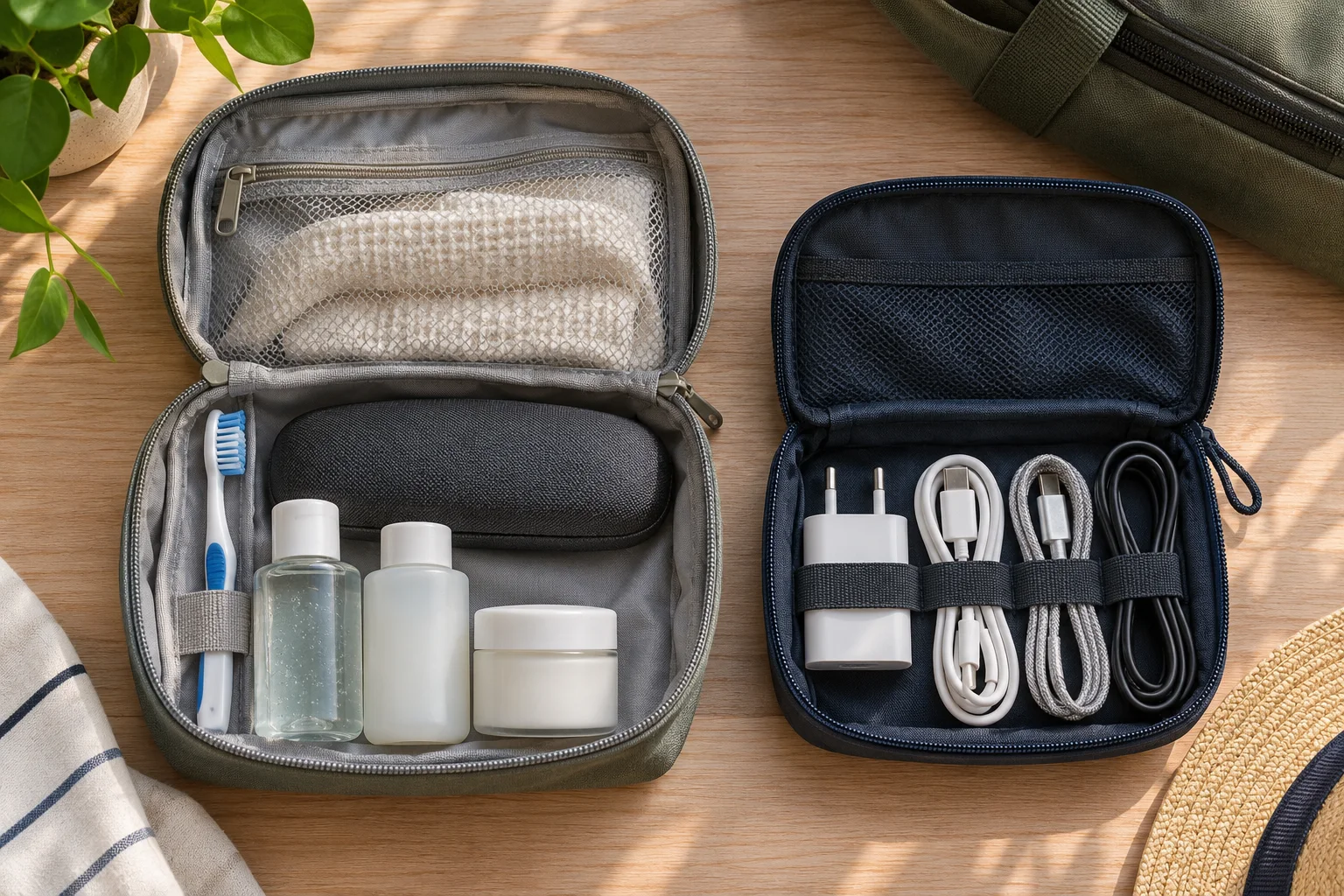
Pack your normal personal-care routine in quantities that suit the trip. Include the products you already rely on, personal-care supplies, glasses or lenses and regular medication. Keep items that need to remain with you in the appropriate travel-day bag rather than assuming you can easily replace them after arrival.
Use current transport security and operator rules for liquids, batteries and luggage. Do not assume the policy is identical at every airport or on every service. The carry-on guide helps divide the suitcase from the personal-item kit, while the relevant operator makes the final baggage decision.
Bring required identity and entry documents, booking details, first-night arrival information and payment options. Download useful tickets and directions before leaving reliable internet. Add the correct adapter and compatible charging equipment for the destinations on your actual route.
The last pack check
Lay out the journey outfit, pack the actual bag and check its size and weight. Make sure the coat has somewhere to go when you remove it and the boots remain comfortable for travel. Leave room for a small change in the plan rather than compressing the suitcase to the point where it cannot be repacked.
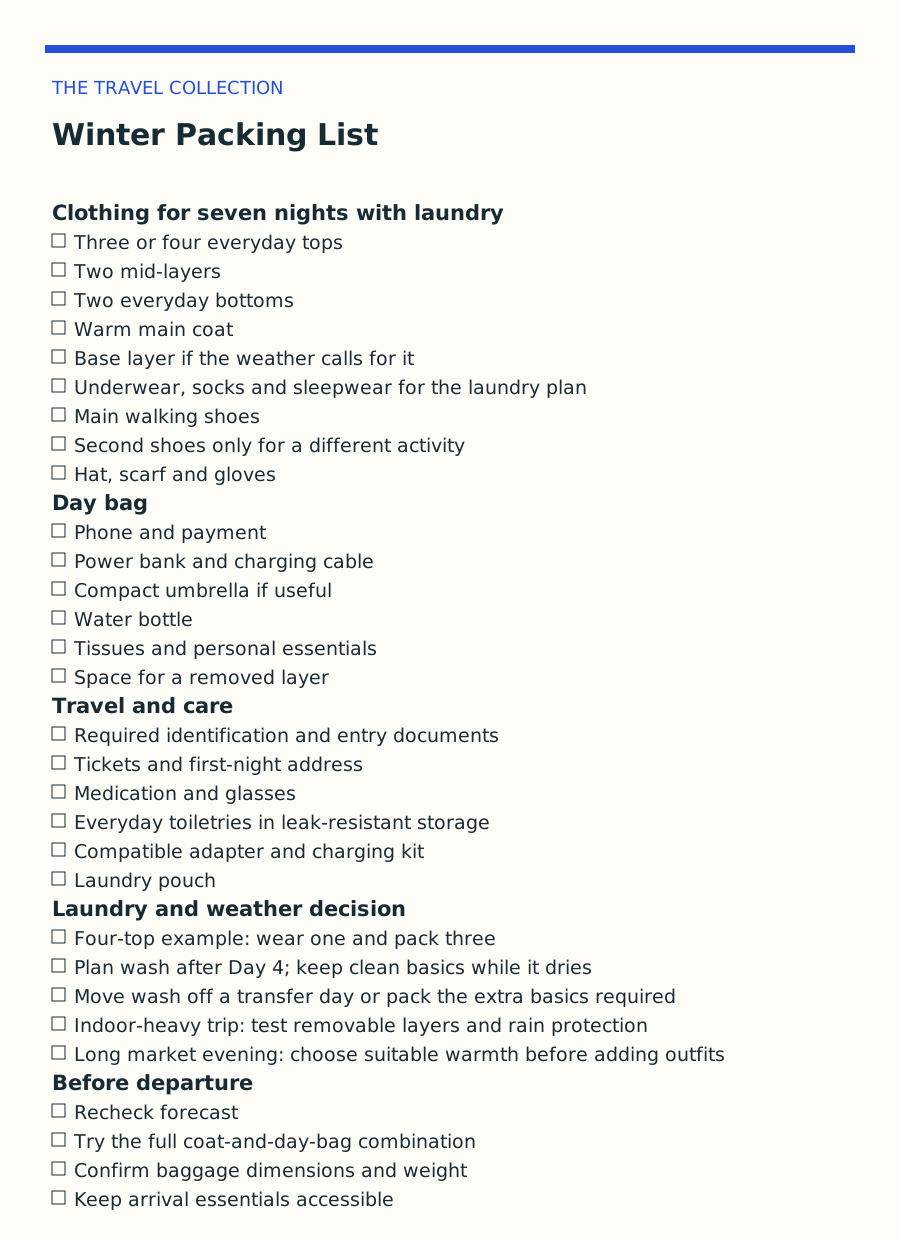
Use the printable companion to mark what is packed and note the items still in use: phone cable, glasses, medication and the coat you will wear. Recheck the forecast close to departure. The finished bag should reflect that trip, rather than every winter trip you might take someday.
Winter packing questions
Can winter clothes fit in a carry-on?
Sometimes, depending on the clothes, bag, allowance and trip. Test the actual packed bag. A smaller wardrobe helps, but it does not establish compliance with a carrier's limits.
Should I take jeans?
Take them if they work for your activities and the weather. Consider comfort, drying time and what you will wear if they become wet. They are an option, not a compulsory winter item.
Useful planning links
Take the plan with you
Open the companion packing checklist, add your own notes and print it for the trip.
Open the packing checklist